
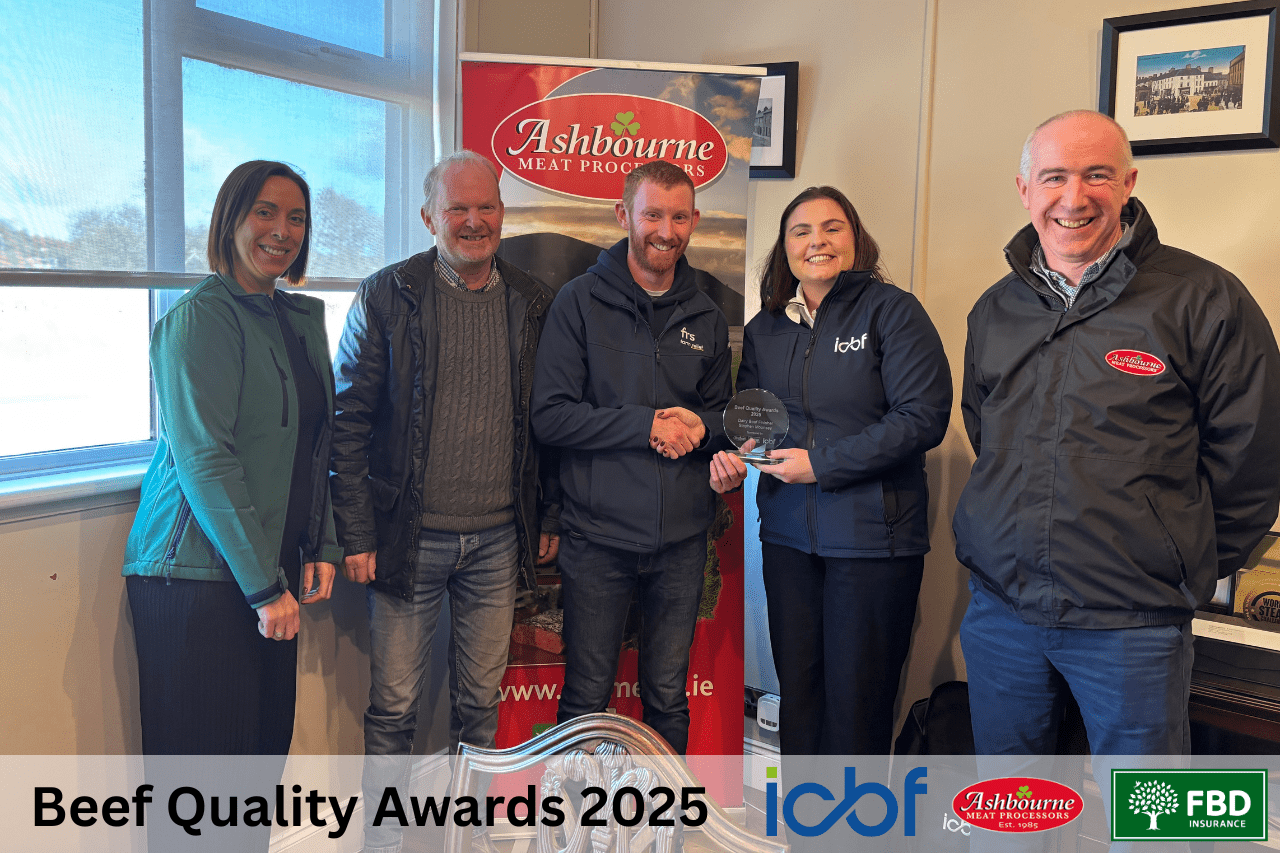
Stephen and Rory Mounsey run a calf‑to‑beef enterprise in Roscrea, Co. Tipperary, delivering strong finishing performance and earning the Ashbourne Meats Dairy Beef Farmer Finisher Award at the ICBF Beef Quality Awards.
The System
Stephen and Rory operate a calf-to-beef system on the farm, primarily buying AAX and HEX calves, with some FRX calves purchased at the beginning of the year. He has no preference on sex, he buys both heifers and bulls. Bulls are squeezed and finished as bullocks between 20 and 24 months, with heifers aimed to be finished at 20 months. Calves are bought through the same local farmers year on year; he does not buy in the mart.
Finishing Performance
The cattle performed well in 2025. On average, the bullocks graded O= 3= with an average carcass weight of 311kg at 22.5 months. The heaviest bullock was an AAX with a carcass weight of 408kg, grading R-3, at 22.5 months. This bullock had a CBV value of €237 (5-star on dairy x beef breed ). On average, the heifers graded O+ 4- with an average carcass weight of 277kg at 21.1 months. The heaviest heifer was also AAX, with a carcass weight of 322 kg, grading R-4, at 22.1 months. This heifer had a CBV value of €231 (5 star on dairy x beef breed).
Of the 185 cattle finished, 174 had a CBV, with an average of €111 (2-star on dairy x beef breed). Stephen is becoming more aware of CBV. The animals with higher CBV values, in general, perform better for them. Stephen is also noticing that the dairy farmers they buy from are increasingly looking at the DBI (Dairy Beef Index) when selecting beef sires for their dairy females. This, he hopes, will improve the quality of beef-sired calves going forward.
The herd is involved with the Dairy Beef Weighing Scheme (DWBS). It helps to monitor the progress of the calves, and so far they have gotten on well with it.
Feeding Strategy and Herd Health Plan
Cattle are turned out to grass in April with the aim of keeping them out until September. A rotational grazing system is in place to ensure fresh grass is available at all times. Cattle are typically finished in November / December. While indoors, they are fed silage and high maize balancer, which they get from Liffey Mills. Stephen recognises the benefit of top-quality silage, so he puts a lot of time and emphasis into the silage they produce.
The farm vaccinates for blackleg. Weanlings are dosed at turnout, and this is monitored throughout the grazing season. Calves are also vaccinated for coccidiosis. When calves return to the sheds in September, Stephen finds that a bolus helps them transition.
Future plans and thoughts
Like most farms around the country, the weather didn’t play ball for Stephen, particularly when it came to spreading slurry. Keeping on top of it proved challenging. Another challenge the farm faces is the ever-increasing number of laws and regulations associated with running a farm. Stephen acknowledged it can be tough to keep under control, but he is committed to doing things right. With this in mind, he is concerned about how the Mercosur trade deal will affect the farm’s viability. Only time will tell.
Looking ahead, Stephen and Rory aim to continually improve the quality of the stock they buy and bring to finish by using the CBV and collaborating with the farmers they currently buy from. They also plan to further enhance silage quality and reduce input costs wherever possible to boost profit margins.