
By combining genomics, sexed semen and high‑DBI sires, the Walsh family are delivering genetic gain, quality milk and profitable dairy‑beef calves in Barryroe.
Dermot and Linda Walsh farm in Barryroe, Co. Cork, where they run a compact, spring‑calving dairy system built on genomics, the Economic Breeding Index (EBI) and the Commercial Beef Value (CBV). By combining herd genotyping, sexed semen and careful sire selection, the Walsh family are achieving consistent genetic gain, high‑quality milk production and profitable dairy‑beef calves.
A long‑standing supplier to Barryroe Co‑op, Dermot currently milks between 90 and 94 spring‑calving cows in an efficient system with a strong focus on breeding and performance.
Watch: How Dermot Walsh Uses Genomics and CBV on His Cork Dairy Farm
A Compact, High‑Performing Spring‑Calving System
Calving on the Walsh farm begins around 20 January and runs through to early April, delivering an impressive 84% six‑week calving rate. Artificial insemination typically starts around 25 April, supporting a tight breeding pattern and labour efficiency.
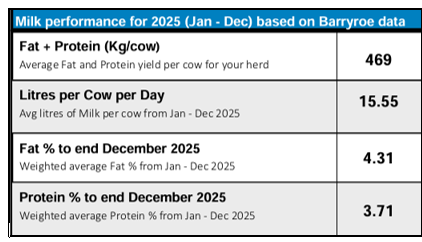
In 2025, the herd averaged 15.55 litres per cow per day, producing 469 kg of fat and protein per cow. These results reflect sound management combined with a strong genetic foundation.
Using Genomics and the National Genotyping Programme
Dermot is an active participant in the National Genotyping Programme (NGP) and has now genotyped all breeding animals in the herd, with calves genotyped at birth.
By using genomic information, Dermot can be confident that the animals he is breeding are genuinely delivering on their genetic potential. Genotyping provides more accurate predictions earlier in an animal’s life, allowing faster, more confident breeding decisions.
“It’s not really extra work for something that has a massive gain,” Dermot explains.
Strong EBI Performance and Accelerated Genetic Gain
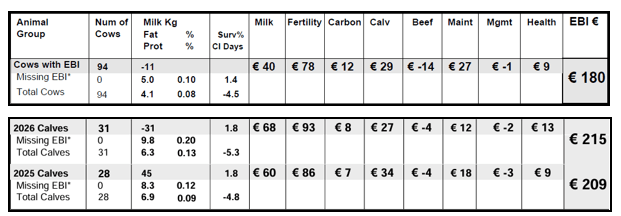
The benefits of genomics are clearly evident in the herd’s performance. The Walsh herd now boasts an average EBI of €180, placing it in the top 5% of dairy herds nationally.
Even more impressive are the 2026‑born calves, which have an average EBI of €215, well ahead of the national average of €173. By identifying the best animals earlier, genomics allows Dermot to accelerate genetic gain year on year.
Sexed Semen and High‑EBI Sires to Drive Further Progress
Building on this genetic foundation, Dermot has moved to a sexed‑semen‑based AI programme. Using ICBF genomic data alongside milk recording information, the Walsh family can accurately identify their best cows and maiden heifers for sexed AI.
In 2025, Dermot assembled a strong AI line‑up, including:
- 40 straws of sexed semen
- 25 Gene Ireland straws
- A selection of high Dairy‑Beef Index (DBI) Angus, Hereford, Charolais, Limousin and Aubrac sires
The dairy bull team consisted of 10 bulls with an average EBI of €245, while the beef bull team included nine bulls averaging a DBI of €145.
Producing High‑CBV Dairy‑Beef Calves
Producing high‑quality dairy‑beef calves is a major focus on the Walsh farm. Dermot supplies calves annually to the Ballyvadin dairy‑beef programme, with a clear objective: to produce easy‑calving, short‑gestation calves with strong Commercial Beef Value (CBV).
Beef sires are selected with:
- A minimum Dairy Beef sub‑index of 100
- Carcass weight figures that meet Ballyvadin’s specifications
Breed usage is carefully balanced, with 20% of bulls sourced from the Gene Ireland Dairy Beef programme to help drive additional genetic gain in the dairy‑beef sector.
Linking CBV Predictions to Factory Performance
Analysis from Ballyvadin shows a strong link between CBV and on‑farm and factory performance. For every €20 increase in CBV, carcass weight increases by approximately 6–7 kg, alongside a quarter‑grade improvement in conformation.
These improvements are clearly visible in Ballyvadin results:
- Heifer carcass weights increased from 254 kg in 2023 to 271 kg in 2024
- Average CBV rose from €163 for 2024‑born animals to €187 for calves born in 2025
These results reinforce both the accuracy of CBV and the value of using high‑DBI sires in dairy herds.
Using ICBF tools, Dermot can track CBV performance across his herd and sees a strong alignment between genomic predictions and factory data.
“The figures coming back match what we’re seeing on the ground,” he says.
Milk Quality Remains Central to the System
While genetics and calf quality are key priorities, milk quality remains central to the Walsh farming system. Dermot continues to focus on improving Somatic Cell Counts (SCCs), TBCs, thermoduric bacteria levels and overall herd standards.
By using ICBF tools such as breeding indices and Sire Advice, Dermot can strike the right balance — producing high‑quality milk while also delivering valuable dairy‑beef calves from the same system.
Supporting a Sustainable Dairy‑Beef Supply Chain
For Dermot, this balanced breeding approach benefits the entire supply chain. Producing well‑bred, high‑CBV dairy‑beef calves supports beef farmers and helps build confidence in the dairy‑beef system.
“From a dairy farmer’s point of view, we’ve been striving for years to produce quality milk — improving cell counts, TBCs, thermoduric and everything else. But we can do that while also improving the quality of our calves. By striving to produce a quality calf, it works for the beef men, it works for the industry, and ultimately it brings beef farmers back to buying calves from dairy farmers again.”
See how ICBF breeding tools can support genetic gain, milk quality and calf value in your own herd.
Learn more about the National Genotyping Programme, Sire Advice and CBV at www.icbf.com.