
The breeding season is one of the most important periods on any dairy farm. Getting cows served early and keeping the calving pattern tight is key to driving output and profitability on Irish dairy farms. The ICBF Weekly Fertility Report is designed to provide farmers with a clear, up-to-date snapshot of their herdis performance during this critical period. Rather than waiting until the end of the season, this report allows farmers to track progress in real time and take action where needed.
What is the weekly Fertility Report?
The Weekly Fertility Report is a simple but powerful report available through HerdPlus that summarises your herd’s fertility performance throughout the breeding season. It brings together key metrics, graphs and action lists in one place. Using live herd data, the report tracks calving performance, submission rates over time, key fertility KPIs, bull usage, breeding patterns and sows requiring attention. Combining all of this into one simple report allows farmers to quickly assess where their herd stands and, most importantly, where action is needed.
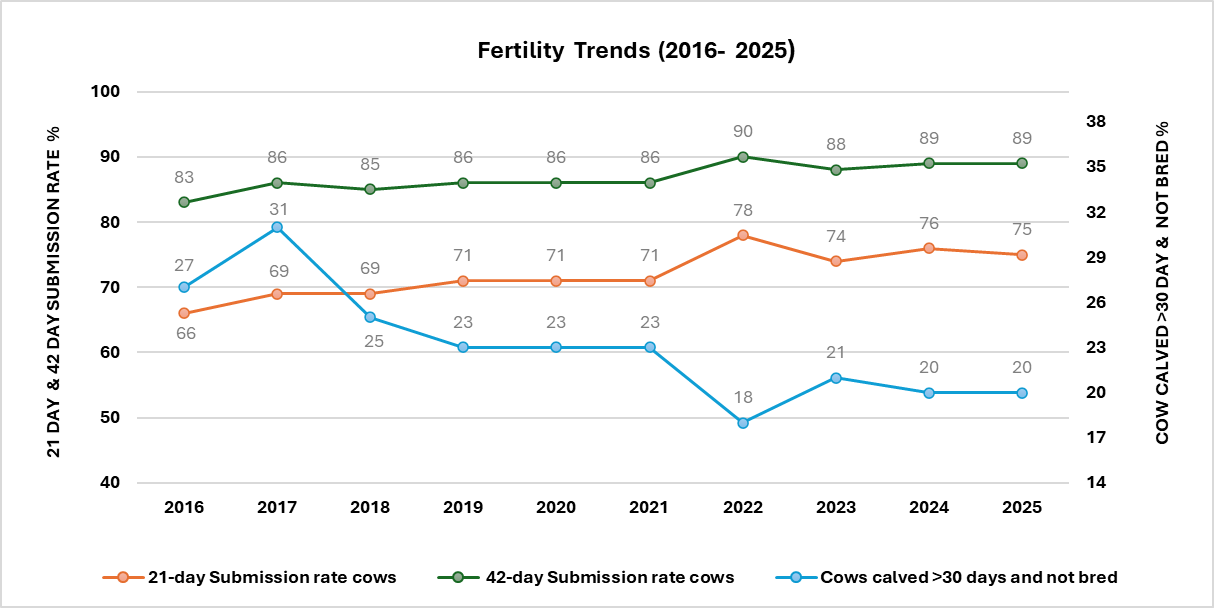
Focus on what matters- Submission Rates
Submission rate is one of the most important drivers of herd fertility. The submission rate measures the proportion of eligible cows that have been bred within a given period, effectively reflecting how well heat detection and breeding management are working on farm. The report focuses in particular on the 21-day and 42-day submission rates, which indicate how quickly cows return to estrus after calving and provide a strong early indication of overall breeding performance. A good submission rate generally points to cows cycling well and being picked up for breeding at the right time, while a drop in submission rate is often the first sign of an issue on farm.
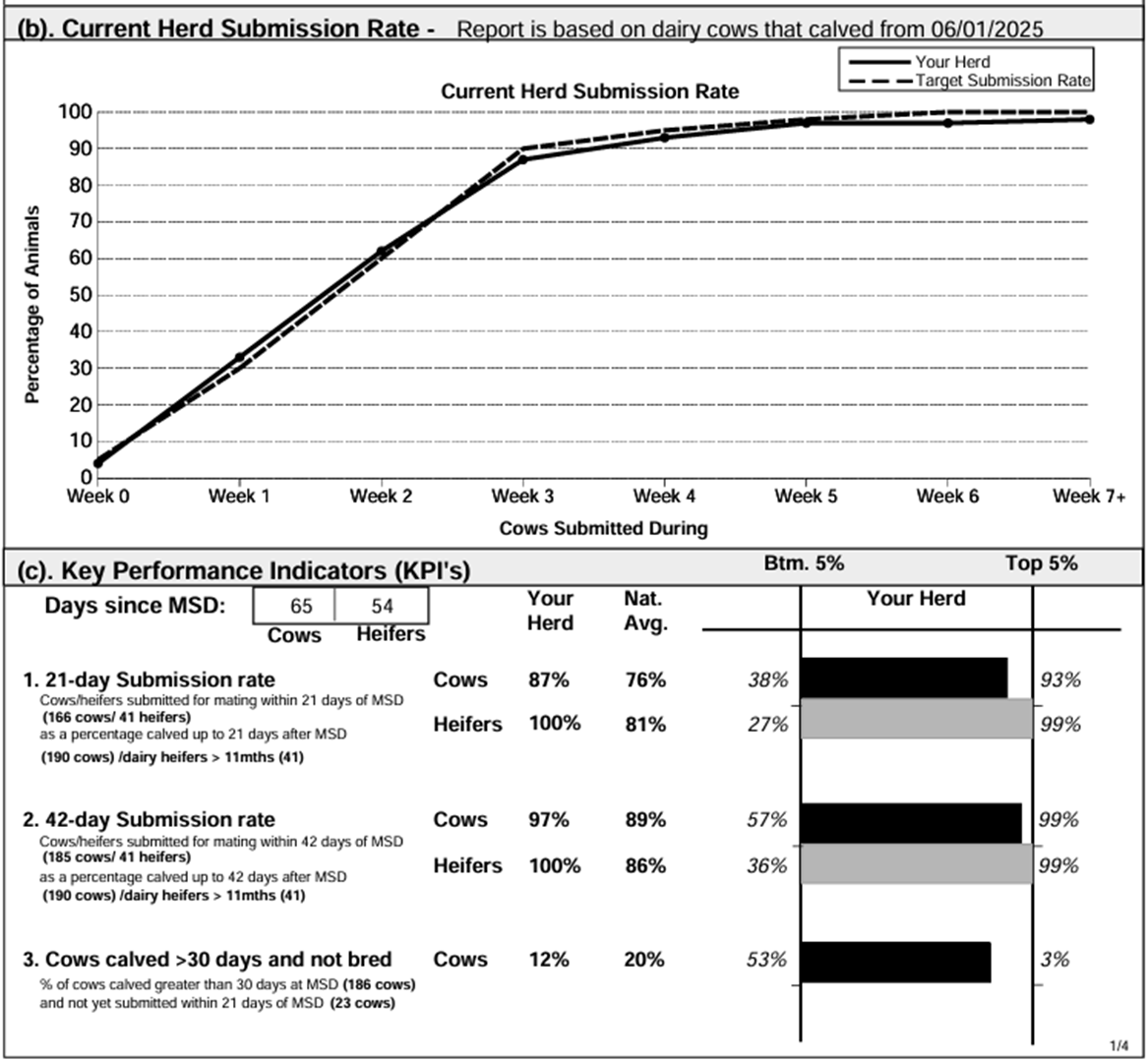
One of the key strengths of the Weekly Fertility Report is that it shows current performance rather than relying on end-of-season figures. The submission rate graph tracks weekly progress and compares the herd against target levels, making it easy to spot if performance is slipping. This real-time feedback gives farmers the opportunity to intervene early, whether that means reviewing heat detection, assessing cow condition, or identifying groups of cows that are falling behind.
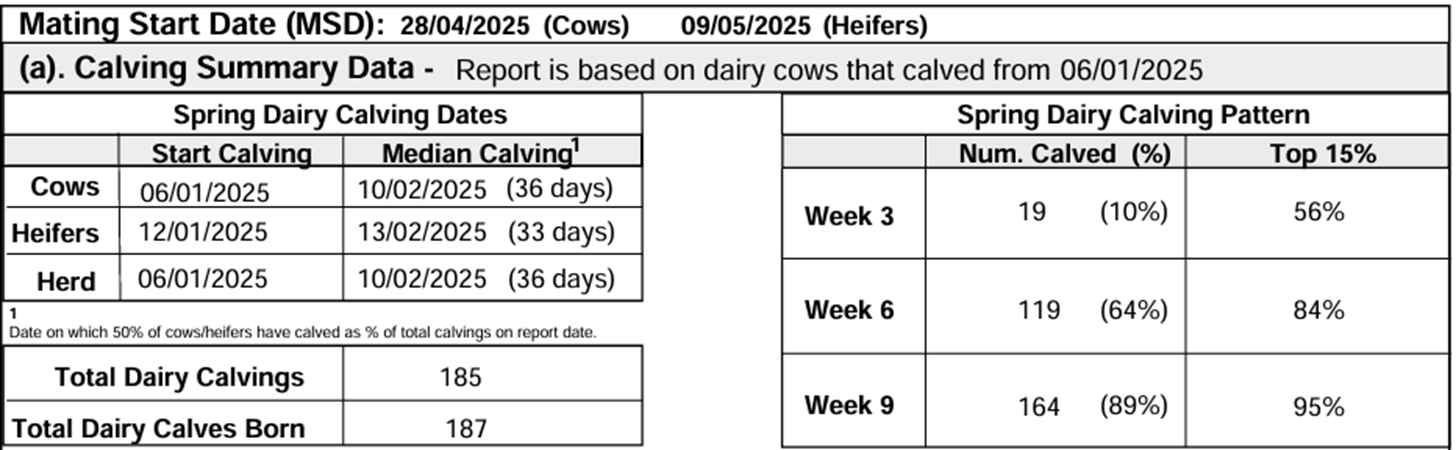
The opening section of the report provides a summary of calving performance, including the start and median calving dates, the total number of calvings, and the compactness of the calving pattern. Maintaining a tight calving pattern remains a key objective on Irish dairy farms, as earlier calving leads to longer lactations and greater output from grass-based systems. By reviewing this section alongside submission performance, farmers can build up a clear picture of how well the herd is set up for breeding success.
Making Better Breeding Decisions
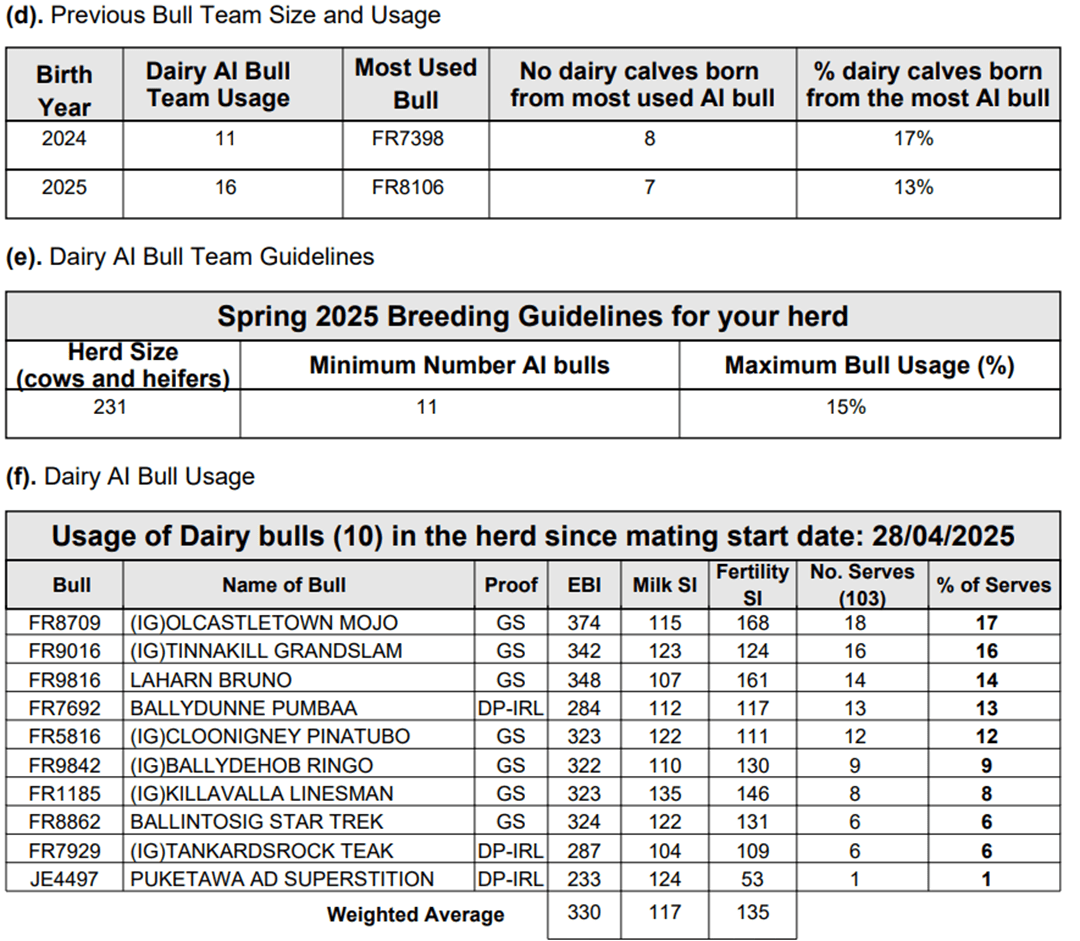
The report also includes a detailed breakdown of dairy and beef bull usage within the herd. This helps ensure that an adequate number of bulls are being used and that no single sire is being overused. Alongside this, breeding guidelines are provided based on herd size, including the recommended minimum number of bulls and maximum usage per bull. This supports better breeding decisions while helping to spread risk and maintain genetic progress within the herd.
One of the most practical and widely used sections of the report is the Action List. This highlights cows that are over 30 days calved and not yet submitted for breeding, as well as animals that may require further investigation. In the example report, individual cows are listed along with their calving dates and any relevant notes, making it easy to identify those that need attention. This effectively becomes a weekly to-do list, allowing farmers to focus on the cows that matter most and keep the breeding season moving forward.
Fertility remains one of the biggest drivers of profitability in dairy systems. Poor fertility results in later-calving cows, fewer days in milk, higher empty rates, and increased replacement costs. Regular monitoring is essential to identify issues early and take corrective action. The Weekly fertility report supports this by turning herd data into clear and practical information that can be acted on straight away.
How to access your report?
Generating your Weekly Fertility Report is quick and simple:
- Log in to HerdPlus
- Go to Reports → All Reports → Fertility
- Select Weekly Fertility Report
- Enter your calving and mating start dates
- Click Generate Report
Frequently Asked Questions
What is a good submission rate in the breeding season?
A good 21‑day submission rate indicates that cows are cycling well and being detected in heat early, providing a strong foundation for good herd fertility.
How often should farmers check the Weekly Fertility Report?
Reviewing the report weekly allows issues to be identified early, when corrective action can still be taken.
Is the Weekly Fertility Report available on mobile?
Yes, the report can be accessed through the HerdPlus app, allowing farmers to check progress at any time.
By reviewing it weekly, farmers can stay on top of breeding progress, identify problems early, and make timely decisions. In a tight breeding season, small improvements can make a big difference, and this report helps ensure that opportunities are not missed.