
How the Bailey family’s focus on genetics and performance delivers a more efficient, profitable dairy beef system.
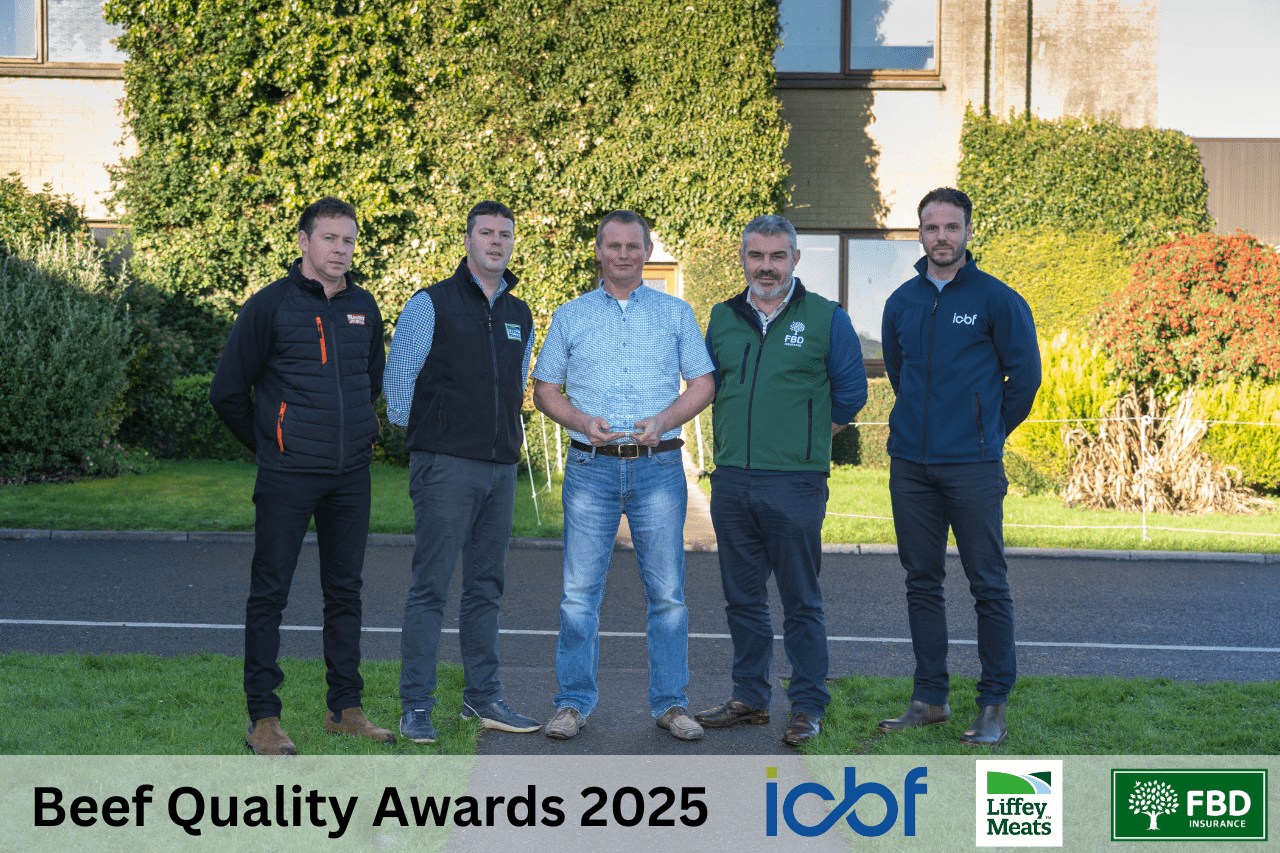
Damian Bailey, his wife Susan, and their four young children farm just outside Gorey in north County Wexford. Damian describes himself as a “full‑time, part‑time farmer,” as he works full time on his brother’s dairy farm while also running his own 80‑acre standalone dairy‑beef enterprise. It was the excellent performance of this heifer‑finishing system that saw Damian being awarded the Dairy Beef category winner as a supplier to Liffey Meats.
The home farm consists of 60 acres of grassland and 20 acres of tillage. The tillage crop varies year to year but is usually either barley sold off the combine or contract maize grown for local farmers. Damian sees a major advantage in growing his own barley, as it provides a reliable source of straw for use on the farm.
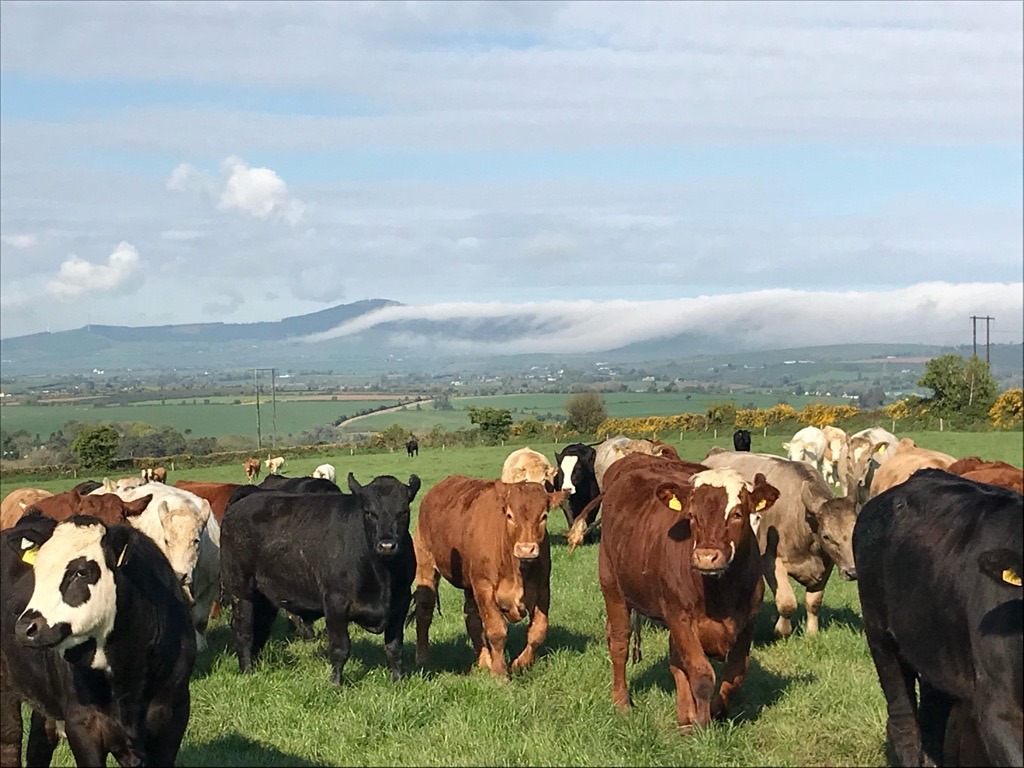
Like many successful businesses, the system is intentionally simple and run on strict commercial principles. Approximately 180 store heifers of various breeds are purchased throughout the year, averaging 400 kg on arrival. These are mainly sourced in Carnew or Enniscorthy marts through a trusted buyer who knows exactly what Damian is looking for. A distinctive feature of the farm is an uncovered housing unit with mats on slats. Despite sounding unconventional, he finds it works extremely well from both health and performance perspectives, provided animals are sheltered from prevailing winds.
Damian has identified several key drivers behind the success of the business. First and foremost, he focuses on purchasing heifers that will perform consistently from the day they arrive. He wants animals that are not “over‑done” and will respond well when moved onto a specialised finishing diet. Up to now, relatively few heifers passing through the marts have displayed CBVs, but as this increases, he has instructed his buyer to watch for them and use the information to help guide purchase prices.
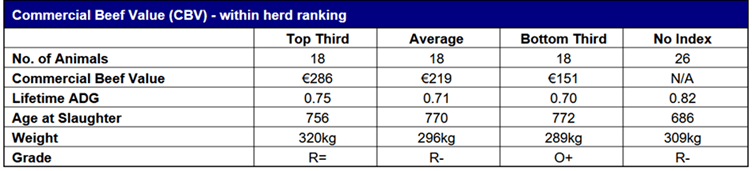
All animals are wormed and dosed on arrival, and those purchased in winter are also vaccinated for IBR. Because the heifers are bought as stores rather than younger stock, Damian encounters very few health issues. Table 1 presents slaughter data for the Dairy Beef heifers finished in 2025. It clearly demonstrates the advantage of high‑CBV heifers on the same system, showing an additional 31 kg of carcass and a 16‑day younger slaughter age compared to low‑CBV animals.
Table 1. Slaughter Data on Dairy Beef Heifers finished in 2025
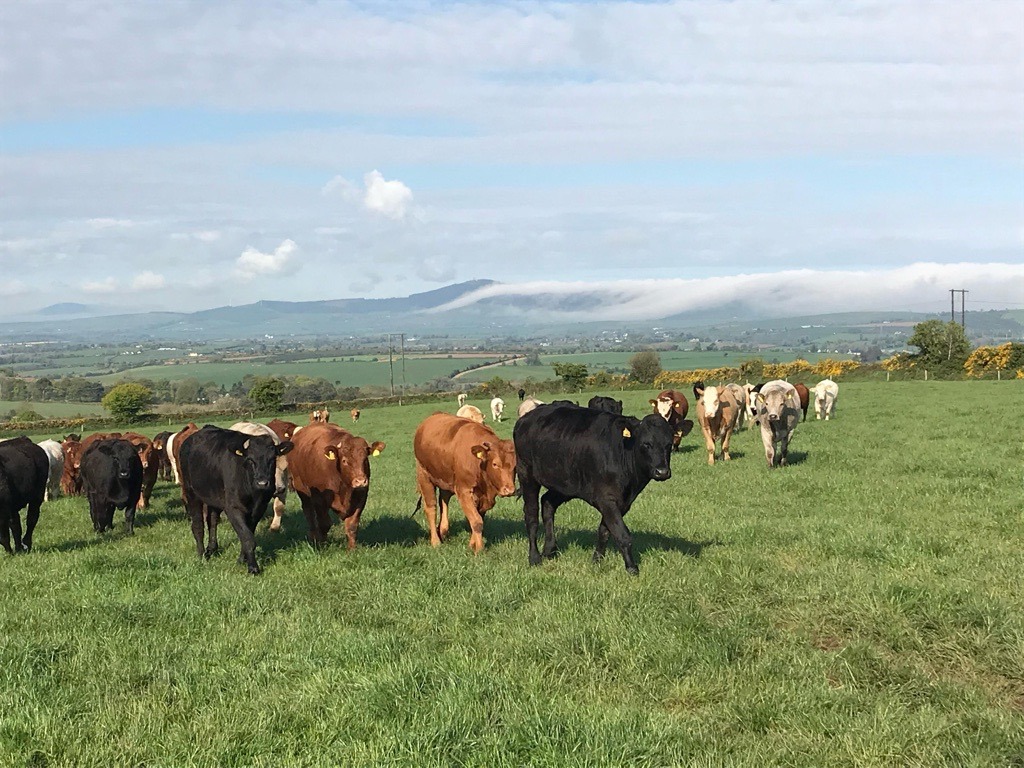
The farm is also well structured to support strong liveweight gains at grass. Paddocks are managed on a three‑day grazing and three‑week rest rotation. The simplicity of the system — with no multiple groups of differing stock types — makes this approach highly effective. Surplus grass ahead of the herd is removed as baled silage in addition to the main cuts. Damian is also a strong advocate of regular weighing and records weights three times annually: at turnout, mid‑summer, and housing.
Another pillar of the system is the emphasis on the finishing diet. From mid‑July, he introduces 2 kg/head/day of concentrate to animals he intends to finish off grass, gradually increasing to a maximum of 4 kg/head/day with the goal of finishing by late September. Housed animals receive ad‑lib silage and are built up to a maximum of 7 kg/head/day until drafted. Again, CBV plays a significant role in profitability, as high‑CBV heifers finish quicker and consume less feed. In a low‑margin, high‑throughput system, this can make the difference between profit and loss in any given year.
Like all agri‑businesses, the farm operates in an ever‑changing environment. One of the major challenges Damian faces is the sharp increase in beef prices over the past 18 months. While factory prices have risen significantly, the cost of stores has also increased by several hundred euro per head. As a result, margins per animal have remained broadly similar, but financial risk and working capital requirements are now substantially higher. This further reinforces the value of CBV in predicting profit potential and informing purchase decisions.
Looking ahead, Damian and Susan take great pride in seeing their children show an interest in the farm. Like many Irish farm families, they hope to create a viable business that can be passed to the next generation. In terms of the wider industry, Damian believes the QPS grid is overdue for review. Introduced in 2009, it no longer reflects today’s market or the modern national herd, and he feels the current 6c bonus increments do not adequately reward farmers who produce top‑quality stock.
ICBF would like to congratulate Damian on winning the 2025 Dairy Beef Finisher Award for Liffey Meats.