
Higher Commercial Beef Value (CBV) dairy-beef calves are delivering more profit, based on analysis of over 87,000 Irish cattle. The results show that 5-star animals returned €113 more per carcass than 1-star cattle and were finished 13 days earlier. They were also more likely to meet carcass weight and conformation specifications, reinforcing CBV as a strong and reliable predictor of profitability in Irish dairy-beef systems.
Key findings:
- 5-star cattle returned €113 more per carcass and were finished 13 days earlier than 1-star animals
- Higher CBV cattle were more likely to meet carcass weight and conformation specifications
- Commercial Beef Value (CBV) is a reliable predictor of dairy-beef profitability across all sire breeds
CBV: A Practical Tool for Dairy-Beef Profitability
Once calves are on the ground, one of the key decisions for farmers is identifying which animals are most likely to deliver the best margin at finish. The ICBF Commercial Beef Value (CBV) is designed to support this decision by ranking animals on their expected profit potential based on genetics.
This large-scale analysis confirms that CBV works effectively in real farm conditions. Across the dataset, cattle with higher CBV consistently performed better, demonstrating that CBV is a valuable and practical tool for selecting dairy-beef calves with greater profit potential.
Dataset and Approach
The analysis included 87,323 spring-born dairy-beef heifers and steers finished in 2025. All animals were out of dairy dams and sired by the main breeds used in Irish systems, including Angus, Hereford, Aubrac, Limousin, Belgian Blue, Charolais and Simmental. Traditional breeds dominated the dataset, with Angus and Hereford accounting for 84% of cattle, while Limousin and Belgian Blue were the most common continental sires.
Importantly, each animal’s CBV was calculated without using its own performance data, reflecting the information available to farmers at the point of calf purchase. To ensure fair comparisons, all cattle were valued using the same carcass price assumptions, including a base price of €6.70 per kilogram and standard Quality Payment System (QPS) grid rules.
Stronger Performance at Finish
The results clearly show that cattle with higher CBV outperform those with lower CBV across key performance metrics. On average, 5-star animals delivered carcasses that were 14 kg heavier and had higher conformation scores and finished earlier. This combination of traits resulted in an additional €113 per carcass compared to 1-star cattle.
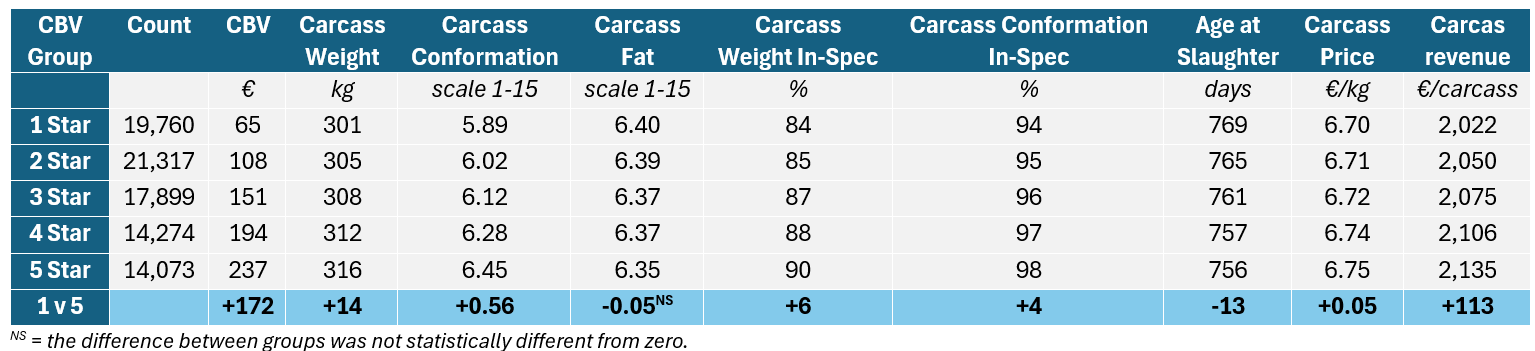
Crucially, this improved performance was not driven by increased fat levels. Fat scores remained unchanged, meaning the added value came from improved carcass weight, better grading, and more efficient finishing. Higher CBV cattle were also more likely to meet factory specifications, including carcass weight targets of 280–380 kg and conformation grades of O+ or better. Overall, this translated into an additional €0.19 per day of life in carcass value for higher CBV animals.
Efficiency and Sustainability Benefits
While feed intake data was not available for this dataset, previous research at the ICBF Beef and Dairy Research Centre in Tully highlights an important additional benefit of higher CBV animals. Cattle ranked in the top 20% for CBV consumed less dry matter per day and produced lower levels of methane compared to lower CBV animals.
These findings indicate that CBV can contribute not only to improved profitability through earlier finish and better carcass performance, but also to lower feed costs and improved environmental efficiency in dairy-beef systems.
CBV Performs Across All Sire Breeds
As expected, differences exist between traditional and continental sire breeds. Angus-sired cattle, for example, tend to finish earlier, while continental-sired cattle typically produce heavier carcasses with better conformation. However, the key finding from this analysis is that CBV remains a strong predictor of performance within each breed type.
Across all sire breeds analysed, increases in CBV were associated with improvements in carcass weight, conformation, and overall carcass value. While continental breeds showed slightly larger gains in carcass traits, traditional breeds tended to show greater improvements in finishing age and hitting weight specifications. These differences were relatively small, confirming that CBV works effectively across a wide range of dairy-beef production systems.
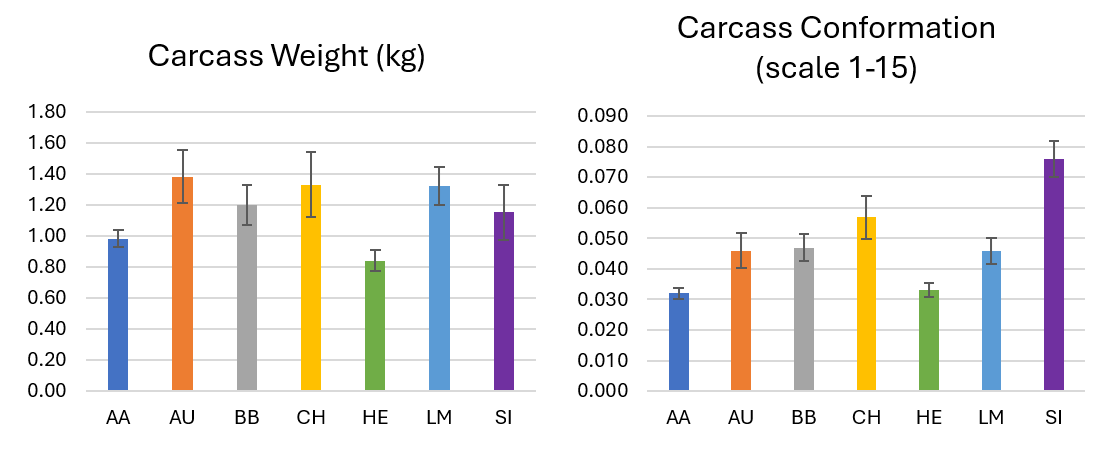
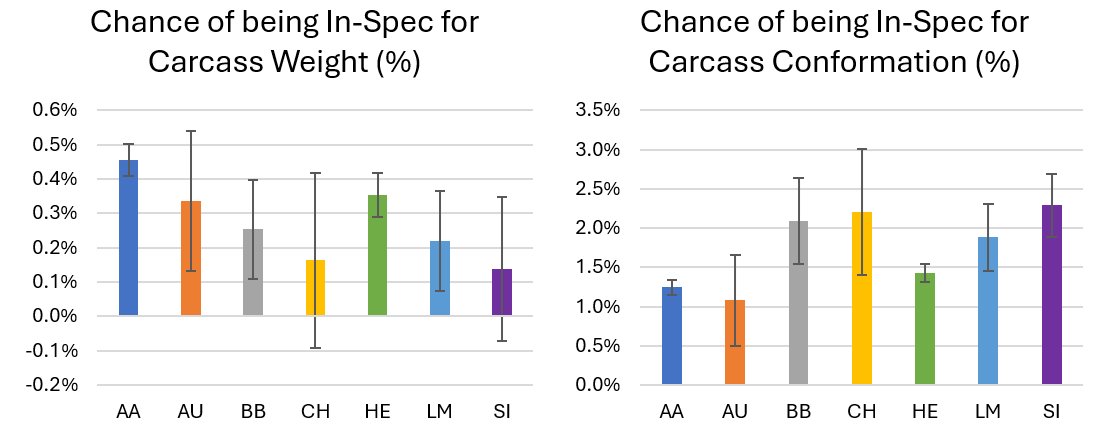
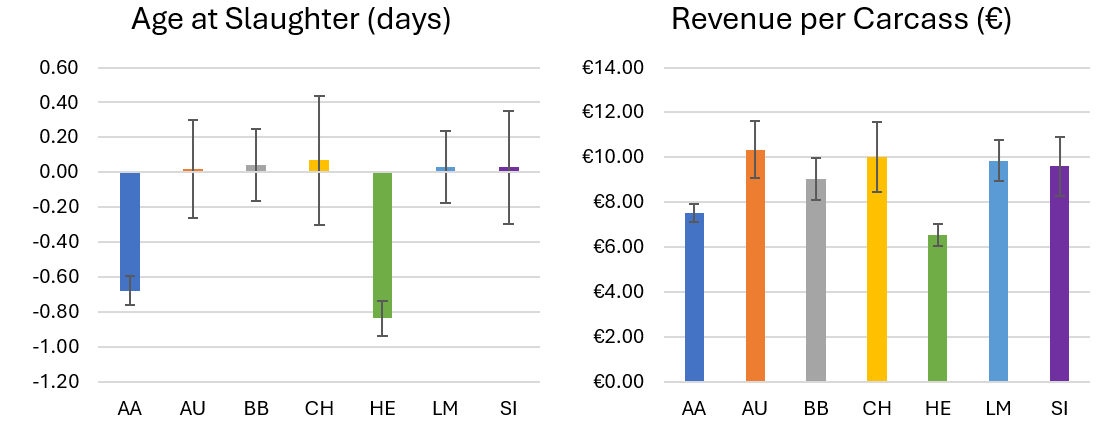
AA = Angus, AU = Aubrac, BB = Belgium Blue, CH = Charolais, HE = Hereford, LM = Limousin, SI = Simmental
What It Means in Practice
The practical value of CBV is evident when comparing animals within the same breed. For example, an Angus-sired steer with a €50 higher CBV will, on average, finish earlier, produce a heavier carcass, and have a higher likelihood of meeting both weight and conformation specifications. This results in a significant increase in carcass value.
Similarly, within continental breeds such as Limousin, higher-CBV animals produce heavier carcasses and achieve better grading, leading to increased revenue at finish. When earlier finishing is factored in using Teagasc production costs, the overall profit difference aligns closely with the predicted CBV value, demonstrating CBV’s accuracy as a predictor of real-world performance.
A Reliable Guide for Calf Selection
While different sire breeds follow distinct biological pathways to performance, the outcome is consistent: higher-CBV cattle deliver greater profit. CBV provides farmers with a simple and reliable way to identify dairy-beef calves that are more likely to finish efficiently, meet factory specifications, and deliver stronger financial returns.
Final Takeaway
For farmers purchasing dairy-beef calves, CBV offers a clear advantage. By selecting higher CBV animals, farmers can improve carcass performance, increase the likelihood of meeting market specifications, and ultimately leave more profit at finish.