
A disciplined approach to rearing, winter management and finishing is supporting carcass performance within this dairy‑beef enterprise.
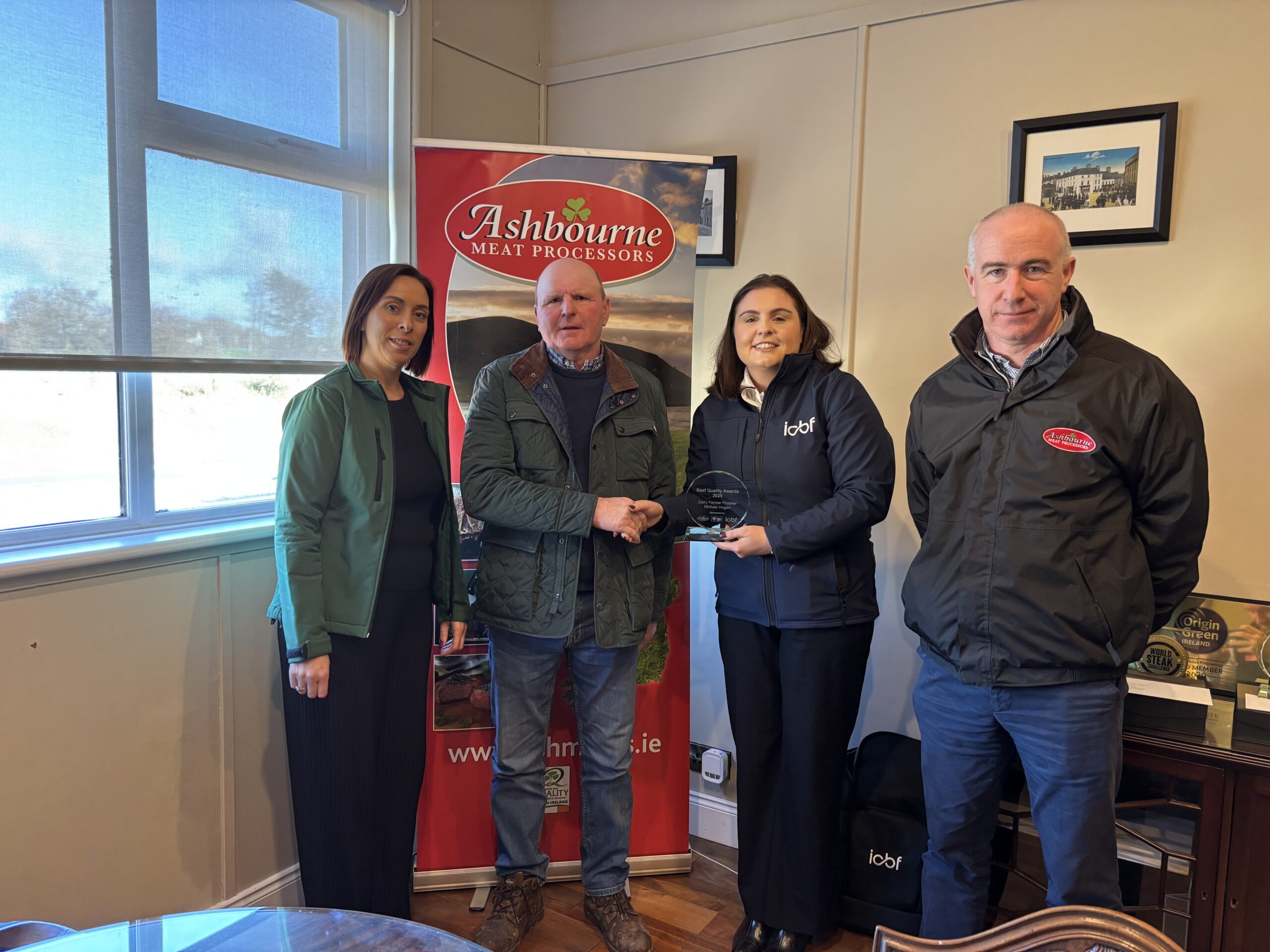
Michael Hogan farms outside Nenagh, Co. Tipperary, where he operates a dairy‑beef finishing system alongside a spring‑calving dairy herd. Michael and his wife milk 110 cows across more than 300 acres of owned and rented land, managing both enterprises with a strong focus on efficiency, performance and consistency.
Like many Irish farms, the holding has been passed down through generations. Michael’s parents farmed the land before him, and when he first started out, he was farming just 60 acres. Since then, the operation has steadily expanded to its current scale.
The farm was traditionally dairy‑based until a Brucellosis outbreak in 1979 resulted in the compulsory culling of the herd. It was more than a decade before dairying resumed, re‑established through a merged milk quota. When quotas were abolished in 2015, Michael had the land base to expand further, but chose to increase cow numbers by just 30 animals in order to maintain his dairy‑beef finishing enterprise.
Rearing and Finishing Dairy‑Bred Stock
All male calves born on the farm are retained and finished through Michael’s dairy‑beef system. He uses conventional dairy semen across the herd, finding that calf numbers tend to balance out evenly. Hereford bulls also run with the cows to produce beef‑sired calves.
Calves are fed whole milk from birth to approximately 70 days, receiving around 4 litres per day, with constant access to water. Meal feeding is introduced after 3–4 weeks, alongside milk and roughage.
Michael deliberately delays the introduction of meal, believing early feeding can increase the risk of scour.
“I prefer to let the calves develop a bit first,” he explains.
Calves remain on meal until turnout to grass, depending on grass availability.
First Winter Performance Is Key
Michael firmly believes the first year of an animal’s life is critical in setting it up for strong lifetime performance. In recent years, he has introduced kale to outwinter his young stock during their first winter.
“I find they gain more weight outdoors on kale compared to being housed,” he says. “That early growth lays the foundation for how they finish later.”
For finishing, cattle are housed at the start of November on high‑quality first‑cut silage. Meal feeding begins at 4kg per head per day, increasing to 6kg after the New Year.
Heifers are typically finished in early February, with bullocks following towards the end of March. Finishing periods generally range from 100–150 days.
Last year, heifers achieved an average carcass weight of 297kg, while bullocks averaged 350kg – performance levels Michael is satisfied with.
Breeding and Herd Health
The dairy herd consists primarily of British Friesian‑type cows. While not pedigree animals, Michael favours cows with a stronger British influence over Holstein genetics, believing they deliver better carcass outcomes in finishing animals.
“They’re stronger, better‑framed cows,” he notes. “I like cows that fit their size – broad through the shoulders and hind quarters.”
Herd health is a major priority across both the dairy and beef systems. All cows are vaccinated for pneumonia, IBR, Leptospirosis and BVD. While vaccination represents a significant cost, Michael believes it is essential for maintaining animal performance and welfare.
In previous years, calves were vaccinated at a young age for pneumonia, but Michael has since moved to vaccinating cows instead, finding it more effective. Weanlings are vaccinated for pneumonia in the autumn, and all animals receive routine parasite control, including dosing for lice and worms.
The farm experienced a prolonged TB restriction lasting over 18 months, finally achieving clear status again in September of last year.
Looking Ahead
When it comes to future plans, Michael does not foresee major changes to the system. His focus is on fine‑tuning performance rather than expansion.
On the dairy side, maintaining milk solids and controlling somatic cell count remains key, while carcass weights and finishing performance continue to be closely monitored within the beef enterprise.
Reflecting on the wider sector, Michael describes rising input costs as the main challenge. While milk price levels would once have been considered strong, he believes increasing production costs have changed that reality. He is currently satisfied with beef prices but remains cautious, particularly regarding the risks associated with purchasing expensive store cattle for finishing.
For farmers considering a similar system, Michael’s advice is clear: avoid excessive Holstein influence within the herd.
“Too much Holstein reduces carcass weight and grades,” he says. “It can also increase the risk of difficult calvings, which affects fertility going forward.”
Michael’s practical, no‑nonsense approach to dairy‑beef finishing has delivered consistent results – earning him recognition as the Ashbourne Meats Dairy Beef Finishing Award winner as part of the ICBF Beef Quality Awards.