
Dairy Farmer, Brendan Phelan outlines his breeding strategy for producing high‑quality milk using high‑EBI cows and the Sire Advice tool.
Brendan Phelan farms in Fethard, Co. Tipperary, with his wife Margaret, having taken on the farm under a long-term lease at the end of 2023. Milk production commenced in spring 2024, with the majority of milk supplied to Cashel Blue Cheese via Tirlán. As a result, the focus is firmly on producing high-quality milk from grass using a highly efficient, high‑EBI dairy cow.

The focus on EBI is clear to see in the herd when you look at how in the herd ranks nationally. With a herd EBI of €177 they rank in the top 10% nationally for herd EBI as well as Milk sub-index, Calving sub-index and Management sub-index. The herd also ranks in the top 15% for the Fertility sub-index, Carbon and Maintenance sub-index.
Approximately 50% of the initial herd consisted of heifers, with the balance made up of mature cows. This helped support milk output in the first year while also easing the integration of large numbers of heifers into the system.
Despite a very challenging wet spring in 2024 and the young profile of the herd, performance was strong. A total of 455kg of milk solids were sold per cow, comprising 4.53% fat and 3.74% protein. This protein performance placed the herd in the top 10% within Tirlán. Meal input averaged 1.2 tonnes per cow, with scope for reduction as reseeding progresses; approximately 40% of the farm has been reseeded over the past two years with a further 16% currently being reseeded in 2026.
In 2025, with more cows in second lactation, herd performance improved further to 549 kg of milk solids per cow, with fat and protein levels of 4.67% and 3.81% respectively.
Breeding Objectives
Clear breeding goals underpin all breeding decisions. The target is a 550kg cow capable of producing at least 500kg of milk solids, predominantly from grass. Compact spring calving is central to this strategy. In 2025, the herd achieved an average calving interval of 366 days and a six‑week calving rate of 85%.
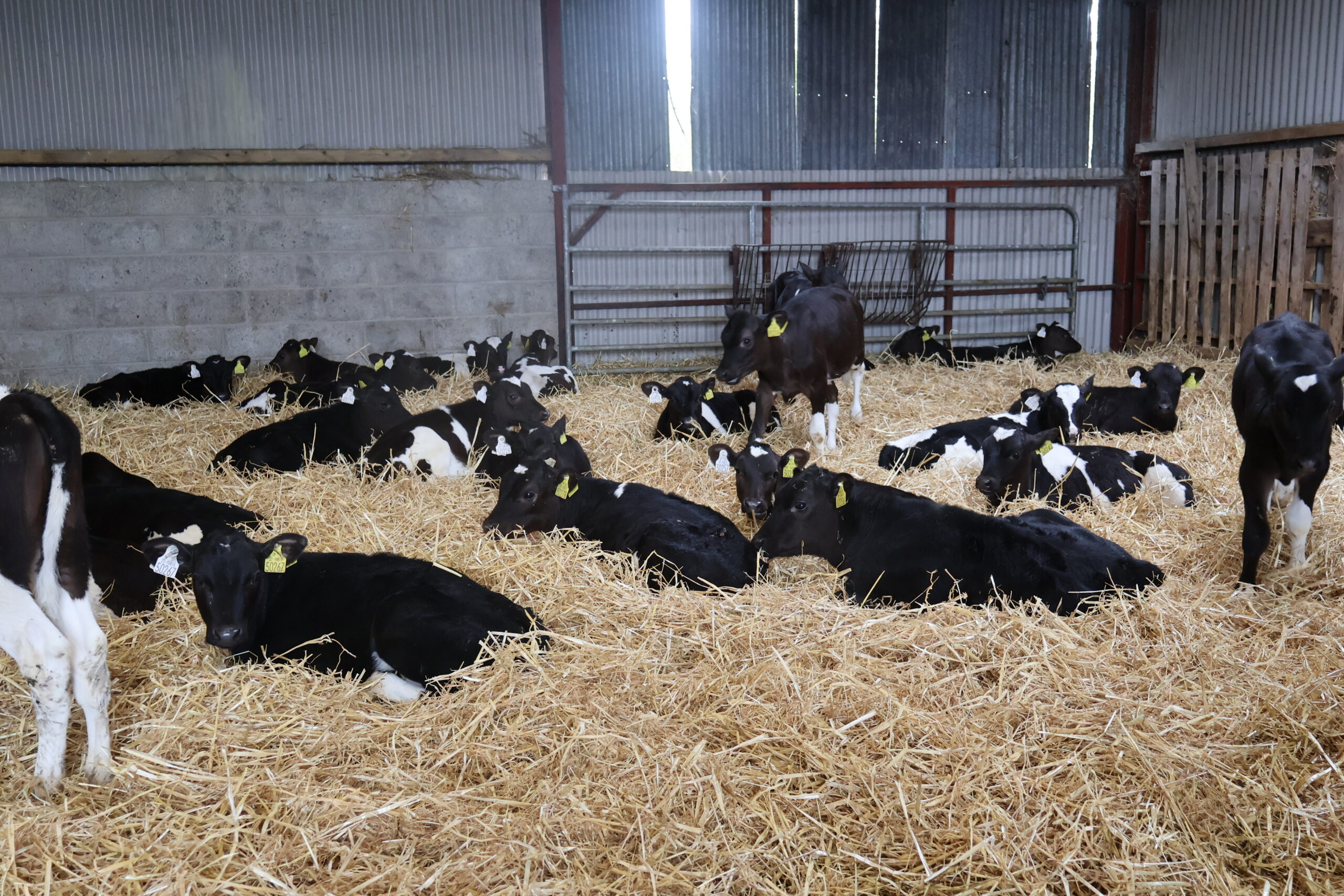
Pre Breeding Management
Brendan sees the 4 weeks in the run up to the breeding season as crucial to a successful breeding season and there are some important steps he takes before breeding commences on the 25th of April.
- He monitors whether cows are cycling or not via their Nedap collars.
- Any cows with a body condition score (BCS) of less than 3.0 before breeding are put on once a day milking for 4 weeks. This approach usually applies to 10–15 cows in the herd and helps ensure they are in good BCS at the start of the breeding period
- In mid-April any cows that haven’t cycled or had issues during calving such as hard calvings, retained placenta or milk fever are all scanned to ensure they are fit for breeding and treated where required to get them cycling.
Once breeding commences Brendan typically breeds for 11 weeks with 100% artificial insemination used on the cows.
Bull Selection Criteria
Considerable time is invested annually into bull selection to ensure alignment with herd objectives. For Brendan, bulls are picked early in February and all straws are ordered by the end of February to make sure he is able to get the right quantities of each bull in his bull team. Bulls are shortlisted based on:
- Good fat and protein kilograms and percentages
- Fertility sub‑index of at least €100
- TB PTA below 8, reflecting local TB risk
- Avoid extremes in Maintenance (bull team average ~€30)
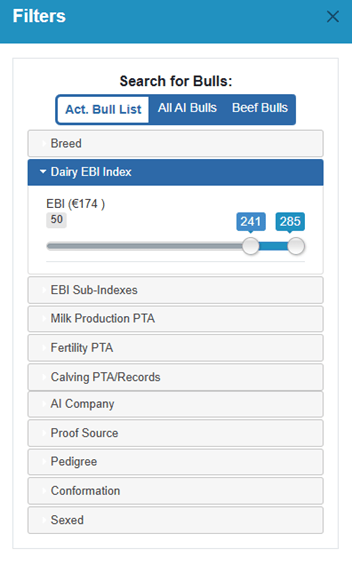
Looking ahead, greater emphasis will be placed on health traits, particularly SCC and mastitis, to enhance longevity and lifetime profitability. Brendan is also comfortable using bulls with negative milk kg where appropriate, viewing them as a useful tool to balance high-volume cows and drive overall milk solids performance. He feels there is plenty milk volume in the herd already so he isn’t afraid to use bulls up to -250kg PTA for milk Kgs.
Breeding Programme
The Sire Advice tool is used extensively to manage the breeding season and develop individual mating plans. Multiple runs are completed before the breeding plan is finalised. Each run generates reports detailing current herd EBI, the selected bull team and predicted calf performance.

AI is carried out by a technician, with twice‑daily visits at the start of breeding when sexed semen is in use, reducing to once daily thereafter.
All maiden heifers are synchronised and served to sexed semen, achieving conception rates of 64% in 2025. Angus stock bulls with high DBI and strong carcass traits are used to mop up repeats.
Sexed semen is also used within the dairy herd for cows that meet strict criteria:
- Top third of the herd for EBI
- At least 50 days calved at mating start date
- No recorded calving or health issues
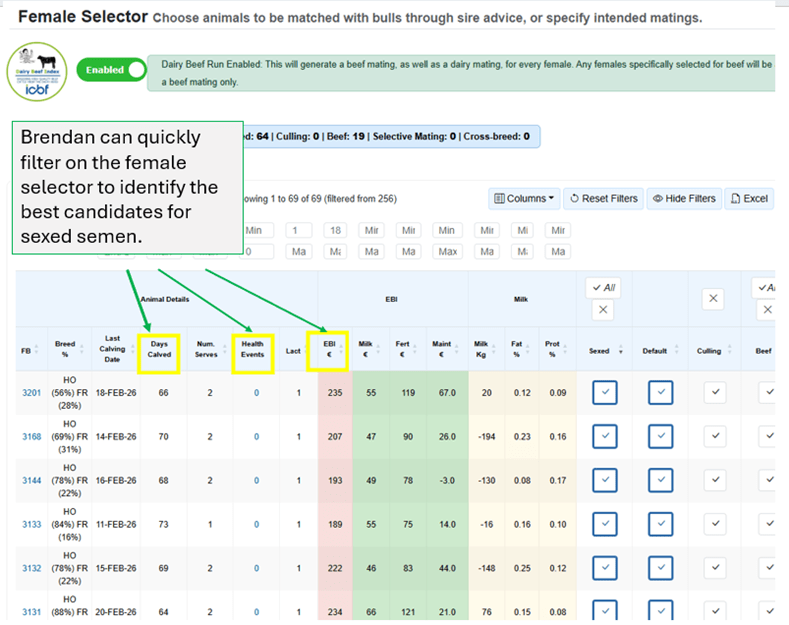
Sire Advice enables efficient identification of cows suitable for sexed semen and based on the selected bull team, matches cows to appropriate bulls while managing milk sub-index, fertility sub-index and inbreeding risk. Heat detection collars further support accurate timing of insemination, particularly when using sexed semen.
Conventional dairy semen use continues to decline, with a greater proportion of the herd bred to sexed dairy or beef AI.
Beef Breeding Strategy
Beef AI is used across the dairy herd, primarily Angus, Hereford and Belgian Blue. Bull selection prioritises high DBI, easy calving, short gestation and with minimum carcass targets of +10kg for Angus and +5kg for Hereford. Belgian Blue has been successfully used on larger, mature cows, producing high‑quality calves without increased calving difficulty.
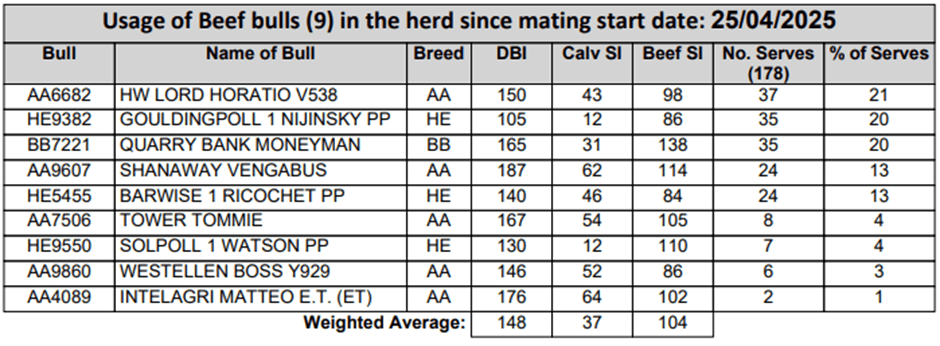
In 2025, nine beef bulls were used, averaging a DBI of €148 and a beef sub‑index of €104. Calves are sold both through farm‑to‑farm sales and via Thurles Mart.
New for 2026 – Sire Advice Now Available on the ICBF HerdPlus App
Sire Advice is now available directly through the ICBF HerdPlus App, making it easier for farmers to access the breeding tool at any time. The mobile app allows users to review herd EBI profiles, record data on their herd and examine herd performance directly from their phone or tablet, whether in the yard or at home.
The ICBF HerdPlus app is free and available in your app store
Having Sire Advice available on App supports more informed and timely breeding decisions, particularly in the lead‑up to and during the breeding season. It provides greater flexibility to review mating plans, refine bull selection and ensure breeding decisions remain closely aligned with herd breeding goals.
This enhanced access further supports the use of data‑driven breeding strategies, helping farmers to maximise genetic progress while managing fertility, milk solids and long‑term herd sustainability.
For help with running Sire Advice this breeding season, contact the HerdPlus team on 023-8820452 or email [email protected]