
The 2026 dairy calving statistics are now available through the latest Dairy HerdPlus Calving Reports, giving dairy farmers valuable insights into herd fertility performance and breeding progress. The reports analyse all dairy calvings in participating herds between 1 July 2025 and 30 June 2026 and allow farmers to benchmark their performance against national averages and top-performing herds.
The national statistics are based on data from over 13,500 dairy herds with 30 or more dairy cows. These key performance indicators (KPIs) can help identify strengths and opportunities for improvement, supporting greater profitability and sustainability on Irish dairy farms.
2026 Dairy Calving Reports Now Available
The latest Dairy HerdPlus Calving Reports provide a comprehensive assessment of herd fertility performance. Key indicators such as calving interval, six-week calving rate, heifer age at first calving and replacement breeding performance allow farmers to evaluate how their herd is performing compared with national benchmarks. These reports can be used to monitor progress over time and guide future breeding and management decisions.
Calving Interval Continues to Improve
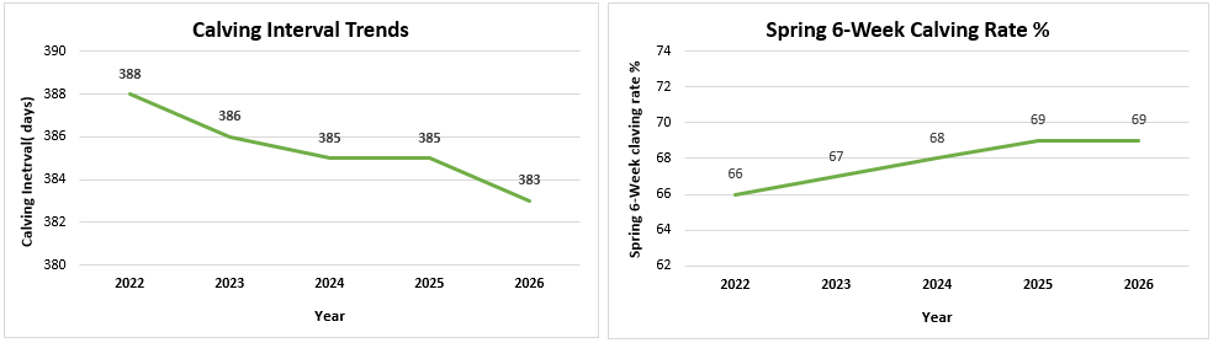
Calving interval measures the number of days between one calving and the next and remains one of the most important indicators of herd fertility. National performance has continued to improve, with the average calving interval reducing from 388 days in 2022 to 383 days in 2026. This five-day reduction reflects improved reproductive efficiency and supports more compact calving patterns, greater milk production potential and improved farm profitability.
Spring Six-Week Calving Rate Reaches 69%
Spring six-week calving rate measures the percentage of cows and heifers that calve within the first six weeks of the calving season. The national average increased steadily to 69% in 2026, indicating that more cows are calving earlier in the season. Earlier calving can increase days in milk production, improve grass utilisation and contribute to greater overall herd efficiency.
Heifer Calving Age and Cow Longevity Trends
Heifers Calving at the Optimum Age
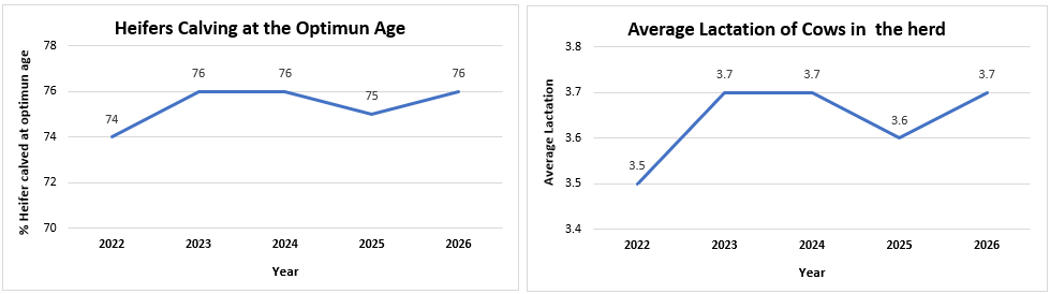
The percentage of heifers calving between 22 and 26 months of age remains an important measure of herd efficiency. Performance improved from 74% in 2022 to 76% in 2026. Achieving the optimum calving age helps maximise lifetime productivity, reduce rearing costs and improve overall herd profitability. While there remains room for improvement, the national trend continues to move in a positive direction.
Average Lactation Remains Strong
Average lactation is a key measure of cow longevity and reflects how long cows remain productive within the herd. The national average increased from 3.4 lactations in 2022 to 3.7 in 2023 and has remained stable through to 2026. This suggests that cows are remaining productive for longer, helping reduce replacement costs and supporting improved herd profitability.
More Replacements Bred to AI and Improved Sire Recording
Replacements Bred to AI Continue to Increase
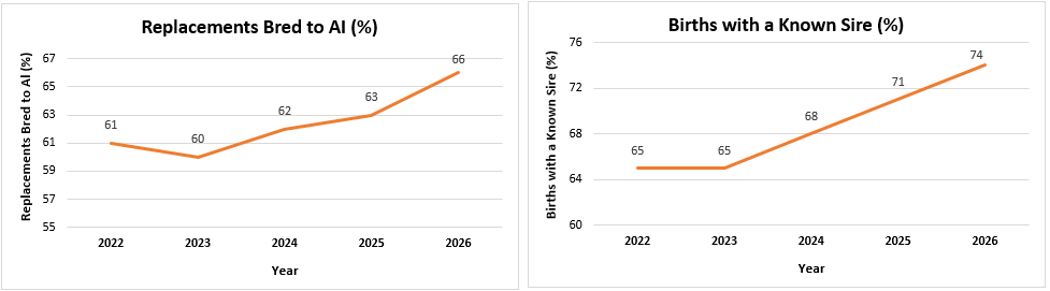
The percentage of dairy AI bred females born since 2022 is shown in Graph 5. The percentage has increased steadily and reached 66% in 2026. Greater use of AI provides farmers with access to higher genetic merit dairy sires, helping accelerate genetic gain and improve future herd performance. These sires are generally superior to the average stockbull and can contribute significantly to long-term breeding progress.
More Births Have a Known Sire
The percentage of births from dairy dams with a known sire recorded is presented in graph 6. The percentage increased to 74% in 2026. The National Genotyping Programme, which genotypes calves at birth, is also helping to increase the number of recorded sires. Accurate sire recording is critical for genetic evaluations and improves the reliability of breeding values. Better recording supports more informed breeding decisions and enhances genetic progress at both herd and national level.
Benchmarking the Best and Worst Performing Herds
The latest HerdPlus Calving Reports highlight significant variation between top-performing and bottom-performing herds. The national average calving interval stands at 383 days, compared with 362 days for the top 10% of herds and 413 days for the bottom 10%. Similarly, the national six-week calving rate averages 69%, while the top 10% of herds achieve 89%.
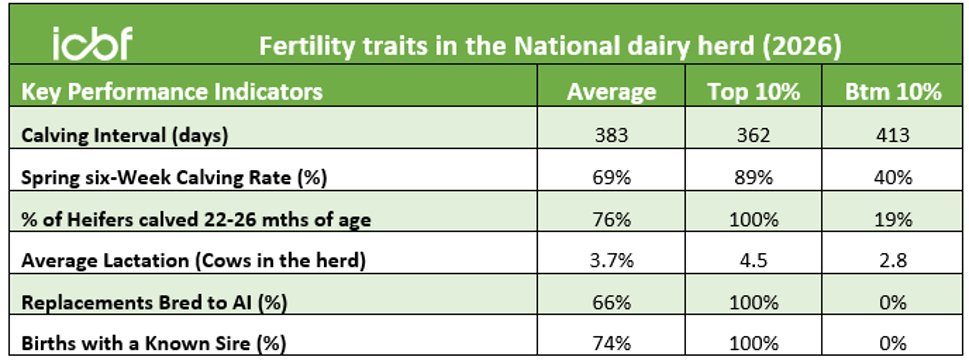
One of the most striking differences is seen in the percentage of heifers calving between 22 and 26 months of age. While the national average is 76%, the top-performing herds achieve 100%, whereas the bottom-performing herds average just 19%. These results demonstrate the substantial opportunity that exists for many herds to improve fertility performance through better breeding and herd management practices.
Summary
The 2026 dairy calving statistics provide a clear picture of continuing improvements in fertility performance across Irish dairy herds. National trends show improvements in calving interval, six-week calving rate, AI usage and sire recording, while cow longevity remains strong. Although progress is encouraging, performance still remains below some of the targets identified by Teagasc for a highly profitable dairy industry. Continued focus on breeding from high EBI bulls, particularly those with strong Fertility Sub-Indexes, will be essential to maintain progress in the years ahead.
How Does Your Herd Compare?
Farmers are encouraged to log in to HerdPlus and review their latest calving reports. These reports allow you to benchmark your herd against the national average and top-performing herds for key KPIs including calving interval, six-week calving rate, heifer age at first calving and many others. They also provide monthly calving summaries and calving survey information to help identify areas for improvement.
For a full breakdown of county and national results, view the full 2026 dairy calving statistics on the ICBF website.