
The latest Co-Op Performance Reports are now available on HerdPlus, giving dairy farmers an up-to-date overview of how their herd is performing across milk production, fertility and genetics.
The report combines milk supply data provided by participating co-ops with fertility, breeding and genetic information held by ICBF, including cow numbers, calving information and EBI data. It helps farmers monitor performance, benchmark against other suppliers within their co-op and identify areas for improvement.
Please note: Herds are compared with other herds of the same milk supply type, including Creamery, Liquid and Winter suppliers.
The Co-Op Performance Report provides an excellent snapshot of herd performance and is a valuable management tool for tracking progress over time. It is also commonly requested by financial institutions when reviewing farm loan applications, with historical reports remaining available online through HerdPlus.
The report is divided into three key areas:
- Milk Production
- Herd Fertility
- Herd Genetics
Milk Production:
The milk production section allows farmers to compare their herd’s performance against the co-op average and top-performing suppliers while tracking production trends throughout the year.
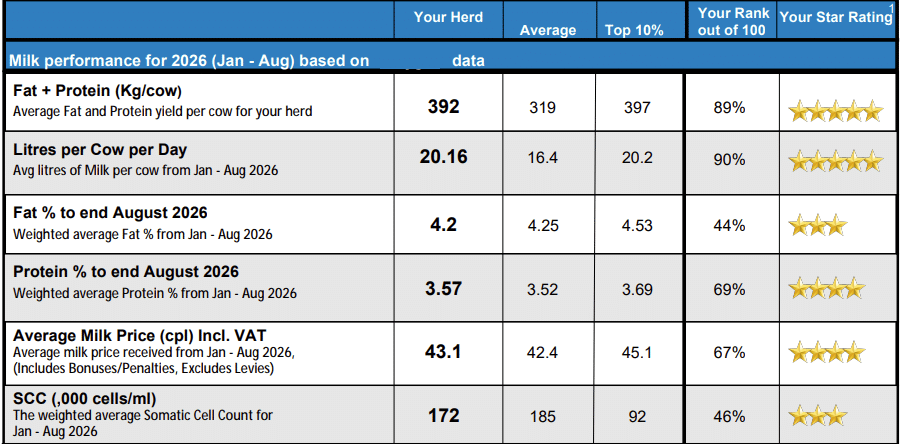
Litres per Cow per Day
This figure measures the average litres of milk supplied per cow per day and provides a useful indication of overall production efficiency within the herd.
Reviewing this KPI alongside milk solids and cow numbers can help identify opportunities to improve herd performance and profitability.
Total Cow Figure – A Key Figure to Review
Many of the production calculations within the report are based on the Total Cow Figure.
This figure is taken from ICBF stock records and includes dairy breed cows and animals recorded with a dairy purpose. To ensure the report accurately reflects your herd, it is important that records are kept up to date throughout the year.
Farmers should:
- Record dry-off dates promptly
- Mark cows for culling where appropriate
- Keep stock records up to date
Accurate recording helps ensure that production figures more closely reflect what is happening in the parlour and improves the accuracy of the report overall.
The dry-off date determines when a cow is removed from calculations, making it particularly important when reviewing litres per cow and milk solids per cow figures.
Fat and Protein %
Fat and protein percentages remain key drivers of milk value and are important indicators of milk quality performance. The report allows farmers to compare these figures against other suppliers within their co-op.
Fat + Protein (kg/cow)
Milk solids production is one of the most important measures of profitability in Irish dairy systems. This figure highlights the amount of fat and protein produced per cow and allows farmers to benchmark performance against the best-performing herds in their co-op.
Herd Fertility:
The fertility section provides an overview of reproductive performance using information from the most recent calving report.
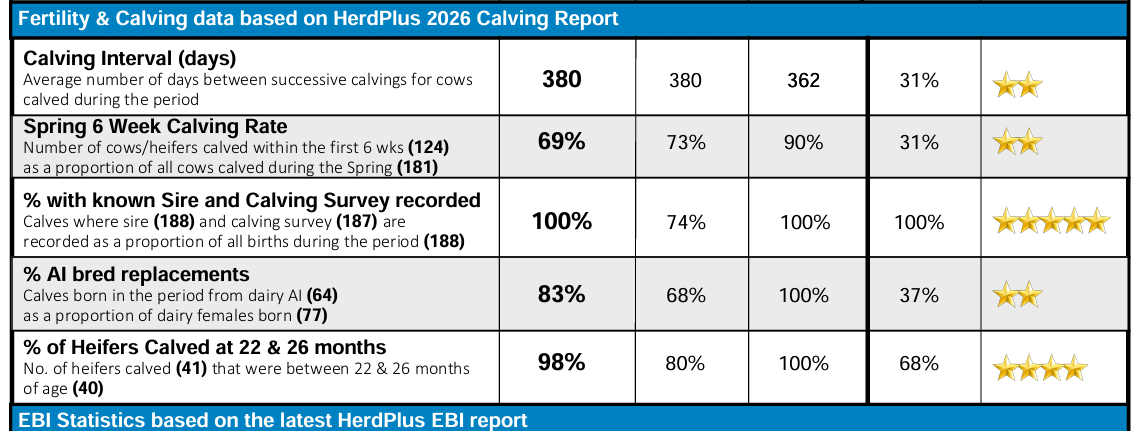
Calving Interval
Calving interval measures the average number of days between successive calvings. Maintaining a compact calving interval is important for reproductive efficiency and overall herd profitability.
Spring 6-Week Calving Rate
This KPI measures the percentage of cows and heifers that calve within the first six weeks of the calving season. A compact calving pattern helps align milk production with grass growth and supports efficient herd management.
AI-Bred Replacements
This figure represents the proportion of replacement females bred from Dairy AI sires and provides an insight into the herd’s replacement breeding strategy.
Heifers Calved at 22-26 Months
Research has consistently shown that heifers calving between 22 and 26 months of age tend to be more profitable over their lifetime than animals calving later. This KPI helps farmers monitor how effectively replacement heifers are reaching this target.
Herd Genetics:
The genetics section focuses on measuring the current genetic merit of the herd and its potential for future genetic gain.

Herd EBI
The Economic Breeding Index (EBI) estimates the profitability of the herd and compares performance against the co-op average and top-performing suppliers. Continued improvement in EBI helps drive long-term gains in profitability and efficiency.
EBI of Inseminations
This figure represents the average EBI of the bulls used within the herd during the breeding season. Using high EBI bulls can help accelerate genetic progress and improve the performance of future generations.
Benchmark Your Herd Against Other Suppliers
The Co-Op Performance Report is designed to help farmers:
- Compare performance against other suppliers.
- Monitor milk production and milk quality.
- Review fertility performance.
- Track genetic progress.
- Identify opportunities for improvement.
- Measure performance over time.
When reviewing your latest report, take a moment to check your Total Cow Figure and ensure dry-off dates and culling records are fully up to date. A few minutes spent updating records can make a significant difference to the accuracy of the report and the performance figures displayed.
The Co-Op Performance Report remains one of the most useful tools available for assessing milk production, reproductive efficiency and genetic performance, helping farmers make informed decisions and track progress year after year.
For any queries regarding your Co-Op Performance Report, please contact the HerdPlus team on 023 8820452 or email [email protected].