Inside the breeding and management decisions that help the Stones deliver strong calves, finish quality beef cattle, and protect future value.
Peter and Alice Stones began leasing 300 acres at Garbally College near Ballinasloe in Co. Galway in 2014. At the time, the farm operated as a beef and suckler enterprise. The Stones saw potential to expand into dairying and in 2015, installed a 15‑unit parlour and began producing milk.
Peter started with 80 cows and gradually built the herd up to 200 before reducing to 150 cows in recent years. Today, the farm houses approximately 450 animals in total, including dairy cows, young calves, and beef cattle.
Family Support and Labour Challenges
Although Peter did not grow up on a farm, he always had a strong connection to cattle through his father, who was a butcher. Peter worked on farms throughout his school years and always kept a few animals himself. He trained as an electrician before eventually taking the step into full‑time farming.
Family remains central to the day‑to‑day running of the business. Peter’s father is still heavily involved, and his brother is an important part of the weekly routine. Peter and Alice, who have five young children, also employ part‑time help. However, labour availability has become one of the biggest pressures on the farm. The increasing workload has been a key factor in the recent reduction in cow numbers, and securing reliable help continues to influence management decisions and future planning.
Breeding Strategy and Herd Performance
The Stones operate a spring‑calving system with a predominantly Holstein Friesian herd and a small number of Jersey crossbreds. Peter is currently breeding out the crossbreds, as he feels they do not deliver the calf value or cull cow weight he is aiming for.
The herd is producing approximately 450–460 kg of milk solids, averaging 6,000 litres per cow. While Peter initially aimed for a 500-kg solids cow, he now prefers a larger Holstein Friesian type. In his view, a bigger cow can produce more milk, deliver heavier calves and achieve a higher cull value. His ideal cow is around 600 kg and capable of producing strong, saleable calves.
This year’s calves have been particularly impressive, with Friesian sires producing big, vigorous calves. The Stones regularly use Belgian Blue, Limousin and Hereford sires, and this year added Charolais and Blonde d’Aquitaine straws for the first time. Beef sires are used on mature cows, and Peter is cautious about matching cow size to Belgian Blue straws due to calf size. Limousin and Hereford stock bulls are also used, both of which are very easy calving.
High‑performing cows consistently receive Friesian straws to maintain key traits in the herd. Peter has purchased sexed Friesian semen for the first time this year, marking a change in breeding approach.
Beef System and Calf Rearing
Beef has always been a key part of the farm’s system. Calves receive colostrum immediately after birth and stay with the cow for the first 12 hours to maximise intake. All calves are reared on a whole‑milk feeder, receiving as much milk as they want for 8–10 weeks. Milk from cows in withdrawal is also used, meaning calves benefit from additional colostrum-rich milk for several days.
Calves are put onto the feeder shortly after birth, and by three weeks of age, the best bull calves—regardless of breed—are selected and put out to grass, two calves per cow, often matched with cows that have high SCC, lameness or are not required for breeding.
These bull calves are housed at 370–420 kg and placed on a mid‑strength diet before moving to a finishing diet in late January. They are slaughtered at 17–18 months at 680–700 kg live weight. Dairy‑bred calves are also finished under 18 months with strong kill‑out figures.
CBV: A Valuable Tool in Changing Market Conditions
Peter notes that with calf prices currently very strong and demand high, some farmers may not be paying enough attention to genetic merit. However, he believes this will change. Strong trade will not last forever, and when calf prices soften, calves with better genetics will stand out.
He sees CBV (Commercial Beef Value) becoming increasingly important for differentiating calves in a more challenging market. In his view, calves with higher CBV scores will retain more value and command a premium when overall prices fall. For both dairy and beef farmers, CBV provides an additional layer of security, ensuring calves remain attractive and marketable even when conditions become less favourable.
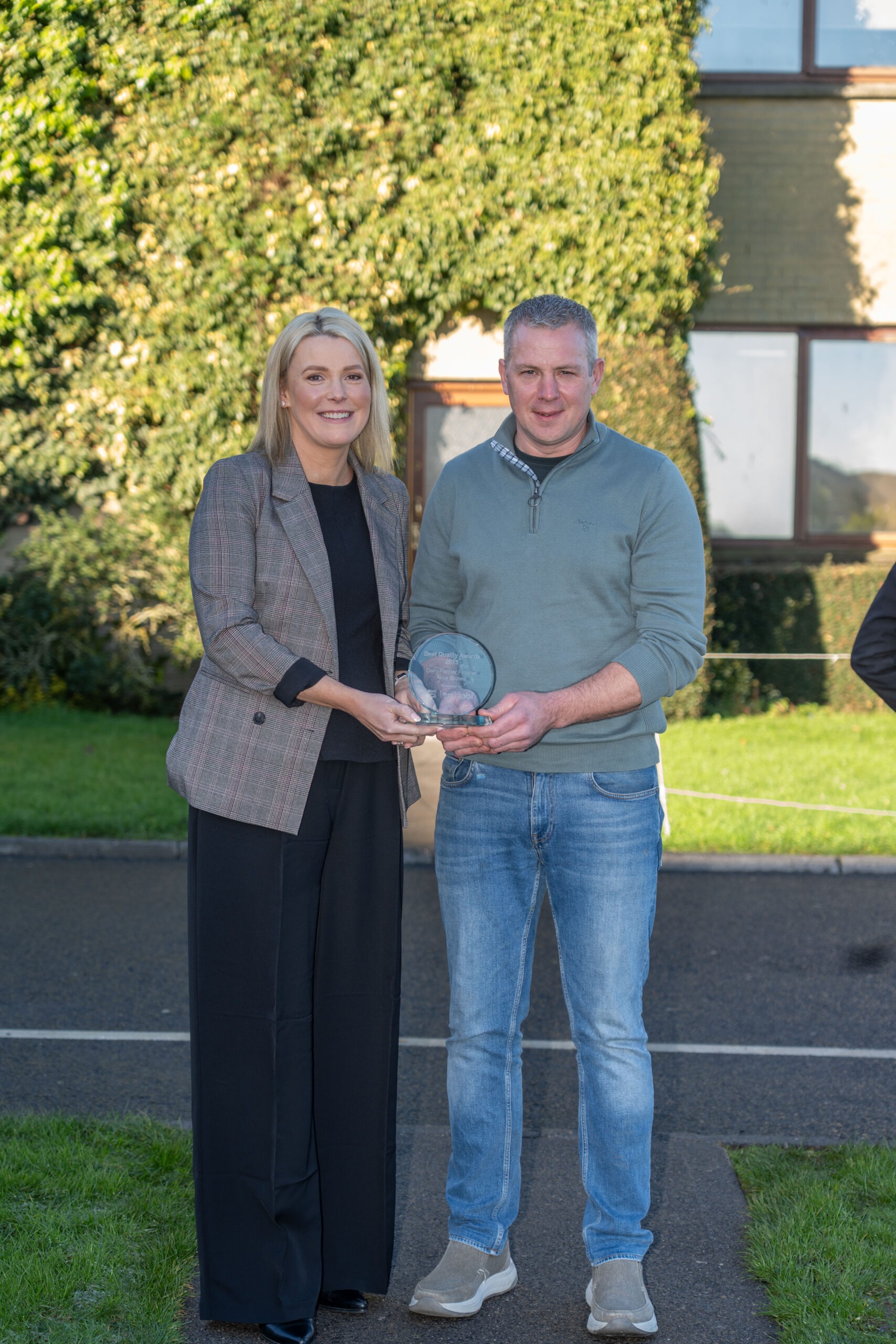
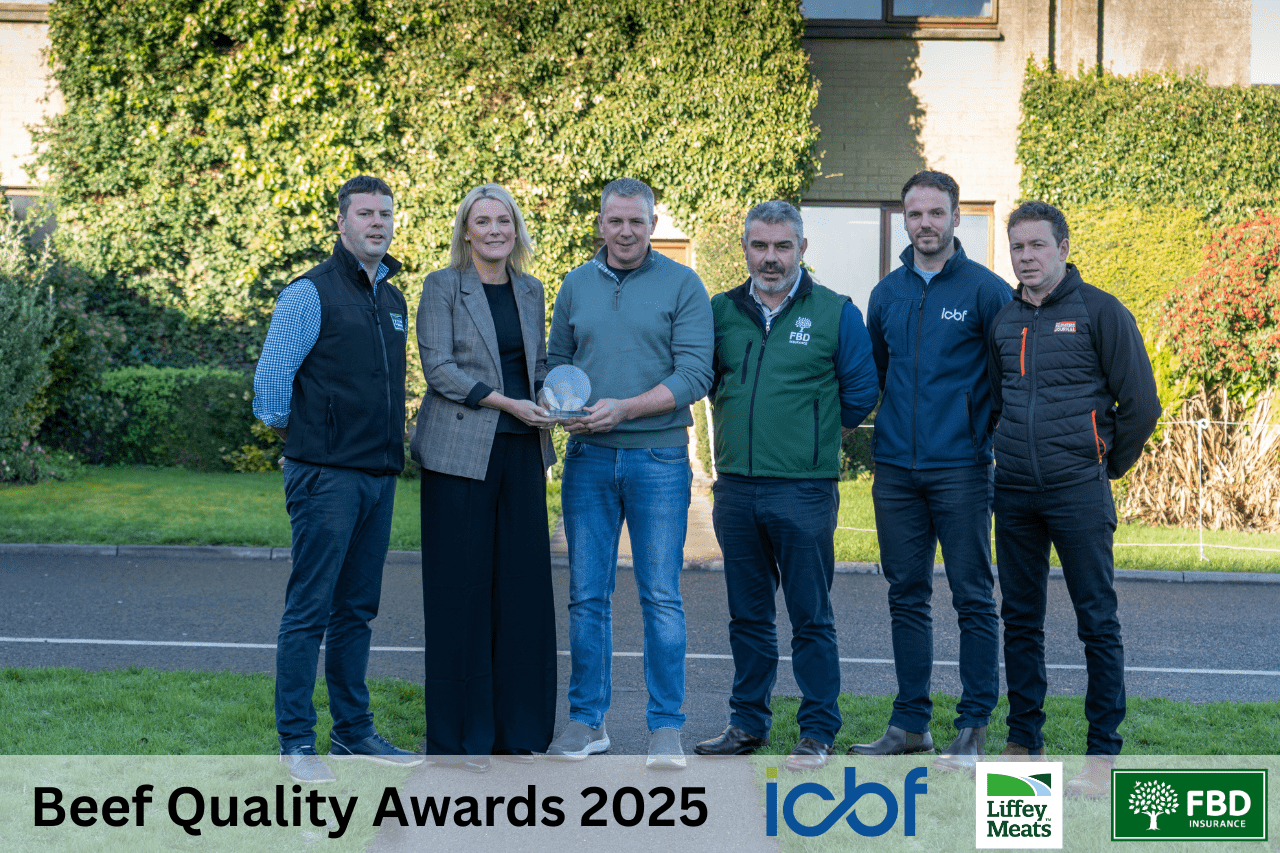
ICBF would like to congratulate Alice and Peter Stones on winning the 2025 Dairy Farmer Farmer Finisher Award for Liffey Meats.