
The ICBF Beef Awards, are proudly sponsored by FBD Insurance and ICBF alongside the main meat processors ABP, Ashbourne, Dawn, Foyle, Kepak and Liffey Meats. The awards recognise farmers who are achieving outstanding results through genetics, performance recording and efficient beef production. Meet the four ABP suppliers recognised at the 2026 ICBF Beef Awards and learn more about the systems, breeding decisions and CBV performance behind their success.
Grass Management and Genetics Drive Beef Finishing Success in Co. Laois
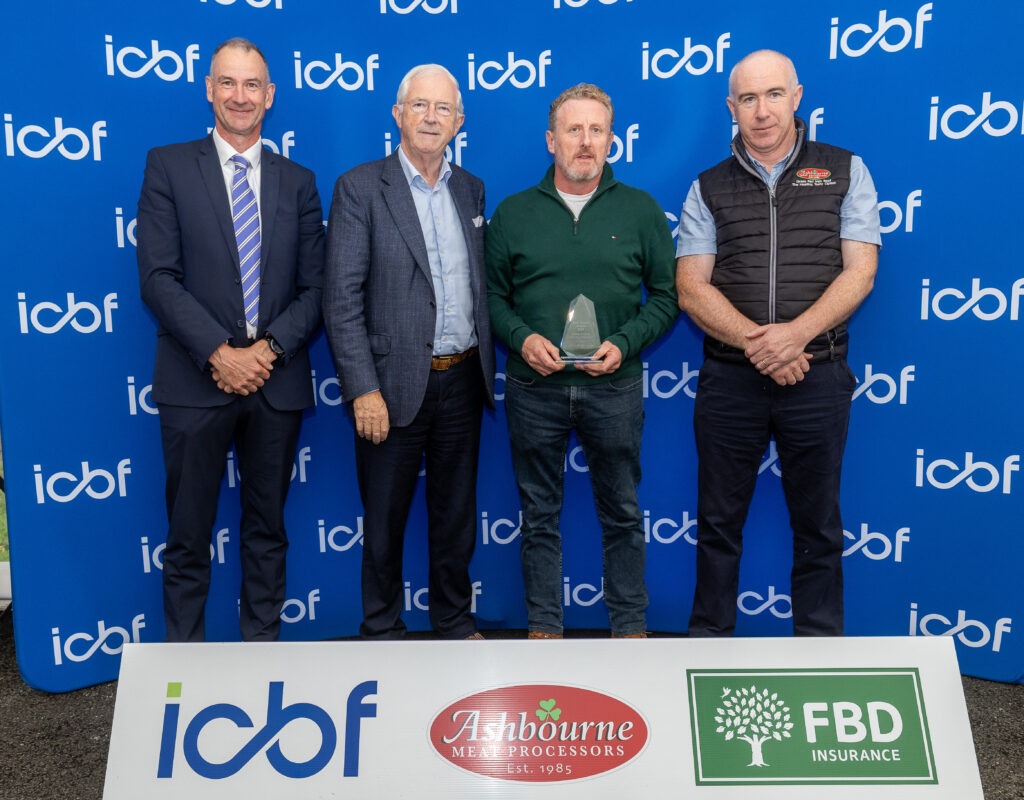
John Fitzpatrick is based outside Mountrath in Co. Laois and was selected as the Ashbourne Meats Suckler Animal Finisher at the most recent ICBF Beef Quality Awards which took place in Tully on September 8th, 2026. John commenced farming in 1996 and today farms alongside his wife Deirdre and their two daughters.
Taking over the family farm in the 1990s was a significant step, but the quality of animals finished on the farm today is clear evidence that John has successfully put his own stamp on the enterprise. John started off by bucket rearing calves on the farm, mainly Friesian bulls which provided the foundation for his farming journey.
Today, John’s beef finishing system now involves purchasing heifers, mainly as weanlings from Roscrea Mart. John typically targets animals weighing around 350kg at 8-10 months of age. His rationale behind this is that he likes to have an animal that has thrived well as a calf on their mother as it is more likely to develop into a productive and profitable finishing animal.
Reducing Stress and Maintaining Performance
Once purchased, the animals are given access to feed and straw bedding indoors while also retaining access to a field. Allowing them to have this option ultimately reduces the stress on the animals when they arrive on farm. During their first 6-8 weeks on the farm, the heifers receive 1-2kg of meal daily to maintain performance, reduce stress levels and support adaptation to their new environment. They are also vaccinated for pneumonia at this stage, reflecting John’s belief that “prevention is better than cure”.
Making Grass Work Harder
A key feature of the system is the use of compensatory growth. During winter, cattle are fed high-quality silage ad-lib with minimal concentrate supplementation, helping to control feed costs while maintaining animal performance.
Once turnout conditions allow in spring, cattle are moved to grass as early as possible. John believes that excellent grassland management is one of the most important drivers of profitability in his beef finishing system. By closely monitoring grass growth, managing covers and grazing residuals, he maximises the use of Ireland’s cheapest feed source.
As a result, many of his heifers are finished directly off grass, with only a small amount of concentrate required for some animals during the finishing period.
Commercial Beef Value (CBV) Delivering Results
When asked about the Commercial Beef Value (CBV), John admitted that it was only within the last year that he began paying close attention to individual animals’ CBV figures and how they translate into final performance. Looking at his ICBF finishing profile, he believes the figures are clearly translating into stronger performance on farm.
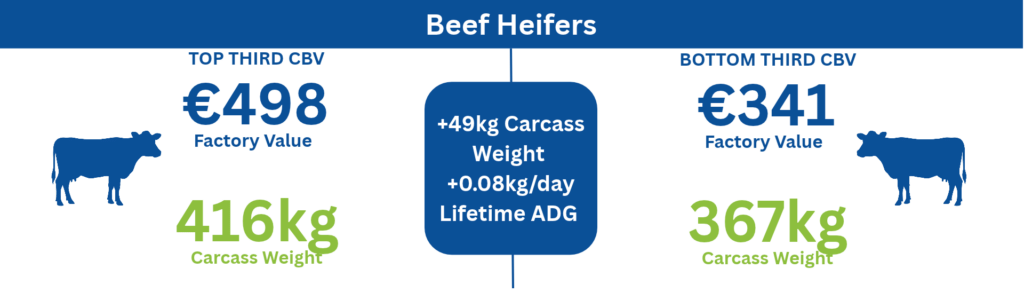
The data clearly demonstrates that higher-CBV animals within the herd deliver superior performance, achieving higher daily weight gain, heavier carcass weights and improved grading outcomes.
Commercial Beef Value figures from the herd highlight the strong performance of the cattle being selected and finished on the farm. Animals in the top third for CBV averaged an impressive €498, compared to €341 for those in the bottom third. These higher-CBV cattle also achieved stronger daily liveweight gain, averaging 0.75kg per day compared to 0.67kg per day, while producing carcasses that were 49kg heavier at slaughter (416kg versus 367kg). In addition, the higher-CBV animals achieved a U- carcass grade, compared to R+ for the lower-CBV group, demonstrating the significant impact genetics can have on finishing performance.
As a result, when stocking the sheds in the coming months John is going to pay closer attention to the CBV figures of the cattle coming through Roscrea mart, allowing him to pick the higher genetic merit animals for his system.
Improving Profitability
While genetics and grassland management drive animal performance, controlling input costs is equally important for overall profitability.
Another factor that John believes gives him a competitive advantage is his involvement in a purchasing group. He finds being involved in such a group and getting products and services like meal and farm insurance at a better rate helps make his farm enterprise more viable.
Challenges Facing Beef Farmers
When asked about current challenges facing the sector, John was quick to mention the issues surrounding weather and price volatility. Following the drought conditions experienced during the summer of 2026, John is fearful that such conditions may become the new norm. If conditions like that are to become more frequent, stocking rates across the country may decline further, which is a concern for John as he purchases all his cattle.
Price volatility is also a massive challenge facing all farmers in the current economy, with input costs soaring and the price farmers receiving for their animals constantly fluctuating, leading to uncertain times for beef farmers into the future. Furthermore, he feels that meat processors need to be more supportive of their producers and not have fluctuating prices, emphasising some processors dropping their prices surrounding unfavourable weather conditions, increasing pressure on the farmers in these situations.
Advice for other Farmers
For farmers in a similar beef finishing system, John’s take home messages are simple:
- Vaccinate cattle to reduce disease risk and protect performance.
- Focus on grassland management and maximise the utilisation of grass.
- Control input costs while maintaining animal performance.
- Select animals with strong genetic potential, particularly through the use of CBV.
By combining strong health management, excellent grass utilisation and a growing focus on genetic merit, John has developed a profitable and efficient finishing system. His success is a deserving reflection of why he was selected as the Ashbourne Meats Suckler Animal Finisher at the 2026 ICBF Beef Quality Awards, recognising the performance of his beef finishing system.