
Genotyping provides valuable information about the genetics within your herd, including major gene results that can help inform breeding and mating decisions. Through the Genomic Herd Profile on HerdPlus, farmers can view results for a range of major genes, including myostatin, polledness, lethal genes, unwanted genes and milk-related genes.
These results can help identify desirable traits, avoid certain genetic conditions and support long-term breeding objectives.
Accessing the Genomic Herd Profile
To view major gene results:
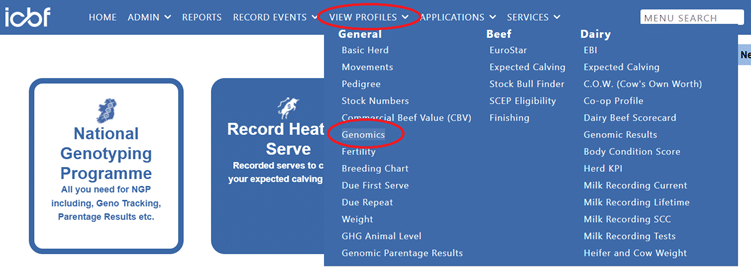
- Log in to ICBF HerdPlus.
- Select View Profiles.
- Click Genomics under the General section.
- Open the Genomic Herd Profile.
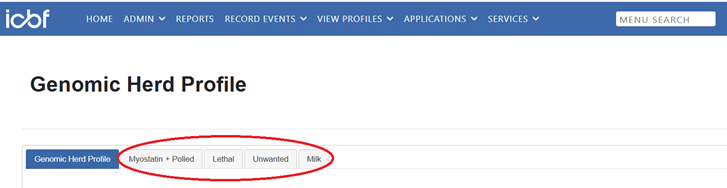
Once opened, the profile is divided into several tabs, allowing you to view different categories of major gene results across your herd.
Understanding Gene Results
Throughout the profile, major gene results are displayed as either 0, 1 or 2.
| Result | Meaning |
| 0 | No copies of the gene variant |
| 1 | One copy of the gene variant (carrier/heterozygous) |
| 2 | Two copies of the gene variant (homozygous) |
These values indicate how many copies of a particular gene variant an animal carries and can help when making breeding decisions.
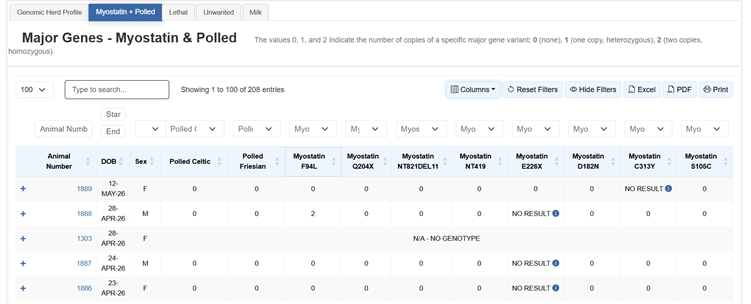
Myostatin & Polled Results
The Myostatin + Polled tab contains information on hornless genetics and muscle development traits.
Myostatin Genes:
Myostatin is a gene that regulates muscle growth. Certain variants are associated with increased muscling, improved carcass weight and enhanced carcass conformation. However, some variants may also be linked to increased calving difficulty, particularly where two copies are present.
Polled Genes:
Polled animals are naturally hornless and can pass this trait on to their offspring. The profile reports results for both Polled Celtic and Polled Friesian gene variants. Breeding for polled animals can help reduce the need for dehorning.
Polled status is also used within the national genetic evaluations. Animals with a desirable polled genotype receive a favourable economic value on the Replacement and Terminal Index. This includes:
- Genotyped homozygous polled animals (all progeny expected to be polled).
- Genotyped heterozygous polled animals (approximately half of progeny expected to be polled).
- Non-genotyped purebred Aberdeen Angus animals.
- Genotyped Aberdeen Angus animals, where the economic contribution is determined based on their reported polled status.
Having access to these results can help farmers make more informed breeding and mating decisions within both dairy and beef herds.
Lethal Gene Results
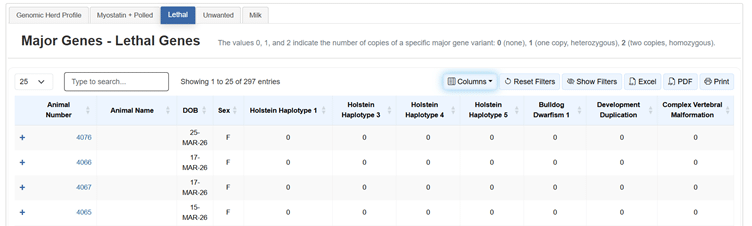
The Lethal tab highlights gene variants that may negatively impact animal viability when inherited in certain combinations.
These results can be particularly useful when planning matings, helping to reduce the risk of breeding carrier animals together.
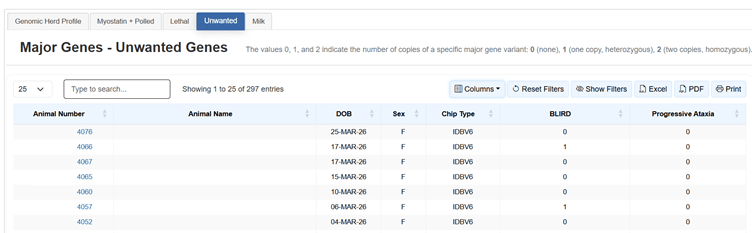
Unwanted Gene Results
The Unwanted tab displays gene variants that may have undesirable effects within a breeding programme.
Reviewing these results can help identify carriers within the herd and support breeding decisions aimed at reducing the prevalence of these conditions over time.
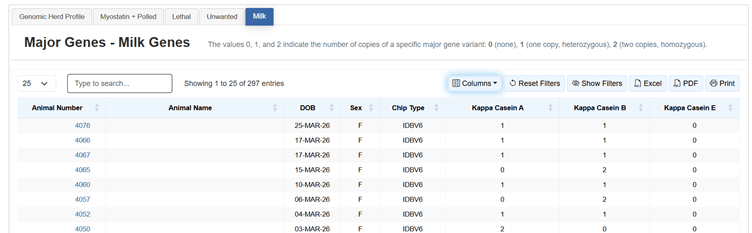
Milk Gene Results
For dairy farmers, the Milk tab provides information on milk-related genes and protein variants.
These results may be of interest to farmers supplying specific milk markets or breeding towards particular milk composition traits.
Why Are Results Missing for Some Animals?
Farmers may notice that some animals do not have major gene results available.
There are several possible reasons for this:
- The animal has not been genotyped.
- The animal was genotyped using an older chip type that does not support major gene reporting.
- The submitted sample did not meet the quality requirements for that particular major gene result.
- The animal’s genotype may have been suitable for genomic evaluations or parentage verification, but not for major gene reporting.
As a result, it is normal for some animals within a herd to have genomic evaluations available while certain major gene results are missing.
What Does “No Result” Mean?
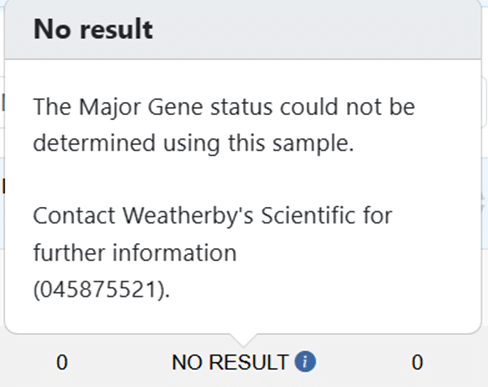
Occasionally, a major gene may display “No Result”.
This means that the major gene status could not be determined from the sample provided. It does not mean that the animal is affected by, or a carrier of, the condition in question. Rather, it indicates that a result could not be confidently reported for that specific gene.
In some cases, a genomic evaluation may still be available even when a major gene result cannot be reported.
Where further information is required, farmers can contact Weatherbys Scientific (045 875521). Additional testing may incur a charge.
Using Major Gene Results in Your Breeding Programme
Major gene results provide another layer of information when making breeding decisions. By regularly reviewing these results, farmers can identify favourable traits within the herd, avoid certain high-risk matings and make more informed decisions when selecting replacement animals.