Strong Genetics, Family Tradition and Calf Health Drive Dairy-Beef Success in Co. Monaghan
Foyle Dairy Beef Finisher Award winner John Graham discusses how strong breeding decisions, excellent calf management and a shared family passion for farming are delivering profitable dairy-beef cattle in Co. Monaghan.
John Graham from Co. Monaghan was recognised as the Foyle Dairy Beef Finisher Award winner at the ICBF Beef Awards 2026, reflecting the strong performance achieved within the family’s dairy-beef enterprise.
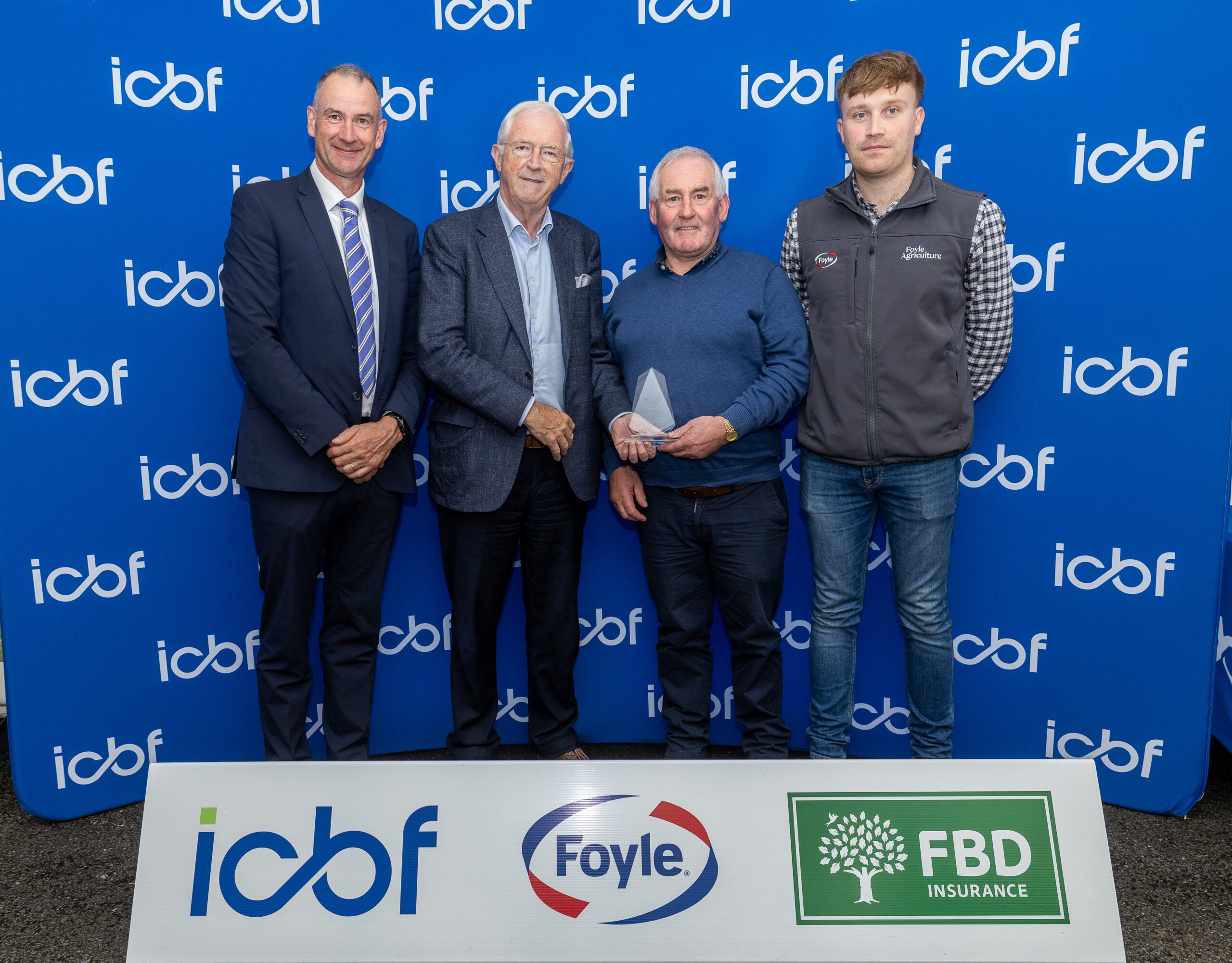
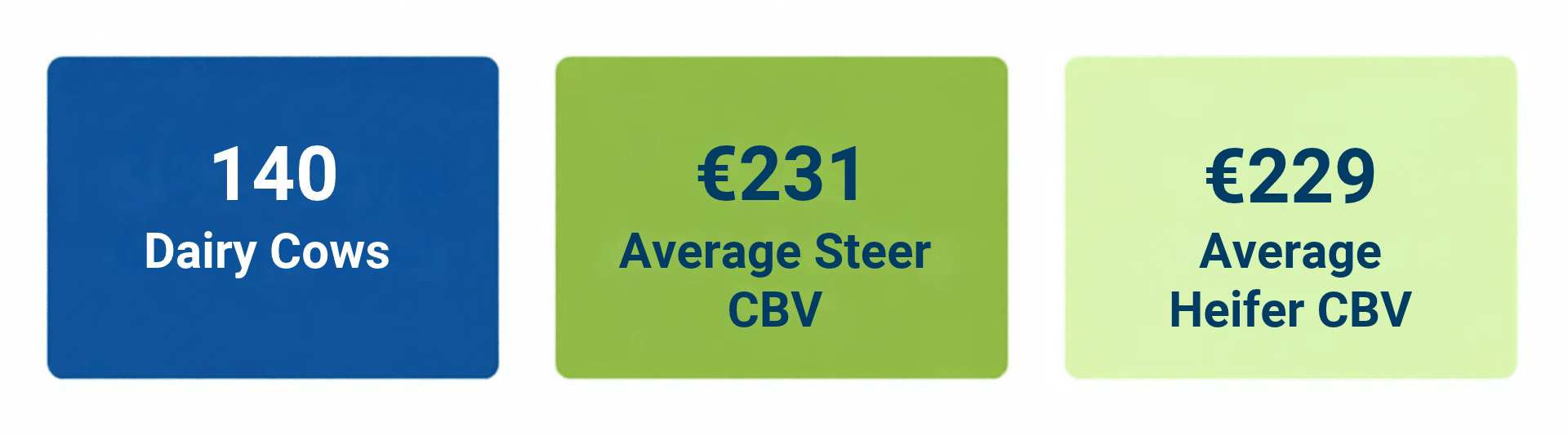
A third-generation farmer, John’s lifelong passion for livestock and breeding has helped shape the family farm into the successful operation it is today. Over the years, he has overseen significant growth on the farm, with the dairy herd expanding from 70 cows to 140 following the abolition of milk quotas. Alongside the dairy enterprise, John and his wife Gail have managed a respected suckler herd, breeding pedigree Limousin cattle under the Glasslough prefix since the 1980s.
John fondly recalls one of his homebred Glasslough bulls being selected to go to Tully when it operated as a young bull testing centre, a highlight that reflected the quality of stock being produced on the farm. Today, John farms in partnership with his son Stephen, a fourth-generation farmer who returned home after studying at Greenmount College. The family operation is a true team effort. John continues to work as an agent for Foyle, while Stephen manages the dairy herd and oversees the feeding of the dairy-beef enterprise. A relief milker also supports the demanding workload, with milking beginning at 6:30am and the day’s work often finishing around 6:00pm.
Family remains central to everything they do. Stephen has two young sons, aged five and seven, who already share the family’s passion for farming. As Stephen explains, “The lads can spot a cow from when she was a calf. They’ll say, ‘Daddy, that cow was the calf from over at Grandad’s.’ I don’t know how they do it.” Their enthusiasm suggests the Graham farming story could yet continue into a fifth generation.
Developing a Dairy-Beef Enterprise
Historically, John sold calves and purchased store cattle, retaining only the dairy heifers required as replacements. However, when Stephen returned from Greenmount, he encouraged the family to take a different approach. Rather than selling the calves born on the farm, the family began keeping them and bringing them through to finishing. A successful dairy-beef system now operates alongside the dairy and suckler enterprises, with a clear focus on producing quality cattle from birth through to slaughter.
Breeding from a Strong Dairy Herd
The foundation of the dairy-beef enterprise is the family’s pedigree Holstein-Friesian herd, managed under the Griggy prefix. The herd is made up of of approximately 75% Holstein and 25% Friesian genetics. A combination of artificial insemination (AI) and homebred Glasslough Limousin stock bulls is used throughout the breeding programme. Sexed semen is used to generate replacement dairy heifers, while beef sires are selected to maximise the value and finishing potential of the resulting dairy-beef progeny.
The introduction of the Smaxtec monitoring system last year has further supported reproductive performance and helped increase the effectiveness of the farm’s sexed semen programme.
When selecting sires for dairy replacements, milk production and milk solids remain the main priorities. Replacement heifers are typically calved between 24 and 26 months of age, helping to maximise productivity within the dairy herd. Stephen is not overly concerned with higher calving difficulty figures. “We’ve used bulls with up to 15% calving difficulty on heifers before with them needing little to no assistance,” Stephen explains. Good body condition management and careful observation around calving help ensure cows come through the period successfully.
Selecting Beef Sires for Finishing Performance
When selecting beef sires, Stephen places significant emphasis on carcase weight, a trait that carries considerable weighting within the Dairy Beef Index (DBI).
The DBI helps dairy farmers identify beef sires capable of producing calves with strong finishing potential. The commercial value of those breeding decisions is subsequently reflected through the Commercial Beef Value (CBV) of the progeny.
Dairy-beef steers in within the Graham herd recorded an average CBV of €231, while dairy-beef heifers averaged €229. Both were €81 ahead of their respective national averages, highlighting the strong genetic merit of cattle being produced on the farm.
Using CBV to Support Cattle Selection
As an agent for Foyle, John occasionally purchases a small number of cattle to finish alongside those bred on the farm. When asked what catches his eye when selecting stock, his answer is straightforward: “Shape, style and size for age.”
Purchased stores are generally around 18 months of age and are typically retained for less than a year before finishing. Although CBV has not historically been a major factor in John’s purchasing decisions, he believes it will become increasingly relevant. “I will be looking at it now,” he says, acknowledging the growing importance of genetic information when identifying animals with strong finishing and profit potential.
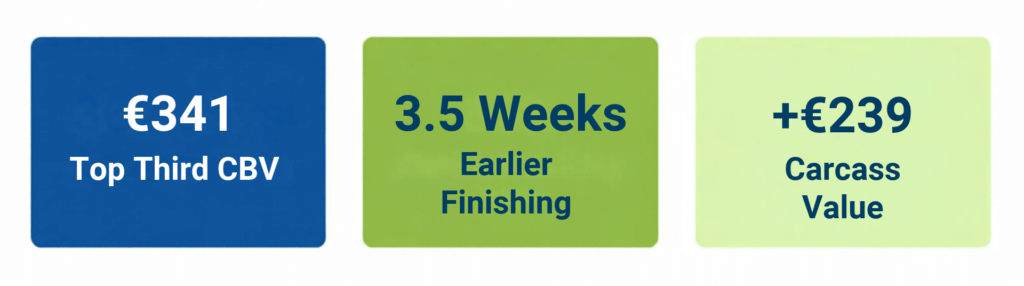
The value of higher CBV cattle can be clearly seen in the farm’s finishing performance. Steers in the top CBV third generated €348 more in factory value than those in the bottom third and produced carcasses that were 40kg heavier, averaging 376kg compared with 336kg. They also returned an additional €0.50 per day over their lifetime, achieving €3.56 per day compared with €3.06 per day for the lower CBV group.
A similar trend was evident among the heifers. Heifers in the top third of CBV delivered €235 more in factory value and produced carcasses that were 35kg heavier than those in the bottom third.
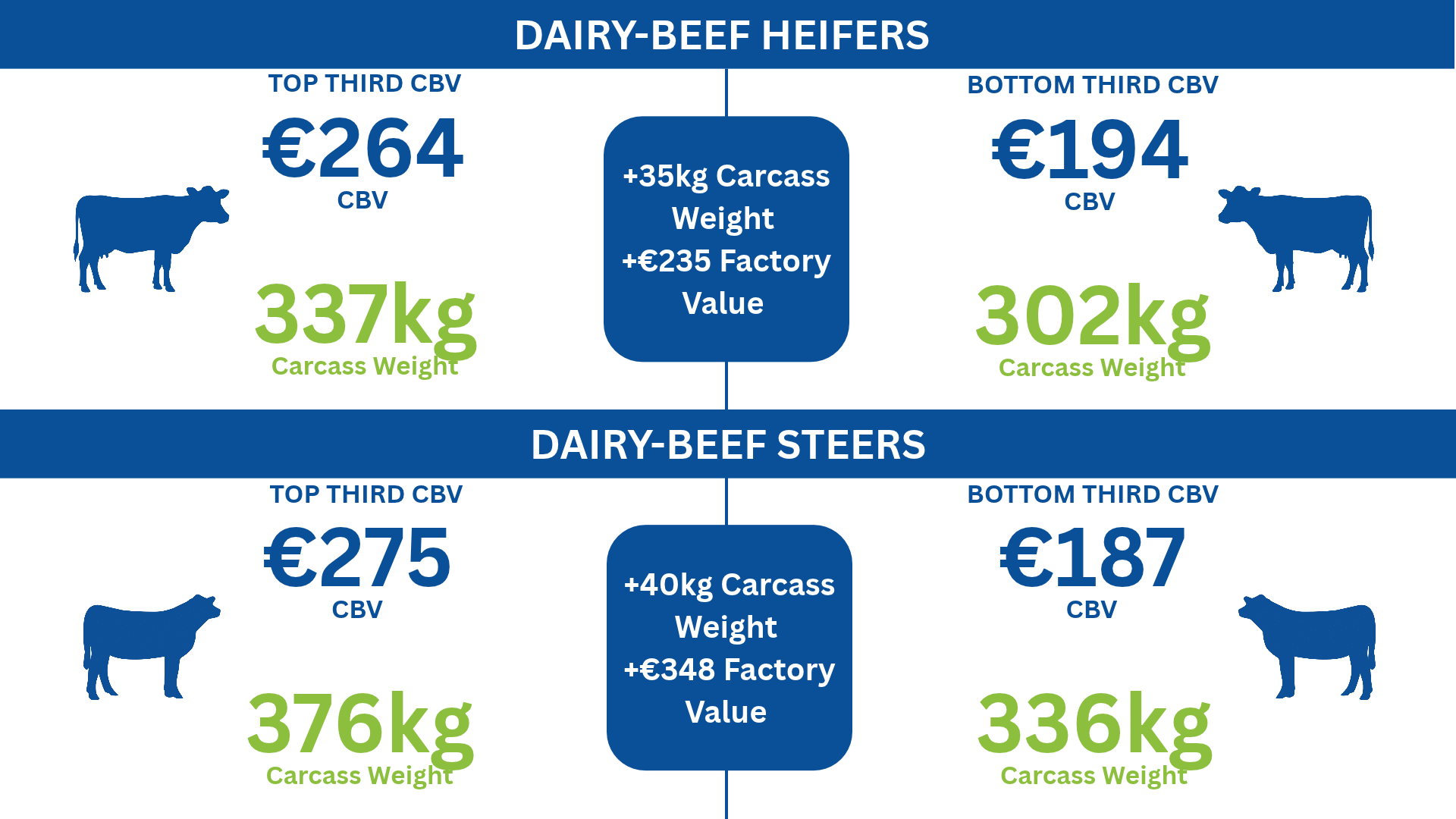
These results demonstrate how stronger genetics can translate into heavier carcasses, increased factory returns and improved lifetime profitability.
Calf Health as the Foundation of Performance
A straightforward but effective herd health plan is followed across both farms, with routine vaccinations forming the foundation of disease prevention.
John and Stephen place particular importance on calf health, believing that the first six months of an animal’s life have a lasting impact on subsequent growth and finishing performance.
“We can often spot an animal that had a chill or illness as a calf when it becomes a mature animal,” Stephen explains. As a result, calf management and preventative health measures receive significant attention from day one.
A Grass-Based Feeding System
The feeding system is designed to achieve steady growth while making maximum use of grass.
Calves are reared on milk replacer before being turned out to grass for their first summer. During their first winter, cattle receive approximately 2kg of meal per head each day.
Animals are generally moved to John’s herd in early spring as they approach one year of age. Weather permitting, they are turned out to grass around the middle of March, with no concentrate supplementation provided while grazing.
The finishing system then varies according to animal type. Bulls are typically housed in August and intensively finished for slaughter around Christmas time. Heifers remain at grass later into the autumn before housing. They initially receive approximately 1kg of meal per day, with concentrate levels gradually increased throughout the winter. As finishing approaches, heifers receive between 8kg and 10kg per day before being finished in April or May.
Managing Performance in a Changing Industry
Stephen participates in the CSP Dairy Beef Welfare Scheme and NGP, while both herds are also participating in the Dairy Beef Weighing Scheme. These programmes provide valuable weight, parentage and performance information that helps support breeding and management decisions across the enterprise.
Like many farmers, John and Stephen are also navigating volatile markets and rising costs. “It’s been a lean year for milk and beef,” John notes. The family is alsoaccustomed to long winters, with Stephen explaining that “A seven-month winter is normal for us. We’re not afraid to open the pit in August and stay feeding,”
This year, feed management has been particularly important due to dry weather conditions and the resulting high milk urea levels. As a result, careful planning around forage quality and supplementation has been essential to maintain herd performance.
Despite these challenges, the biggest concern remains the uncertainty around returns on investment. As John puts it, “There’s no guarantee. There’s always risk.”
Experience, Health and Quality Stock
When asked what advice the family would give to someone hoping to establish a successful dairy-beef enterprise, John returns to the importance of early-life management, “The first six months of a calf’s life are vitally important. Health is everything, and quality stock is paramount.”
John also recognises that the partnership he and Stephen have in place provides an excellent foundation for shared responsibility and learning.
For the Graham family, success begins long before cattle enter the finishing shed. Strong breeding decisions, careful calf management, excellent herd health and steady performance from an early age are all essential to producing profitable dairy-beef cattle.
When asked about future plans, John paused briefly before replying with a grin: “Keep at it. I absolutely love what I do.”
That passion, combined with generations of farming experience, strong genetics and a willingness to embrace new technology, helped John Graham earn recognition as the 2026 Foyle Dairy Beef Finisher Award winner. With another generation already growing up around the farm, the Graham family enterprise appears well positioned for the future.