
From focused breeding strategies to a robust herd health plan, Longford farmer Brian Jordan shares how genetics, good herd management and the right mindset are shaping a resilient and efficient herd for the future.
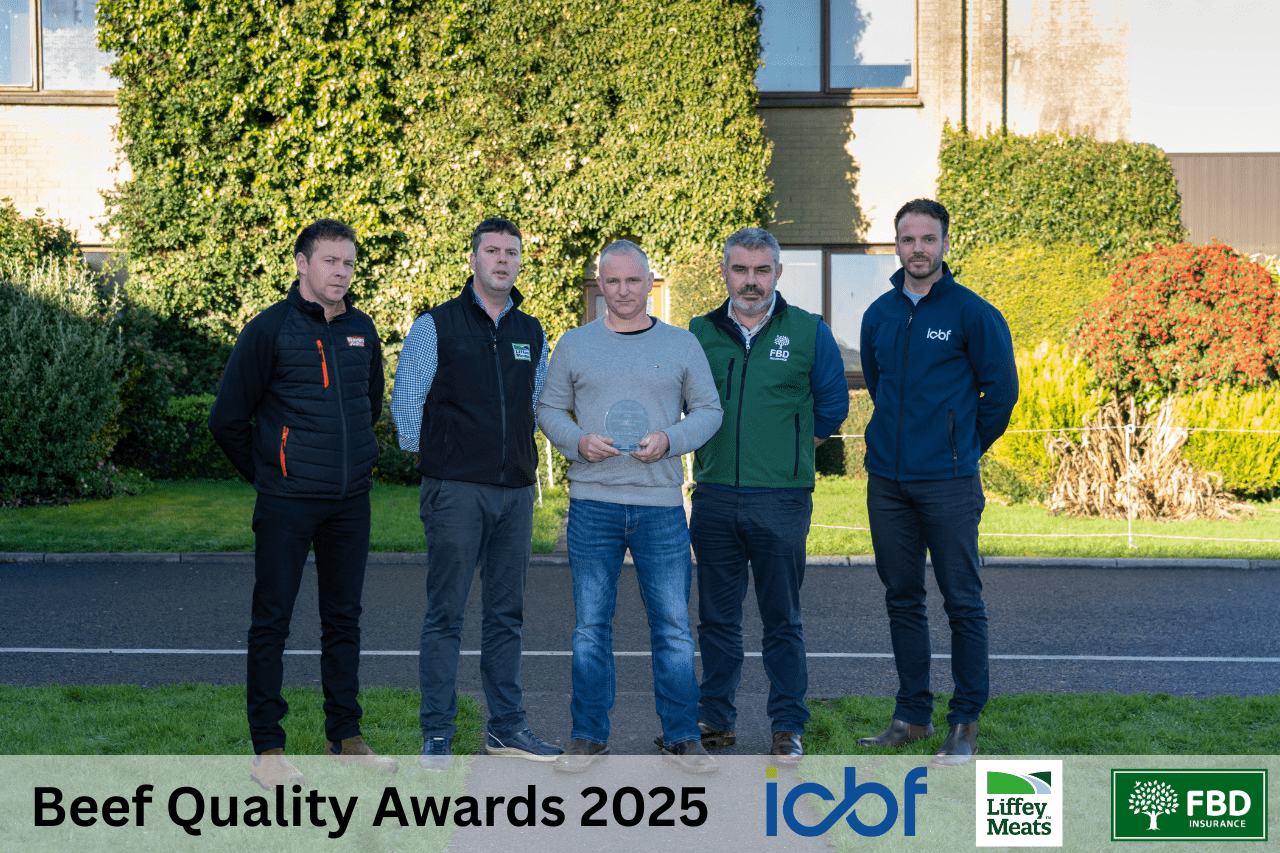
Brian Jordan is a Suckler farmer managing the Castle Forbes Estate in Co. Longford. Brian’s interest in farming stems from growing up on a farm where his father kept pedigree Limousin and Charolais cattle. Brian would have farmed with his father before taking on his role in Castle Forbes.
Brian’s primary enterprise is suckler to beef, finishing animals as cows, heifers and young bulls. He also has some tillage land which helps with self-sufficiency on the farm, growing barley, wheat and beans.
Cows on the estate are currently fed a diet of pit silage mixed with hay and pre‑calving minerals. Weanlings are fed silage along with home‑grown straw and barley, with the mix topped up using soya and minerals. Finishing cattle are offered a mixed ration of home‑grown straw, barley, and silage, supplemented with some purchased maize and soya. All diets are fed as total mixed rations (TMR) using a diet feeder.
Brian’s cows are predominantly Limousin bred, with some Belgian Blue and Charolais crosses present within the herd. Two Charolais stock bulls are currently used on the farm. Any cows with Belgian Blue or a higher proportion of Charolais breeding are crossed using a Limousin AI bull. The majority of heifers are also served to a Limousin AI.
Brian recently started paying more attention to Commercial Beef Value (CBV). He has been using the EuroStar Index for a long time as part of the SCEP scheme, with CBV now becoming more of a factor in his breeding decisions. Bulls are picked mainly on a visual basis first. Most of the bulls selected are terminal sires, while a certain number of Limousin AI bulls are chosen to breed replacement heifers suitable for the scheme. Once the bulls are visually right, he then takes the EuroStar Index into account before making his final decision.
One of the challenges at the moment on the Castle Forbes Estate is sourcing suitable replacements. Even though Brian has always been well above his SCEP requirements, he still has to buy in some replacements each year to maintain herd numbers. He is finding it increasingly difficult to source heifers, and with rising prices, it is becoming even more expensive to do so. The two Charolais bulls Brian has within the herd are not producing enough suitable replacements to keep stock numbers at the desired level.
Brian has a strong herd health plan and a comprehensive vaccination protocol, covering everything from leptospirosis and BVD to cryptosporidium and IBR in calves.
Brian is the chairperson of his local purchasing group in Longford, which consists of over ninety-five farmers. He finds the group invaluable for securing better deals and for helping build strong communications among members.
Over the last 12 months, beef prices have been strong, making finishing cattle more enjoyable than ever for Brian. However, the overhanging worry of the Mercosur deal going through has not been far from his mind. “Mercosur is a worry, it is tempting to invest in animals at the moment, but farmers are still very wary of what the future will hold for beef farming with this looming ahead of us. “
The future of the Castle Forbes Estate herd will not look very different from how it appears today. Brian does not plan on increasing numbers massively; he hopes to raise them slightly, but not to the extent that any changes to farm infrastructure would be required. The farm is aiming to become more self-sufficient over the coming years with regard to feeding. Brian would like to grow more forage to reduce the amount of feed that needs to be bought in. Overall, Brian stated that there are “no major changes in the pipeline.” His breeding strategy and herd health plan seem to be working well for him, so he is going to stick with them.
As far as Brian’s current reflections on the beef industry “everything is reasonably good. For anyone breeding, prices are still strong, and with costs and inputs rising over the last few years, the improvement in prices was badly needed. There has been a recent slip of over 50–60c, and if that had happened a few years ago, it would have caused chaos but because prices are coming from such a high level, it hasn’t created major problems.” Brian believes maintaining last year’s prices is essential for farmers to invest in their farms.
Brian recommends prioritising herd health, especially vaccination, he says that “it has greatly reduced antibiotic use” in his own herd. Having clear goals and a focused mindset when it comes to the running and procedures on the Castle Forbes Estate has been the key driver in helping Brian get to where he is today. By leaning into the EuroStar Index and CBV, he has made excellent breeding decisions that have allowed his herd to excel.
ICBF would like to congratulate Brian on achieving the 2025 Suckler Farmer Finisher Award for Liffey Meats.