
A focus on the fundamentals is driving performance in this dairy‑beef system
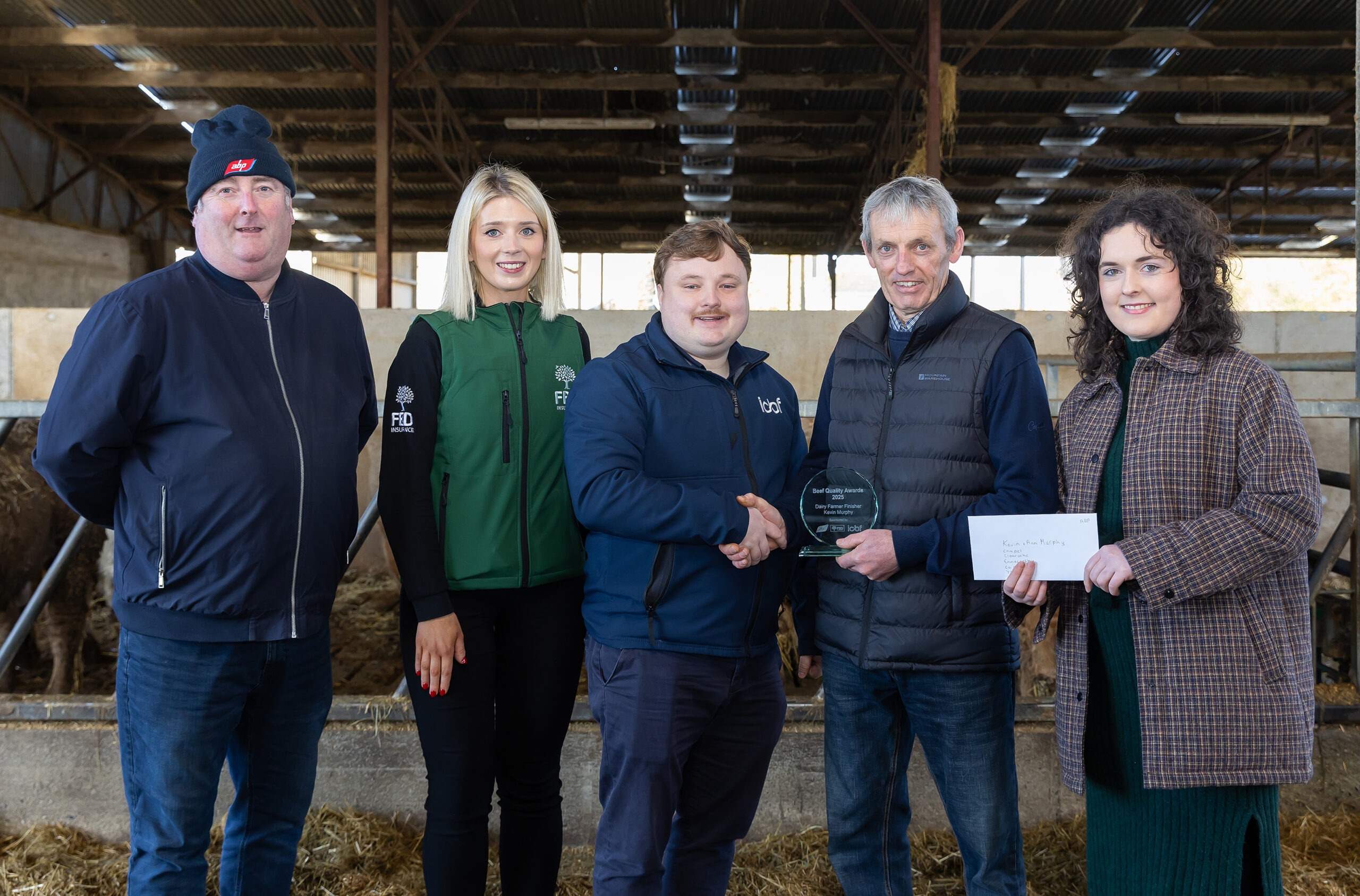
Kevin Murphy farms outside Enniscorthy, Co. Wexford, where he runs a spring‑calving dairy herd alongside a fully integrated dairy calf‑to‑beef system. Farming the family holding with his wife Ann and their five children, Kevin represents the third generation on the farm and has been managing the business since the 1980s.
Growing up on a mixed enterprise, Kevin was well exposed to livestock farming from an early age.
“There was a bit of everything on the farm – dairy, beef, sheep, tillage and pigs,” he recalls. “It was always busy.”
Today, Kevin milks 112 Holstein‑Friesian cows in a grass‑based spring calving system. Maintaining this herd size is a deliberate decision, allowing him to dedicate time and resources to the calf‑to‑beef enterprise, which plays a key role in the overall profitability and balance of the farm.
“There is money in it,” Kevin explains. “And it keeps things moving at a time of year when the dairy cows are dry.”
Calf‑to‑Beef: From Birth to Slaughter
The calf‑to‑beef system is built entirely around calves bred from the dairy herd. With the exception of some later‑born April calves in certain years, all progeny are reared through to slaughter, with a target finishing age of 24 months.
Strong calf demand remains an important consideration. At the time of this interview, continental‑sired dairy‑beef calves were averaging over €450, reflecting the genetic merit and demand for quality animals.
A comprehensive herd health programme underpins performance across the system. Calves receive IBR and pneumonia live vaccines, followed by intranasal vaccines at one week of age. A booster is given in October prior to housing, with a further vaccination administered at 18 months ahead of second winter housing.
Cows are vaccinated annually for Leptospirosis and IBR, with Blue Tongue vaccination also incorporated for all stock remaining on the farm over the summer.
Grass-Based, Low Concentrate System
Grass is central to the production system. Kevin aims to have the dairy herd turnout in February, weather permitting, followed by replacement heifers. Beef stock are typically turned out in March.
At housing, finishing cattle are brought indoors first in October or November, followed by weanlings. All beef cattle are housed in slatted accommodation with rubber slat mats.
Meal supplementation is kept low, typically 1–2kg per day at housing depending on silage quality, with the system remaining predominantly forage‑based.
Breeding with the End Goal in Mind
Breeding decisions are made with a clear focus on both dairy efficiency and beef performance. Kevin targets 20 replacement heifers annually and began using sexed semen three years ago.
“It has made a big difference,” he says. “There are fewer dairy‑bred animals being carried through the beef system.”
Roughly 30 sexed dairy straws are used annually, mainly on heifers and a select group of top‑performing cows. All remaining cows are inseminated with continental beef sires, with Charolais and Belgian Blue used extensively, alongside some Simmental.
When selecting terminal sires, Kevin places particular emphasis on carcass traits within the Terminal Index, while ensuring calving ease is not compromised.
“As a dairy farmer, calving ease is non‑negotiable,” he explains. “But balancing that with strong carcass performance is what really sets the cattle up.”
All breeding decisions are made in consultation with Kevin’s brother, who works with Progressive Genetics.
Recognition for Consistent Performance
Kevin admits he was taken by surprise when informed he had won this Beef Quality Award.
“In all honesty, I thought it was a joke,” he laughs. “You’re not thinking about awards when you’re selling cattle.”
The recognition has reinforced the importance of using the right tools when selecting sires, particularly the beef sub‑index within the Dairy Beef Index, which accounts for calving ease and gestation length, alongside carcass traits critical for beef performance.
Looking ahead, Kevin plans to continue selecting high‑carcass‑merit bulls, while also using promising younger sires where appropriate.
“When you’re using those straws, you’re hoping they’ll tick all the boxes when they get to the factory,” he says. “It’s great to see that recognised.”
Future plans on the farm include installing solar panels and further improving housing facilities, but Kevin’s overall approach remains unchanged.
“Keep it simple and focus on the basics,” he concludes – an ethos clearly delivering results.
ICBF would like to congratulate Kevin Murphy on winning the 2025 Dairy Farmer Finisher award for ABP.