
How targeted breeding, smart buying and practical management are delivering consistent performance in Co. Laois
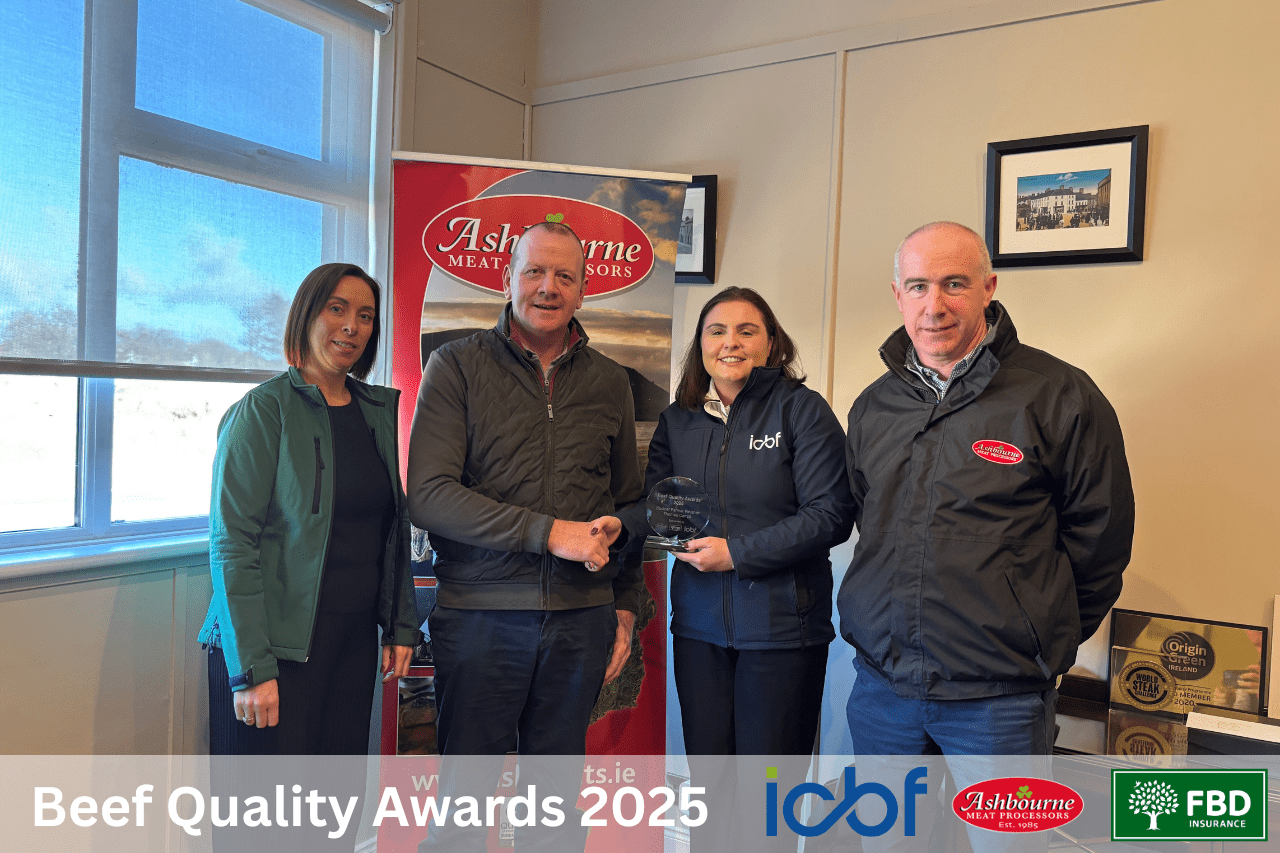
Thomas Carroll is based in Ballbrophy, Co. Laois, where he has been farming full-time since finishing college. The farm is divided into two blocks across approximately 200 acres, and was historically operated as a dairy enterprise. Around the time of milk quota abolition, Thomas transitioned to a suckler beef system—a move that has continued to evolve and strengthen in recent years.
Today, the herd consists of approximately 40 suckler cows, with Thomas also purchasing around 50 weanlings annually—both bulls and heifers—for finishing. Progeny from the suckler herd are finished on-farm, allowing him to maximise output from both purchased and homebred stock.
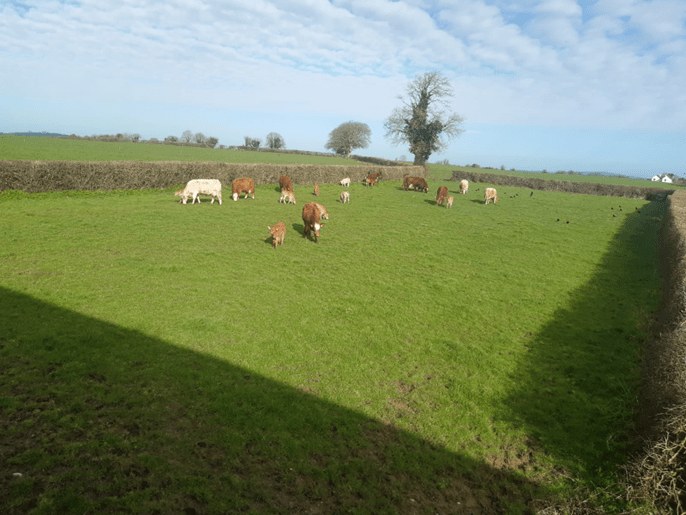
Thomas grows roughly 45 acres of barley each year with some going for malting and the remainder being kept for feeding.
Buying Policy and Breed Preferences
Weanlings are primarily sourced through Roscrea and Ballinakill marts, with a small number purchased privately each year. Thomas typically targets continental-type weanlings weighing 300–350kg, favouring Charolais, Limousin and Parthenaise genetics for his system.
“I like to buy animals with potential rather than the finished article, with the aim of feeding them into U grades,” Thomas explains.
Building a Functional Cow Herd
The suckler herd is predominantly Limousin-cross-Parthenaise. When initially building cow numbers, Thomas prioritised the use of a strong dual-purpose bull and has found Parthenaise genetics to deliver consistently positive results.
“I fell into the Parthenaise breed by accident and ended up becoming very fond of them. They really come into their own in years one and two,” he says.
The Euro-Star indices play a central role in breeding decisions.“They’re a very good yardstick. There can be huge variation between animals, so it’s important to have all the information when making decisions,” Thomas notes.
More recently, Piedmontese genetics have been introduced through the breeding heifers. Calving takes place in February and March. Heifers are synchronised and AI’d, while the main cow herd is run with two stock bulls (Parthenaise and Piedmontese). Each year Thomas goes through his heifers deciding on which ones are best to keep as replacements and finishes the rest.
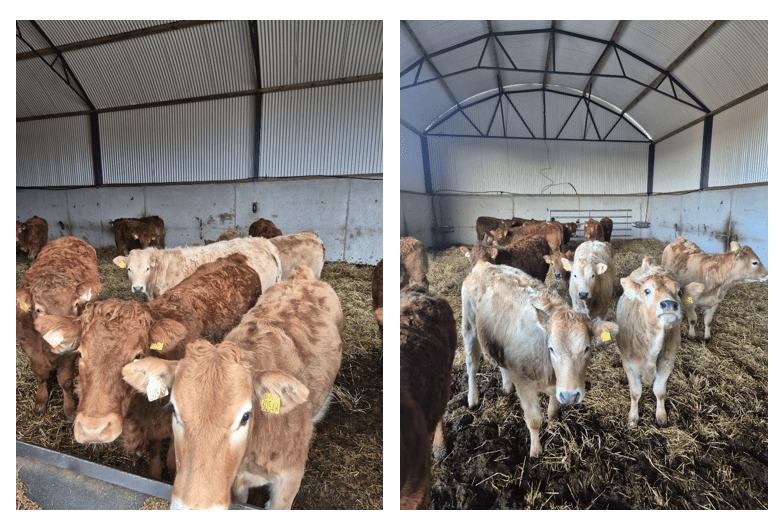
Thomas has developed a strong working relationship with a Parthenaise breeder. His previous bull that was used was more focused on replacement traits, while the current stock bull is stronger on the terminal traits. For now, Thomas intends to continue prioritising terminal performance while maintaining suitable calving ease across the herd.
Herd Health
All purchased weanlings are dosed, vaccinated and returned to grass for a month to help them settle and harden. Despite this, weather-related challenges persist.
“Even with vaccination, pneumonia has been an issue at times with bought-in weanlings this year,” he explains.
Homebred calves are dosed and vaccinated pre-weaning, with all animals treated for lice. Thomas works closely with his vet to ensure herd health protocols remain robust and responsive.
Performance and Finishing System
The herd’s Commercial Beef Values (CBVs) are particularly strong. In 2024, Thomas finished heifers that averaged a CBV of €411, while young bulls averaged €427. Bulls are generally finished between 20 and 24 months of age, while heifers are finished either off grass at the end of their second grazing season or indoors at 24–28 months of age.
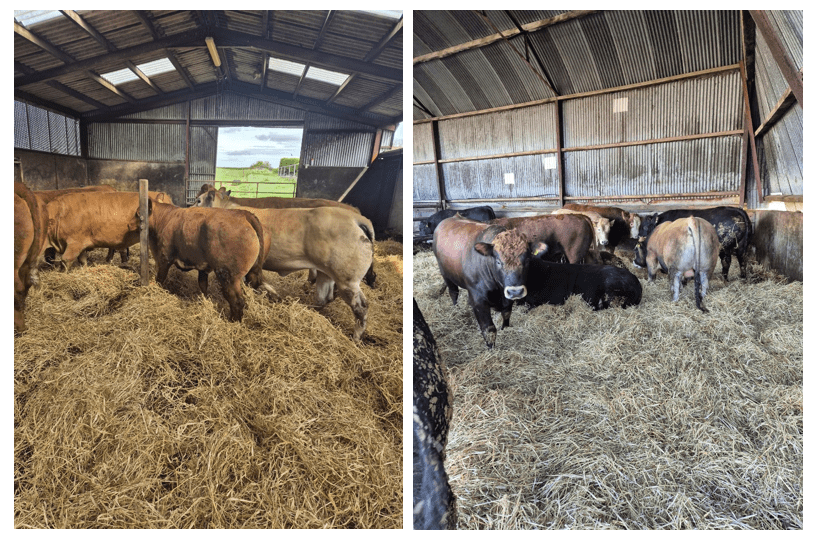
Thomas describes his feeding system as “pretty basic, but it works.”
- All young stock receive high-quality first-cut silage
- Weanlings are fed 3kg of rolled barley plus a balancer up to the New Year, tapering back to silage only from January to March before turnout
- Finishing bulls receive ad-lib meal (up to 15kg)
- Finishing heifers receive 8–10kg for the final month, with some finished entirely off grass
All stock receive the same ration, with store cattle managed similarly to weanlings.
Scheme Involvement
Thomas is a participant in the Suckler Carbon Efficiency Programme (SCEP) and the National Genotyping Programme (NGP), and is an active member of the South Laois Beef Finishers group.
Looking Forward
Looking ahead, he plans to continue improving the output of his herd with an even stronger focus on Commercial Beef Value when purchasing stock.
“I want to be producing cattle hitting U+ and E– grades to complement the animals I buy in each year,” he says. While acknowledging the current positivity in beef prices, Thomas remains realistic about market volatility. He works closely with Ashbourne Meats to consistently supply cattle that meet processor specifications.
Finally, Thomas emphasises the importance of the cow herself:
“Getting the breeding cow right is just as important as buying the right bull. Bigger isn’t always better—I’ve had big cows that didn’t produce big calves.”
With a high cow turnover, culling decisions are straightforward, allowing continuous improvement. Thomas’s goal remains clear: a moderate-sized, efficient cow with good milk producing strong-performing progeny. Commercial Beef Value will remain firmly front and centre in all future purchasing and breeding decisions.
The results speak for themselves—higher-CBV cattle on the Carroll farm are delivering greater efficiency, sustainability and, ultimately, improved profitability.
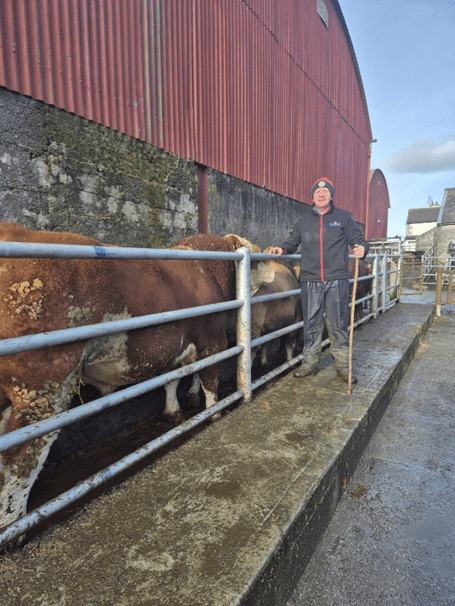
ICBF would like to congratulate Thomas on receiving the 2025 Suckler Farmer Finisher award for Ashbourne.