
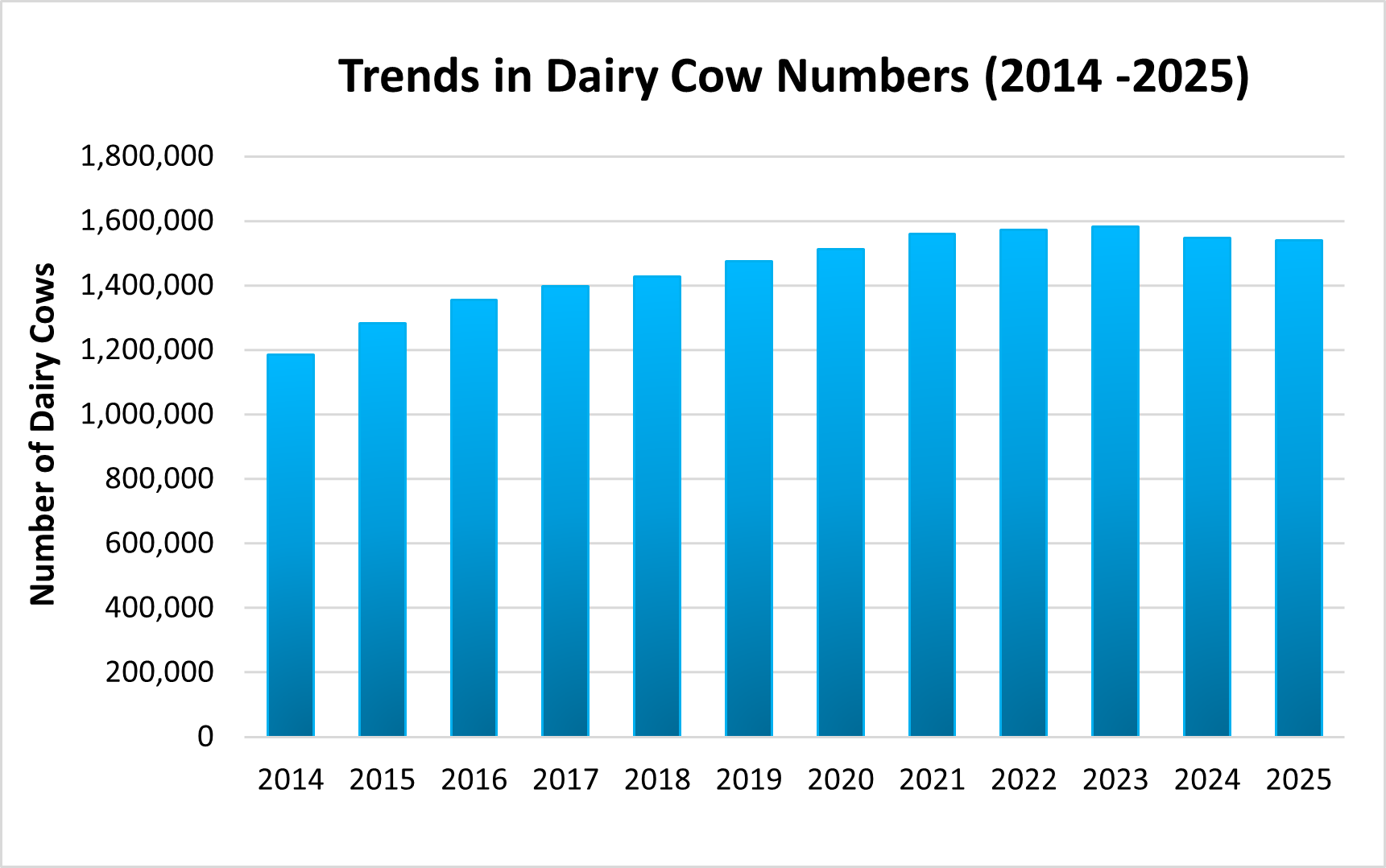
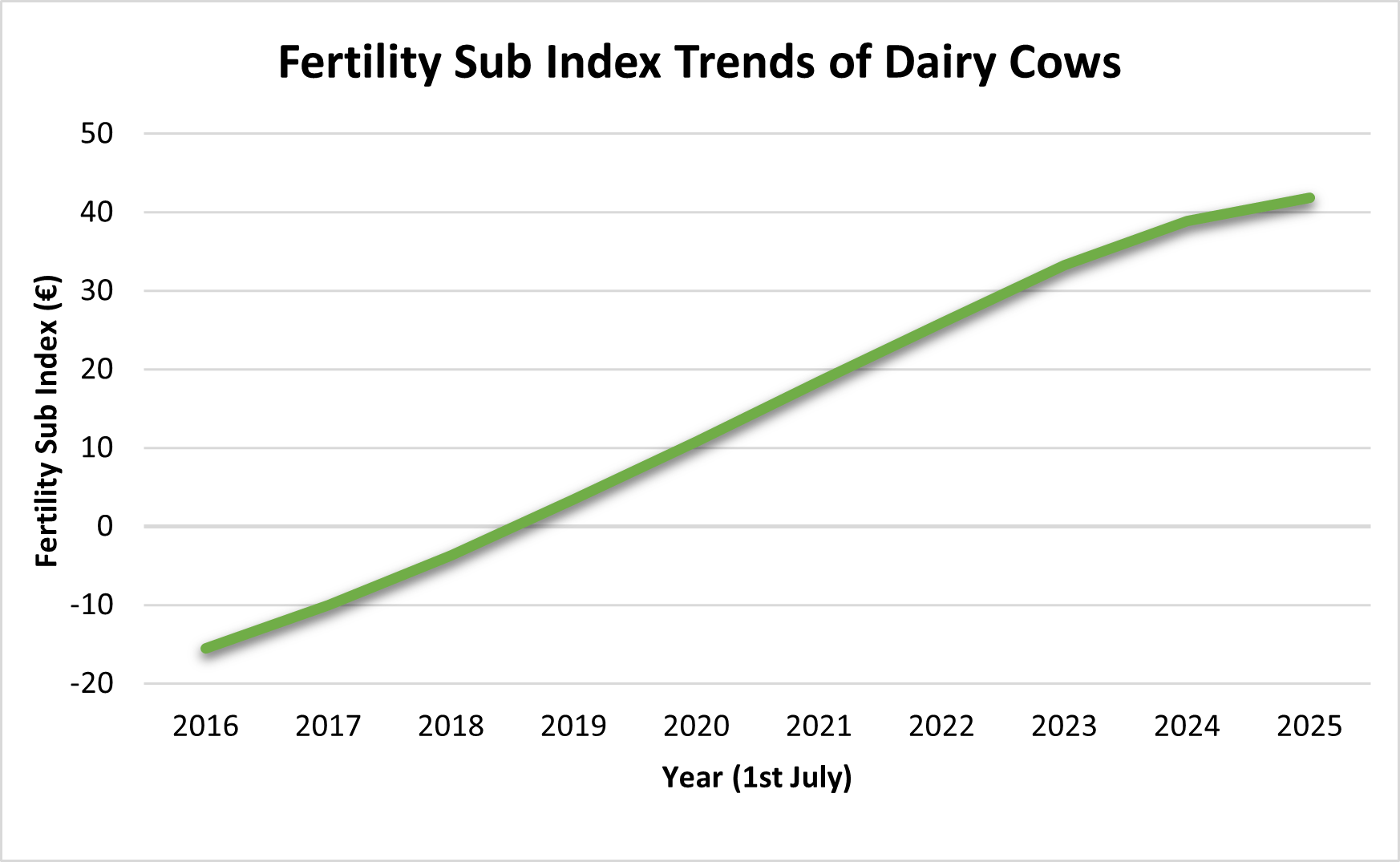
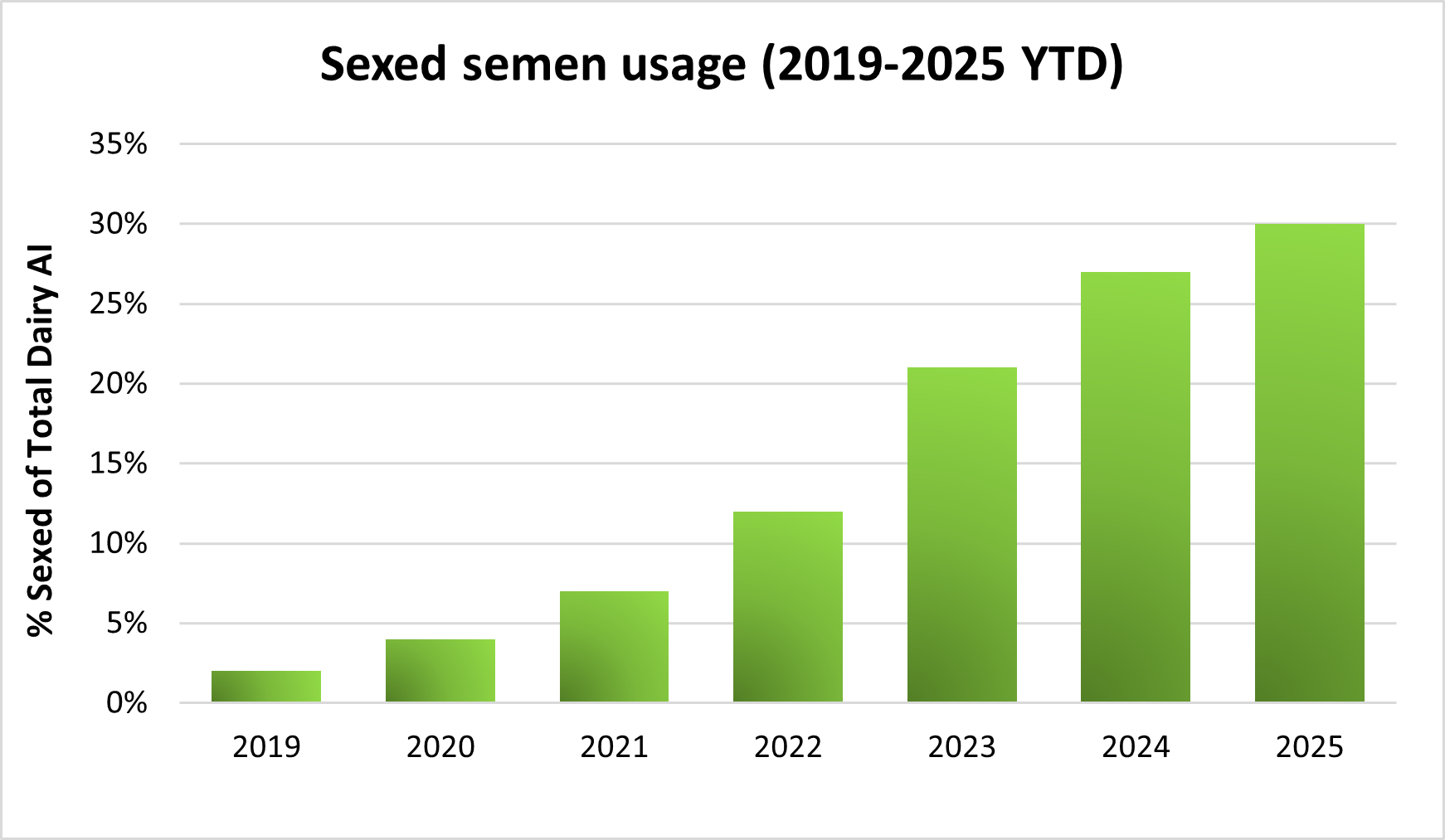
Over the past 10 years, dairy cow numbers increased significantly, although the rate of expansion has slowed in recent years. They have increased from just over 1 million in 2011 to 1.5 million in 2025 based on the 1st October each year. The fertility of the national herd has also improved over this period due to increased genetic gain as result from the Economic Breeding Index (EBI). Cows are more fertile, will go in calf easily and survive longer, therefore reducing the number of dairy replacements required in herds. Management has also improved greatly on farms. In addition, the usage of sexed semen has more than doubled in the last number of years and this upward trend is expected to continue over the next 10 years. Over 6,000 herds used sexed semen in 2025 with 30% of the total AI serves on dairy cows has been to sexed semen.
All these factors combined have resulted in the increased usage of beef bulls in the dairy herd. This is presented in graph 4 below, which shows the number of dairy beef calves born since 2018. There were 270,000 more dairy beef calves born in 2025 than there were in 2020, based from 1st of January to 1st October each year. There were also 208,000 fewer dairy calves born in 2025 compared to 2020 in the same period. This is the third year in a row the number of beef calves born from dairy cows have surpassed the number of dairy calves born from dairy cows. The graph clearly shows the developing trends of dairy farmers shifting their breeding policies by opting to use beef in dairy herds.

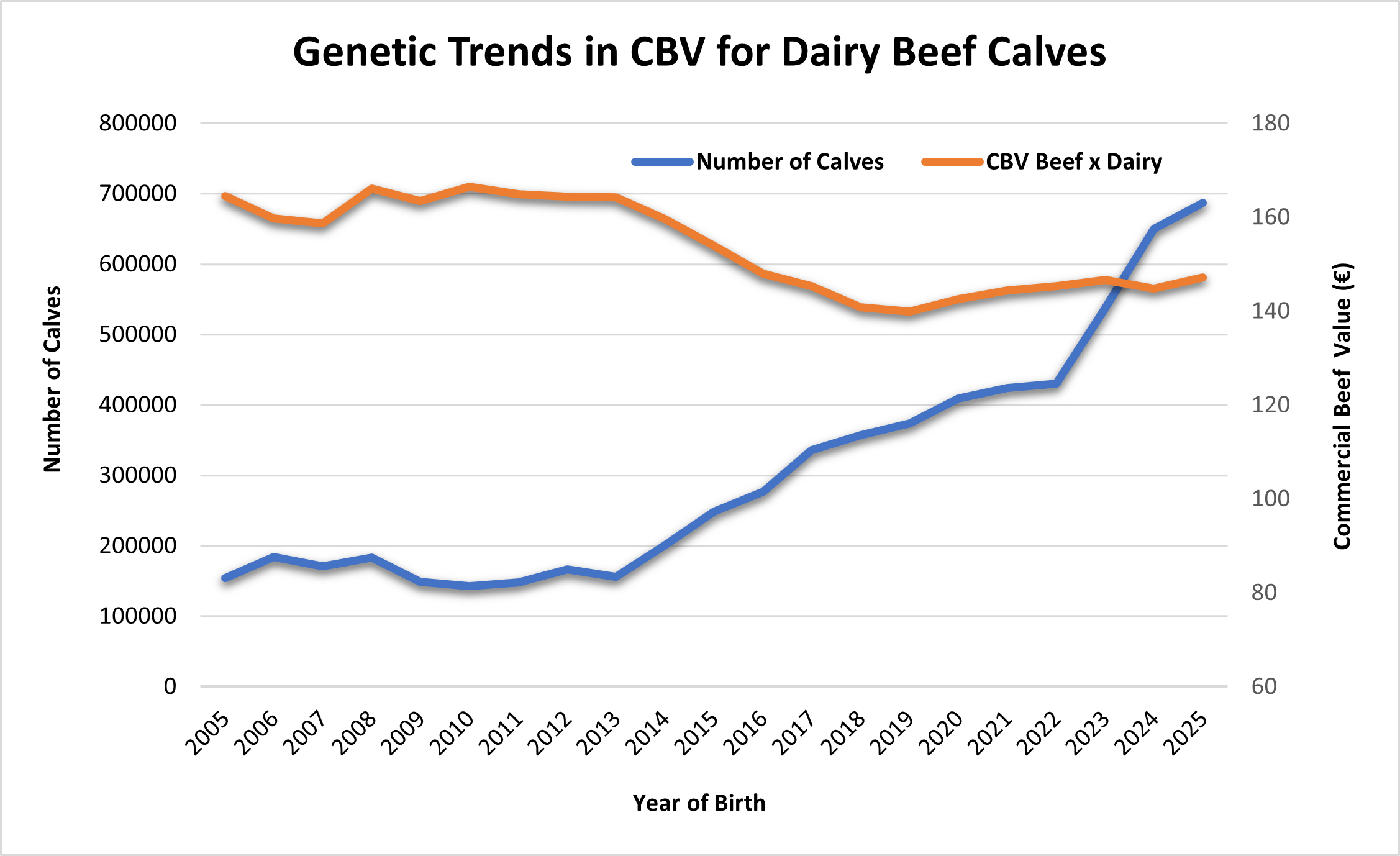
When selecting beef sires to use on dairy females, dairy farmers primarily select beef bulls that have a short gestation length and are easy calving, with less considering for the beef merit of the potential progeny. Consequently, the beef genetics of calves from the dairy herd has declined. This is presented on graph 5 below, which shows the Commercial Beef value (CBV) trends of calves born from beef sires and dairy dams since 2005. The genetic trends in CBV had been declining from 2010 but has halted since slowed down since 2019, with the introduction of the dairy beef index.
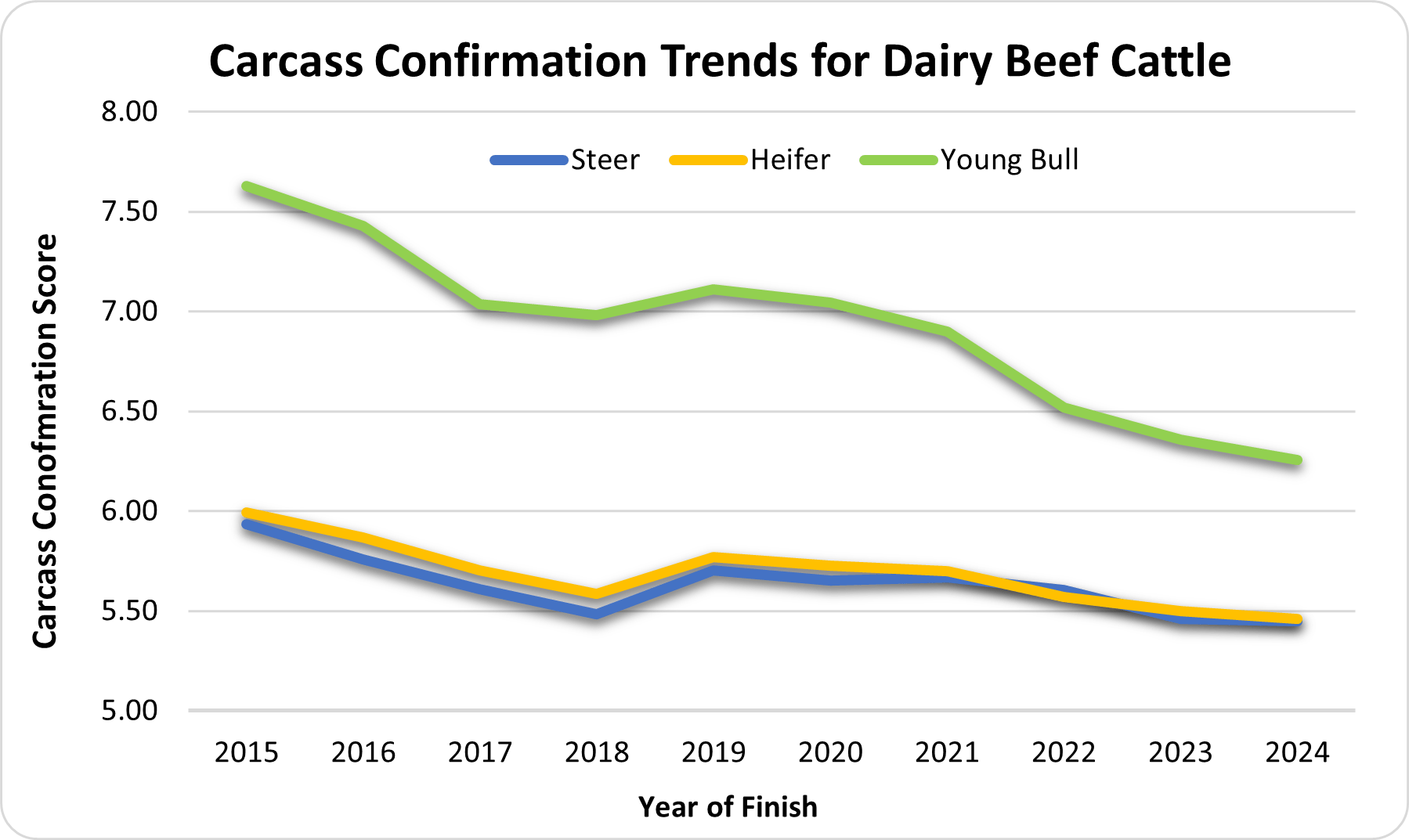
The finishing performance in Irish factories for carcass weight and conformation of cattle bred from dairy dams is displayed in graph 6 and graph 7 below. To ensure that there will be beef farmers to rear the increased number of dairy-beef calves in the future, dairy farmers need to focus more on improving the beef merit from the dairy herd. To address the different challenges, there are various tools available to help improve the quality of beef calves coming from the dairy herd.

Dairy Beef Index
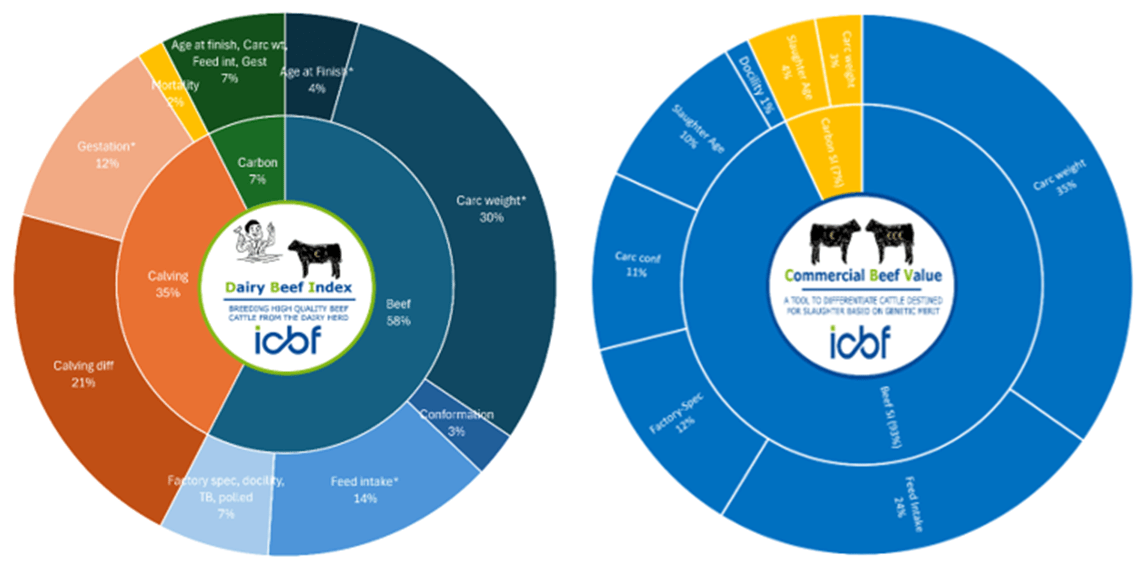
The Dairy Beef Index (DBI) is a tool used to identify beef bulls suitable for use on dairy females. The aim of the index is to improve the beef quality of calves produced from the dairy herd that are more saleable as calves and profitable at finishing without compromising the dairy cow calving performance. The index is comprised of a calving, beef, and carbon sub-index. The relative emphasis of the beef sub index is 58% and this selects for beef traits such as carcass weight and conformation, which are important to the beef farmer. The calving sub index makes up 35% of the index and this selects for calving difficulty, lower mortality, and gestation length, which is important for the dairy farmer. The carbon sub index, which represents 7%, will allow farmers to breed cattle with a lower carbon footprint. The DBI is measured in Euros and for every €1 increase on the DBI is equal to €1 increase in profit for the bull’s progeny. A bull with a high DBI should pass on more desirable characteristics to its progeny than a bull with a low DBI. To maximise carcass merit, select bulls with the highest beef sub index from the dairy beef active bull list. In turn, this will produce a calf that has a high Commercial Beef Value (CBV).
Commercial Beef Value
The Commercial Beef Value is a tool to help identify animals with higher potential for beef production from the dairy herd. It’s essentially the DBI with the calving traits removed as this is no longer applicable to the finishing herd. The CBV is the genetic value for animals destined to be finished for beef. The index comprises of a beef and carbon sub index, which is displayed in graph 8 and includes key traits such as carcass weight, carcass conformation, carcass fat, feed intake, age at slaughter and docility. The CBV is expressed in Euros, which reflects the expected profit at point of finish and is available for non-breeding animals such as dairy males and calves sired by a beef bull. Animals with a higher CBV value will be on average faster growing, grade better at finish, meet market specification at a younger age and have a higher carcass value compared to animals that have low commercial beef value. Therefore, these animals are more profitable and knowing this genetic information will help make farmers more informed selling and purchasing decisions. For a CBV to be generated for a calf, they must have a sire recorded. The CBV is available through the profile section of the ICBF HerdPlus account. The CBV is also available in marts for animals with a genotype to guarantee correct parentage.
In Summary, utilising tools such as the as the Dairy Beef-Index (DBI) and the Commercial Beef Value (CBV) will improve the beef merit from the dairy herd. This will ensure that more dairy-bred beef calves will meet minimum factory specifications. Also, Improving the beef traits of calves from the dairy herd will improve the integration between the dairy and beef systems, which will be an important tool in supporting the economic and environmental of both sectors.