
High-CBV cattle, strong management and a clear family vision are driving exceptional carcass performance and early finishing on the Armstrong farm in Co. Monaghan.
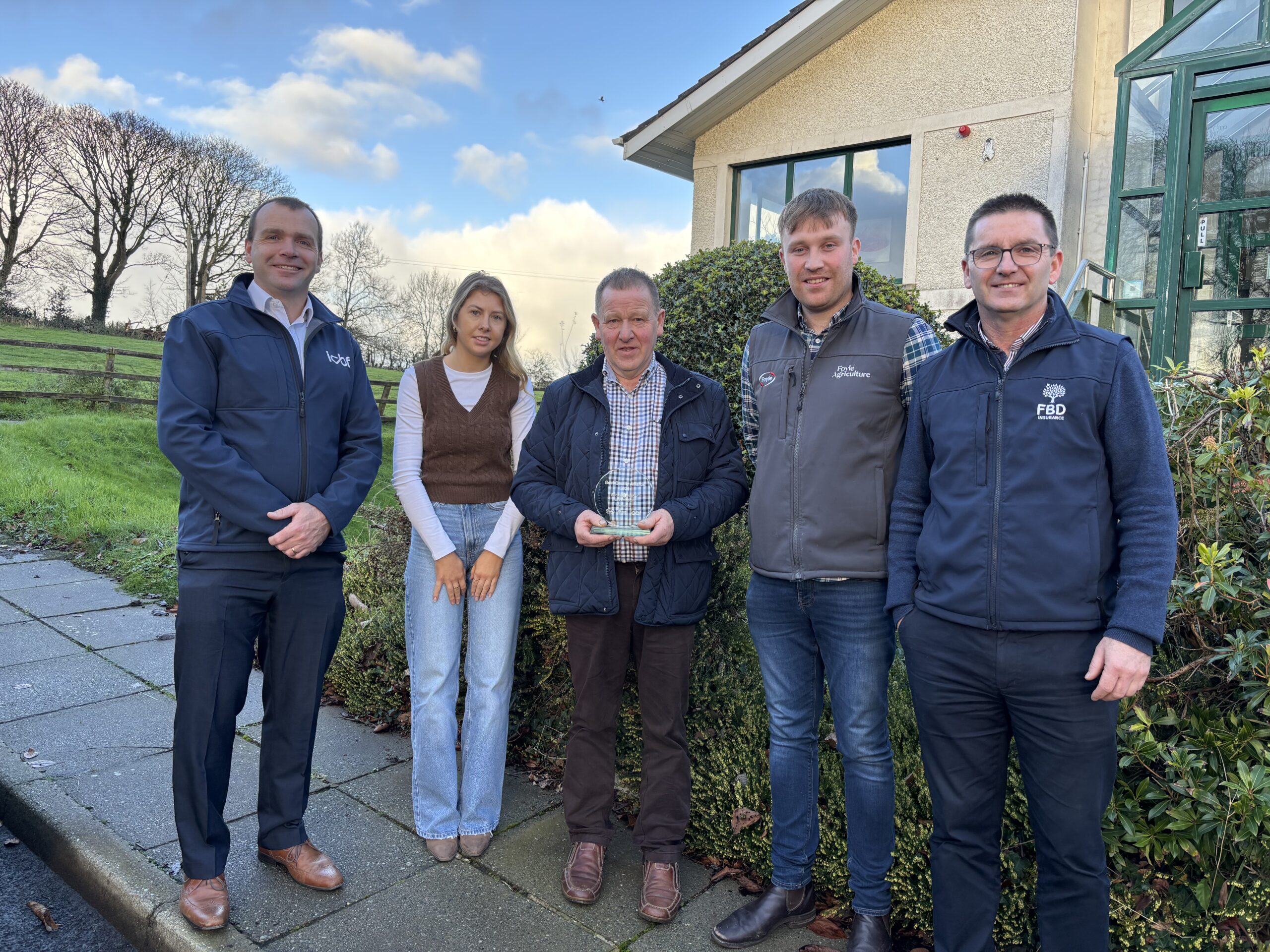
In Co. Monaghan, Ivor Armstrong, his wife Daphne and their children Christine, Annabel and Gregory manage the farm that was passed down from Ivor’s uncle. While also working in welding, he has kept the land and the cattle moving forward, and today the farm stands as a good example of what management, stockmanship and genetics can achieve. With retirement edging closer, he is glad to see the next generation showing interest. As he says himself, “Gregory has the interest, so why not let him at it.”
The Armstrong farm operates as a dedicated finishing unit, purchasing continental store cattle through the local mart in Ballybay in spring and again in autumn. Bulls, heifers and bullocks are finished on farm. Limousin and Charolais types dominate the system, with bulls generally arriving between 420 and 500kg, and heifers or bullocks landing from 450 to 520kg. Ivor insists “You can’t beat being at the ring.” Cattle purchased in spring are turned out to grass. Bulls are typically finished at around sixteen months, with a second group going between eighteen and twenty-two months. The aim is to buy an R+ and “feed it into a U+” where possible, producing a carcass that fits factory requirements.
Feeding plays a central part in achieving that outcome. Bulls are finished on a 45% maize ration, while the heifers and bullocks are pushed on with a 40% maize nut from Fane Valley. Bulls bought in August or September are built up to a 120-day finishing diet. Ivor believes the basics still matter, adding, “If you’re as good to them outside as you are inside, you’ll make a good job of them.” A rigorous health plan underpins the system. All cattle are vaccinated for IBR when they arrive, followed by dosing with a multi-purpose anthelmintic, lice treatments are applied every two to three weeks during the winter. Fluke control is non-negotiable. As Ivor puts it bluntly, “All cattle must be treated for fluke… they’re not thriving otherwise.” When stock are in the right order, a levamisole is used, noting that he ensures cattle have a full a stomach and are in good condition beforehand.
The farm’s ICBF Beef Benchmarking and Finishing Reports reflect the impact of this combination of management and genetics. In 2024, the Armstrong herd produced 444kg of beef output per livestock unit, well above the national average. Year to date, bulls killed out at an average of 429kg with a U– grade, achieving 1.30kg/day from birth. Heifers averaged 367kg carcass weight with 98% meeting conformation targets, while steers finished out at 378kg carcass weight, R+ 3=. Genetics play a major role in that performance.
The CBV breakdown of stock on the farm shows that the higher-CBV animals consistently produce heavier carcasses, earlier finishing ages and stronger grades. Among the heifers finished in 2024, those in the top third for CBV were €78 (CBV) ahead and finished three months earlier than the bottom third. Young bulls in the top third finished more than two months younger and killed 32kg heavier than their lower-CBV counterparts. These results mirror national trends, demonstrating the value that high-genetic-merit cattle bring to finishing systems, particularly where feed efficiency and early finishing are important.
While the system is performing well, the last year hasn’t been without pressure. Store cattle have climbed sharply in price, with increases of €800 to €1,000 per head compared to previous years. Animals that once cost €1,600 to €1,800 now command €2,400 to €2,600. Inputs and insurance have also climbed, and Ivor is conscious of the wider challenges facing the sector, especially around market volatility and future trade agreements. “It’s going to affect everyone from weanling and store producers to finishers,” he says. “Everyone needs to make a living.”
Despite the challenges, the farm continues to perform strongly. Cattle are sold to the Foyle Food Group in Donegal, with Waddell Haulage handling the transport. Sustainability measures come naturally through the system’s efficiency, lower finishing ages, strong carcass performance and good feed conversion all contribute to reducing emissions per kilogram of beef produced. Above all else, Ivor remains a strong believer in the importance of the suckler sector. “The suckler man must be rewarded,” he says. “It’s all down to the breeding.” His results back up that point. The high-CBV cattle coming through his sheds have delivered better grades, heavier carcasses and younger slaughter ages, key drivers of profitability on any finishing unit.
Looking to the future, the Armstrong family intend to keep the system going much as it is. Gregory’s growing involvement brings energy and continuity, and the performance indicators show the farm is in a strong position. By identifying good genetics, the Armstrongs have built a finishing enterprise that continues to deliver.
ICBF would like to congratulate the Armstrong family on achieving the 2025 Suckler Finisher Award for Foyle Food Group.
For more information on the Commercial Beef Value (CBV), click here.
