Direct Sourcing and Attention to Detail Drive Beef Awards Success for Tim and Michael Hurley
Kepak Dairy Beef Finisher Award winners Tim and Michael Hurley discuss how direct calf sourcing, strong supplier relationships, attention to detail and consistent calf management are delivering excellent finishing performance across their specialised calf-to-beef enterprise following recognition at the 2026 ICBF Beef Quality Awards.
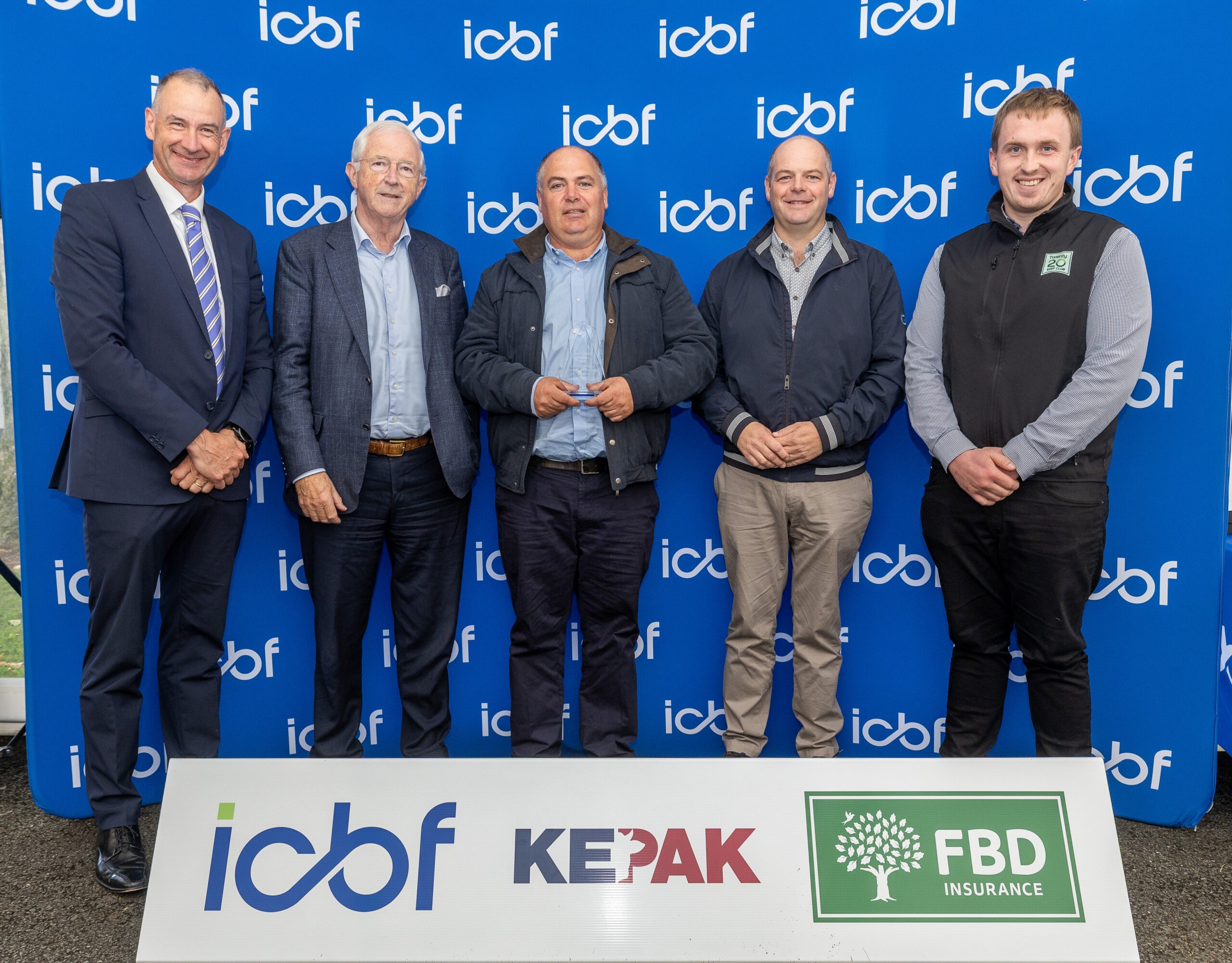 L to R: Sean Coughlan (ICBF), Michael Berkery (FBD), Tim & Michael Hurley (Award Winners), Craig Buttimer (Kepak)
Tim and Michael Hurley from Ballinhassig, Co. Cork were named as the Kepak supplier winners of the Dairy Beef Finisher Award at the Beef Awards 2026, recognising the outstanding performance achieved within their calf-to-beef enterprise, from calf sourcing and rearing right through to finishing.
Second-generation farmers, the brothers continue the farming business established by their father, building a specialised dairy-beef enterprise that has grown significantly in recent years. Michael farms full-time, while Tim combines farming with his role as a sales representative with Bandon Co-op. Together they run a specialised dairy-beef finishing system, purchasing approximately 300 calves annually and carrying more than 500 cattle across the farm throughout the year.
Building a Successful Calf-to-Beef Enterprise
Unlike most beef farms, Tim and Michael do not breed any cattle themselves. Instead, the entire system is built around purchasing dairy-beef calves and bringing them through to slaughter.
The enterprise has been developed around long-standing relationships with dairy farmers, with calves sourced directly from farms rather than through marts. This gives the brothers confidence in the quality and consistency of the calves entering the system each year. Tim explains: “All calves are bought direct off farm.”
The strong relationships built with suppliers over a number of years have become a key part of the farm’s success. These relationships provide confidence around calf quality, health status and breeding background before animals ever arrive on the farm.
Attention to Detail from Day One
The brothers believe that successful finishing performance starts the day calves arrive on the farm.
Calves are reared on milk replacer, typically receiving between one and a half to two bags of milk powder before moving onto grass. Animals remain on a grass-based system throughout their first grazing season before receiving silage and concentrates during their first winter. They are then returned to grass before entering the finishing period.
Some of the earlier maturing animals are finished off grass with meal supplementation, while others are housed and finished on silage and concentrates during their second winter.
When asked about the most important management practice on the farm, Michael highlighted the importance of consistency throughout an animal’s lifetime. “Every day is a growing day, there’s no point in feeding heavy rations at the end if you don’t feed them well as a calf.”
That philosophy underpins every aspect of the system, with a strong emphasis placed on maintaining performance from an early age.
Grass and Feeding Supporting Performance
Like many successful beef finishing systems, grass forms the foundation of the enterprise. High-quality grass and silage help drive animal performance while keeping production costs under control.
However, 2026 presented significant challenges. Drought conditions placed pressure on grass supplies, requiring additional supplementation to maintain growth rates.
The brothers increased meal feeding and fed between eight and nine bales of silage daily for approximately seven to eight weeks during the summer.
Fortunately, their dry farm typically allows them to carry surplus fodder reserves, providing valuable flexibility during difficult years. “We have a dry farm, so we normally would have a bit of surplus in hand for that kind of a situation.” Despite the challenges, the enterprise continued to deliver excellent finishing results.
Strong Finishing Performance
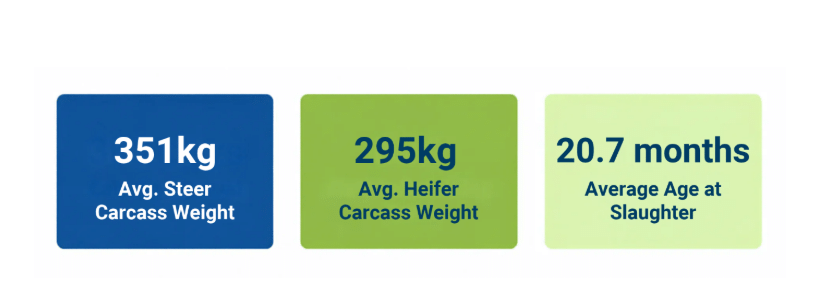
The quality of Tim and Michael’s system is ultimately reflected in the animals presented for slaughter. Out of the 248 animals finished from the herd, cattle achieved an average carcass weight of 325kg and were finished at an average age of 20.7 months.
Steers accounted for 110 animals finished, averaging 351kg carcass weight, while 81 heifers averaged 295kg carcass weight. A further 57 young bulls were finished, averaging 316kg carcass weight. Steers and heifers both achieved an average carcass grade of O+, highlighting the consistency of performance being achieved across the enterprise. These figures demonstrate the efficiency of the system from calf purchase through to finish and reflect the attention to detail applied throughout the production cycle, from calf sourcing and rearing right through to finishing. The consistency of these figures highlights the success of the brothers’ approach and helps explain why they were recognised as Kepak Dairy Beef Finisher Award winners at the Beef Awards 2026.
CBV Delivering Results at Finishing
While Commercial Beef Value (CBV) is not currently a major factor in calf purchasing decisions due to the long-standing supplier relationships the brothers have established, their Annual Finishing Report: CBV highlighted the clear performance advantages achieved by higher-CBV animals.
Among Dairy-Beef heifers, animals in the top CBV third averaged a CBV of €226 compared to €107 for the bottom third. These higher-CBV heifers produced carcasses averaging 308kg compared to 281kg and generated €292 more in factory value per head, while also finishing almost one month younger than their lower-CBV counterparts.
A similar trend was evident among Dairy-Beef steers. The top CBV third averaged a CBV of €255 compared to €112 for the bottom third and produced carcasses averaging 373kg compared to 335kg. These higher-CBV steers generated €323 more in factory value per head and achieved two carcass grades higher than animals in the bottom CBV third.
Perhaps most notably, these improvements were achieved without extending the finishing period. The higher-CBV animals delivered heavier carcasses, stronger grades and greater factory returns, demonstrating the value of stronger genetic potential when animals reach slaughter.
Looking Ahead
Despite the challenges posed by weather conditions, rising costs and volatility within the sector, Tim and Michael remain committed to the calf-to-beef enterprise they have developed.
For the brothers, success comes back to a few simple principles: sourcing quality calves, building strong supplier relationships, maintaining performance from an early age and paying attention to detail every step of the way. As Michael puts it, “If it’s something that can make more money, we will be interested in it.”
By combining strong supplier relationships, excellent calf management and consistent attention to detail throughout the production cycle, Tim and Michael have developed a highly efficient calf-to-beef enterprise. The results achieved across the farm ultimately earned them recognition as Kepak Dairy Beef Finisher Award winners at the Beef Awards 2026.
William & Paul Burke’s Award-Winning Beef Finishing System
Ashbourne Dairy Beef Finisher Award winners William (Bill) and Paul Burke have built a straightforward beef finishing system in Co. Tipperary, where quality cattle, grassland management and a focus on doing the simple things well are central to achieving strong finishing performance.
Bill and his son Paul from Co. Tipperary were recognised as the Ashbourne supplier winners in the Dairy Beef Finisher category at the 2026 ICBF Beef Quality Awards. Their farming system is centred around buying store cattle with the potential to develop into quality finished animals, while keeping inputs and management as straightforward as possible.
Farming has been a lifelong occupation for Bill. After his father James passed away when Bill was young, he left school at 15 and began running the family’s dairy farm alongside his brother Matt. In the early 1990s, Bill moved to his own farm, where he established a suckler herd alongside finishing beef cattle. He exited suckler farming around 2020 and has since focused on purchasing store cattle and taking them through to finishing.
The farm remains very much a family operation. Bill’s wife Brigid and son Paul are both involved, with Paul becoming increasingly active in the day-to-day running of the farm since moving home. Alongside his involvement on the farm, Paul works as an Agricultural Consultant with FDC Group.
Keeping the Beef Finishing System Simple
Simplicity is one of the key principles behind the Burke farming system. Bill describes the enterprise as a straightforward beef finishing operation, with no complicated TMR finishing programme. Instead, the aim is to maximise the use of grass and supplement cattle with meal when required.
It is also a relatively low-input system in terms of fertiliser and other costs. Rather than increasing inputs unnecessarily, Bill’s focus is on getting as much performance as possible from cattle through good stock management and effective use of grass.
Most cattle are purchased through Tipperary Town Mart. Bill relies heavily on his own experience when selecting animals, looking for cattle that offer value when purchased but also have the potential to develop into high-quality finished beef animals. Continental breeds have traditionally been favoured, although greater numbers of Angus and Hereford cattle have also been purchased in more recent years.
Grass and Silage at the Centre of the Diet
The same focus on simplicity carries through to the feeding programme. Grass and good-quality silage account for a large proportion of the animals’ diets throughout their time on the farm.
During the winter housing period, most cattle receive a small amount of high-quality beef nut to complement the forage available. As cattle approach finishing, the feeding rate is increased gradually. Animals being prepared for finishing generally begin receiving approximately 2 to 3kg of beef nuts around six weeks before their target finishing date, with feeding levels increased where necessary during the final weeks.
This allows Bill and Paul to keep the overall system straightforward while giving individual animals additional supplementation when required to reach their finishing targets.
Commercial Beef Value and Finishing Performance
The Beef Quality Awards aim to recognise beef finishers using Commercial Beef Value (CBV) to support efficiency, profitability and sustainability, while highlighting the role genetics can play within beef finishing systems.
For Bill, CBV is an area that has become more prominent over the past year. While it has not traditionally been something he used when buying cattle, he has become increasingly aware of the CBV and its potential to help identify animals with greater genetic merit.
The finishing performance recorded within the herd is helping to demonstrate that potential. Bill and Paul’s cattle generally achieve U or R grades, with the higher-CBV animals within the herd finishing earlier and producing heavier carcasses than other animals.
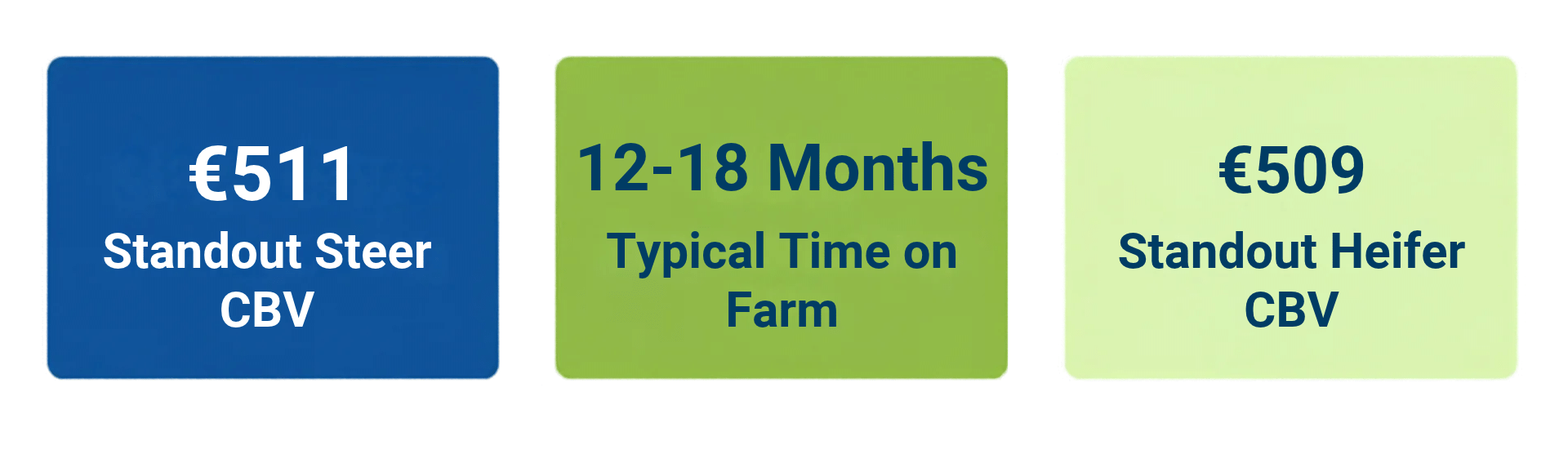
One standout steer had a CBV of €511 and finished at 24.4 months of age, achieving a U grade. A heifer with a CBV of €509 also achieved a U grade and was finished at 31 months.
 As Bill and Paul become more familiar with CBV and see its relationship with finishing performance, the information has the potential to play a greater role when sourcing animals for the enterprise.
Sourcing the Right Animal for the System
Finding the right type of animal has become one of the main challenges on the farm.
Bill believes it has become more difficult to source the continental-type cattle he has traditionally preferred. He has observed a greater shift towards Angus and Hereford breeding within dairy herds, which has reduced the choice of continental-type cattle available to him.
Bill recalls previously being able to purchase cattle originating from larger, more British Friesian-type dairy cows, which he felt had the potential to produce a stronger beef animal. As the type of dairy cow has changed, he believes this has also influenced the type of dairy-beef calf coming through the production system.
Looking ahead, he is hopeful that the Dairy Beef Index (DBI) can help dairy farmers identify beef sires capable of adding greater value to calves, in turn providing beef farmers with quality animals to purchase and bring through to finishing.
A Practical Approach to Herd Health
Herd health is another area where Bill and Paul favour a practical, uncomplicated approach.
Purchased animals generally remain on the farm for approximately 12 to 18 months. The land is maintained in good condition, while cattle are treated for worms and lice using a pour-on ivermectin treatment. Animals also receive an oral treatment when they are housed for the winter period.
For the Burkes, the aim is to have a health programme that works effectively within the finishing system without unnecessarily complicating day-to-day management.
Managing the Challenges of Beef Production
Like many finishers, Bill is conscious of the challenges associated with beef production. Alongside difficulties sourcing his preferred type of cattle, the price of beef remains an ongoing consideration within the enterprise.
His approach is to focus on what can be controlled inside the farm gate by producing animals capable of grading well and returning as much profit as possible.
Having farmed through both difficult and more favourable periods for the sector, Bill takes a practical view of the industry’s future. He believes Ireland’s grass-based production system can remain an important strength for Irish beef on international markets.
As Bill puts it:
“I don’t know where we will end up in the future of Ireland’s beef sector, but if we continue to push our low carbon grassland beef image to international markets, there should be a future for the sector.”
Looking to the Future
There are no plans to dramatically change the system that Bill and Paul have established. Instead, the objective is to continue doing what is working and make improvements where opportunities arise.
Bill believes there will always be areas where the farm can progress, whether through infrastructure or improved animal performance, but maintaining a simple system remains central to his approach. Just as importantly, he continues to enjoy farming and sees that as an important part of sustaining the enterprise.
With Paul now increasingly involved in the daily running of the farm, the business also has the benefit of the next generation playing a greater role in its development.
The approach Bill has developed over the years ultimately comes back to a straightforward approach: keep the system simple, do the basics well and continually look for opportunities to improve.
Recognition through the ICBF Beef Awards 2026 reflects the results being achieved within that system. Bill also expressed his thanks to ICBF and Ashbourne Meats for the award, with a special acknowledgement for their agent, William McCormack, for his service over the years.
Sean Conroy: Liffey Meats Dairy Beef Finisher Award Winner 2026
Liffey Meats Dairy Beef Finisher Award winner Sean Conroy discusses how strong calf health, trusted calf sourcing and a consistent approach to feeding and management are helping to deliver high-performing dairy-beef cattle in Co. Galway.
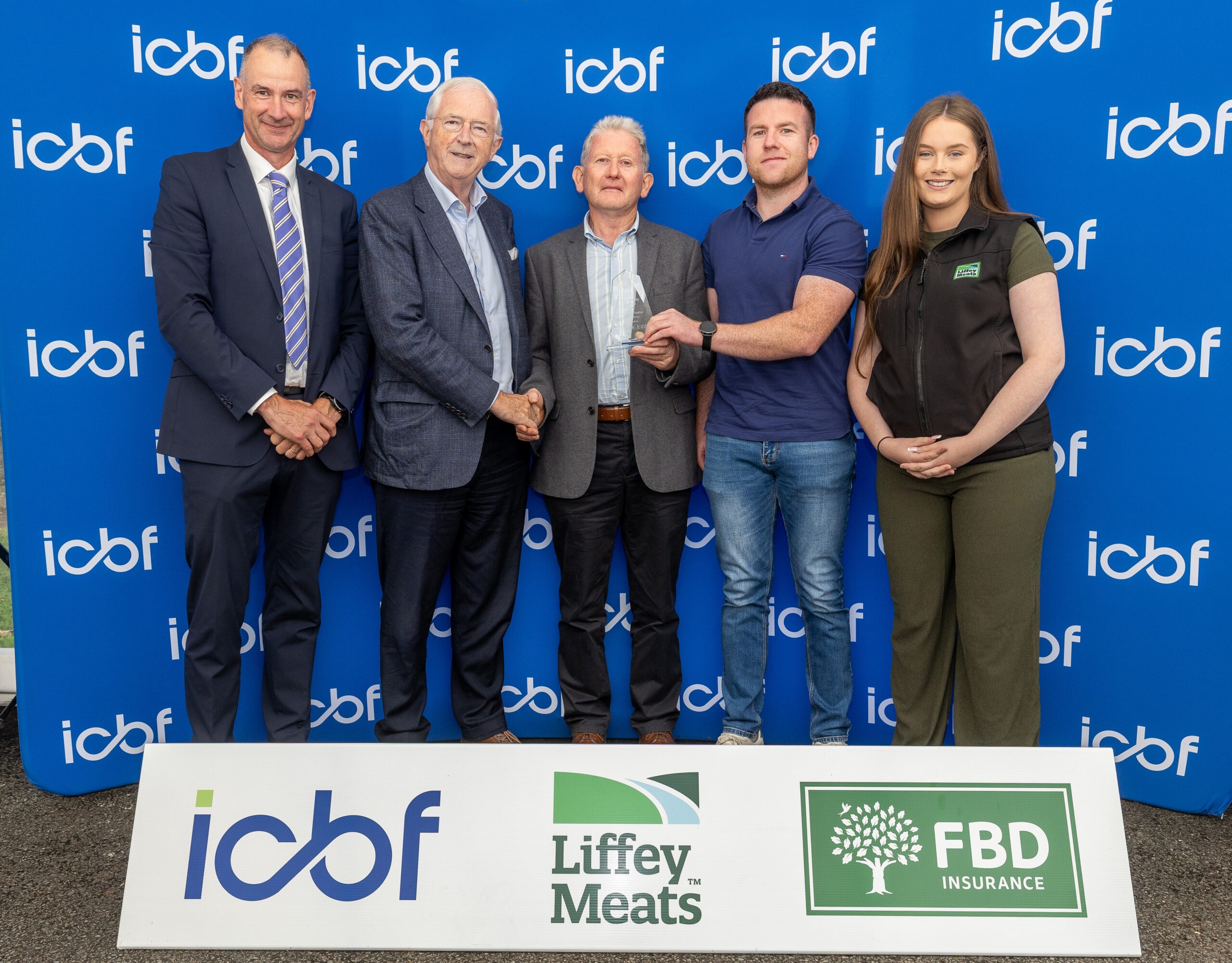 L to R: Sean Coughlan (ICBF), Michael Berkery (FBD), Sean Conroy (Award Winner), Juliette Nugent (Liffey Meats)
Sean Conroy from Ballinasloe, Co. Galway was recognised as a Liffey Meats supplier winner in the Dairy Beef Finisher category at the ICBF Beef Awards 2026, reflecting the strong performance achieved within his calf-to-beef enterprise. Farming alongside his son John, Sean has developed a system built around strong calf health, efficient feeding and continual farm improvements.
Although Sean worked as a fabricator for many years, farming has always remained a central part of his life. Introduced to farming through his father’s dairy enterprise, Sean began developing his own farm after receiving land from a relative in 1990. Through land reclamation, reseeding and continual investment, he has transformed the farm into the enterprise it is today.
Over the years, Sean has been involved in a range of farming enterprises, including tillage, suckler cows and a significant sheep flock, before ultimately settling on a calf to beef production system.
Currently, the farm comprises of 40 acres of owned land with an additional 80 acres leased. Sean describes it as ‘mixed ground’, adding that he has “the best of the worst” when it comes to grazing potential.
Grass, Silage and Finishing Performance
A strong focus on the Conroy’s farm is the utilisation of grass during the Spring and Summer months, to ‘maximise daily liveweight gain from grass’. The first grazing season is complemented with concentrates, to ensure target growth rates are maintained throughout this critical period. Sean believes concentrate supplementation is largely determined by grass availability, with meal levels reduced when grazing conditions are favourable.
Sean and John prefer to finish their dairy-beef animals indoors, believing it is both “easier and safer”, particularly when dealing with dairy-bred calves. They also feel that housing during the finishing period provides greater control over performance and helping cattle reach their full slaughter potential. On an annual basis, the Conroy’s aim to rear approximately 100 calves and finish a similar number of animals to beef.
A strong emphasis is placed on the utilisation of pit silage, achieving substantial results from recent silage testing, producing high-quality silage with DMD values of 72.
During the housing and finishing period, cattle are fed through a Keenan diet feeder, allowing rations to be accurately distributed according to the nutritional requirements of animals at each stage of production.
Sourcing of Calves and Reducing Biosecurity Risks
One of the key strengths of the Conroy system is calf sourcing. Sean purchases all calves from his brother’s neighbouring farm, providing confidence in both the health status and genetic background of the calves entering the enterprise.
Sean’s brothers would have used a stock bull quite frequently through the years with a move to 100% AI in recent times. The long-standing relationship between both herds has provided assurance in the genetic merit of the calves entering Sean’s enterprise.
The majority of calves purchased are Angus bred, with smaller numbers consisting of Hereford and Friesian calves year on year. Sean is a firm believer that ‘when you get the right British Friesian, it can be as good as anything in a finishing system’.
The Growing Impact of Commercial Beef Value
Where the health status of calves remains paramount to the Conroy’s selection process, Sean and John have become increasingly aware of the growing value of the Commercial Beef Value information, demonstrated through their finishing system.
John noticed a significant difference between the top and bottom CBV groups among cattle finished from the farm, reinforcing the value of the index when identifying animals with greater commercial potential. Particular interest has centred on cattle bred from sires such as Carrowboy Vegas 2, carrying a carcass value of +18kg, and the Conroy’s are looking forward to seeing how his progeny perform at finishing. Overall, they believe there is clear value in Commercial Beef Value as a tool for identifying cattle with stronger performance and profitability characteristics
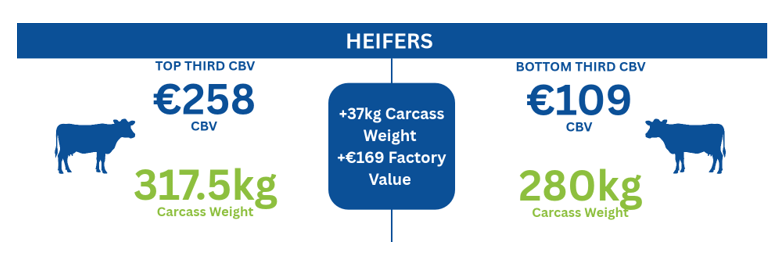
The impact of stronger genetics can clearly be seen in the performance of cattle finished from the farm. Animals in the top CBV group achieved average carcass weights of 317.5kg compared to 280kg for those in the lower-CBV group, a difference of approximately 37kg per animal. Despite only a relatively small difference in finishing age, the higher-CBV cattle consistently delivered stronger finishing performance.
The Importance of Herd Health in the System
A strong emphasis is placed on herd health measures throughout the Conroy enterprise. Due to the close relationship with the calf sourcing farm, all calves purchased receive an intranasal pneumonia vaccination prior to arrival, aiming to reduce disease risk during what can often be a stressful period for younger livestock. Sean believes that this invaluable practice on the farm has alleviated significant disease pressures and has improved calf health and performance in recent years. Their comprehensive health programme also includes animals receiving a Blackleg vaccination and a preventative treatment for Coccidiosis at one month old.
Future Development and Continuous Improvement
Sean and John are looking towards the future with plans to improve infrastructure and the functionality of the farm, rather than solely increasing in livestock numbers. Currently, a new slatted tank is being built, along with a calf shed and the Conroy’s believe that this will ‘make the place easier to work’.
In terms of succession talks, the future of the farm appears secure, where John is expecting to take over the enterprise in the coming years, continuing in his father’s footsteps. John has recently provided valuable additions to the farm in terms of labour-saving technologies through the use of automatic calf feeders and hopes to incorporate a newly improved cattle crush into the enterprise in the future.
Overcoming Challenges Inside and Outside the Farm Gate
The Conroy’s perspective on the industry was a positive one, the system has been good to them over the past number of years and they said they will ‘stick with it anyways’. Sean feels insulated from the challenges faced by other dairy-beef farmers in the sense that the calves purchased for the farm are sourced from a reliable supplier and the potential biosecurity risks are significantly reduced. This arrangement has also proven beneficial for Sean’s brother, providing great certainty for both parties involved.
Fortunately, the Conroy’s did not face drastic implications of the drought conditions this year, however, if they felt they were facing grass shortages they would compensate by housing ‘a few cattle earlier than usual’.
Advice for Fellow Farmers
Sean and John were quick to highlight the sheer importance of promoting herd health across their enterprise, they feel like it has had a massive improvement across the last number of years.
Through the improvement of the farm’s grazing model and the increased number of paddocks and water troughs in recent times, day-to-day operations have proven to become more efficient and manageable. The Conroy’s are firm believers that these ‘small but constant improvements’ have massively improved the efficiency of their system and have led to their recognition as Liffey Meats suppliers in the Dairy Beef Finisher category at the ICBF Beef Awards 2026.
Strong Genetics, Family Tradition and Calf Health Drive Dairy-Beef Success in Co. Monaghan
Foyle Dairy Beef Finisher Award winner John Graham discusses how strong breeding decisions, excellent calf management and a shared family passion for farming are delivering profitable dairy-beef cattle in Co. Monaghan.
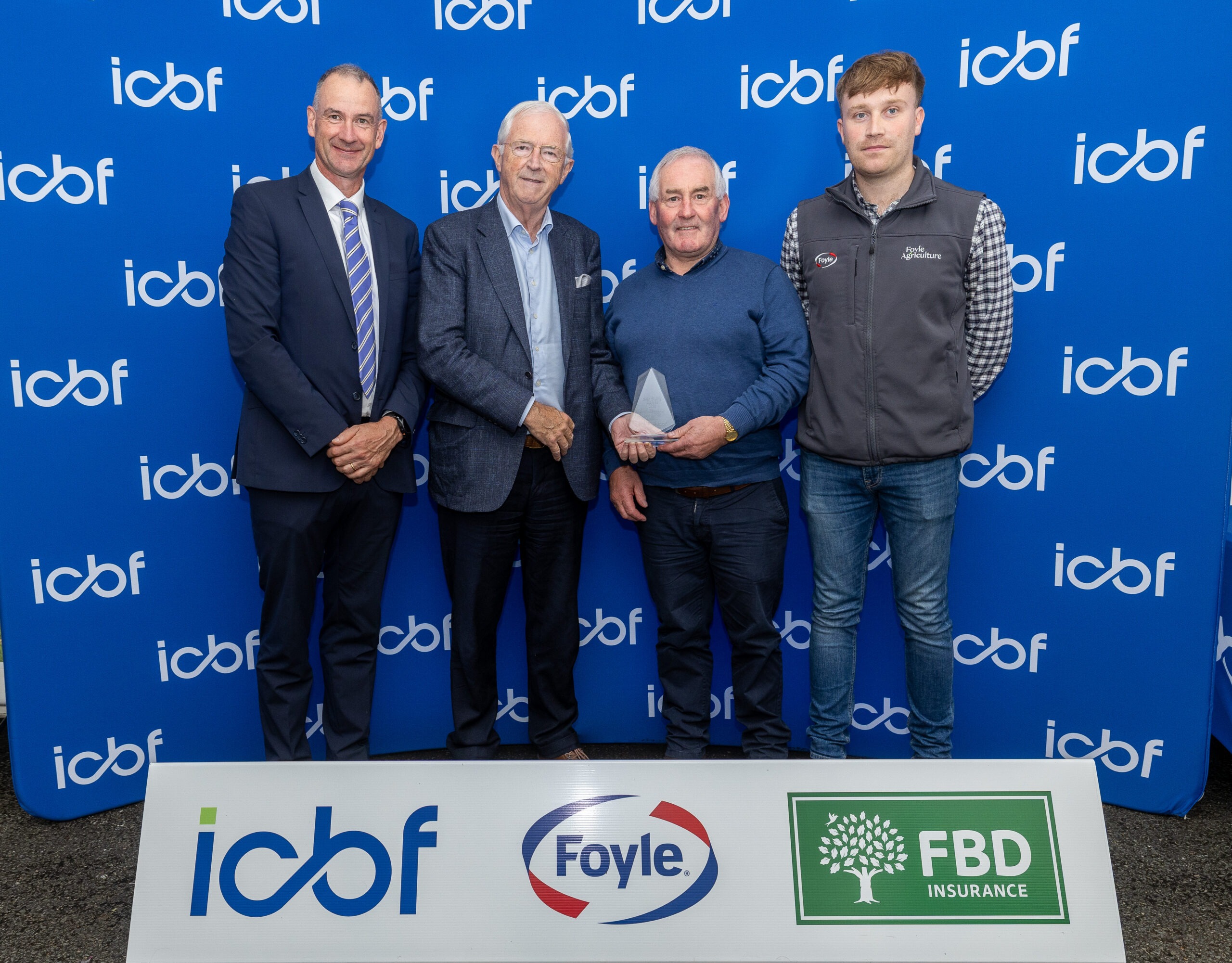
John Graham from Co. Monaghan was recognised as the Foyle Dairy Beef Finisher Award winner at the ICBF Beef Awards 2026, reflecting the strong performance achieved within the family’s dairy-beef enterprise.
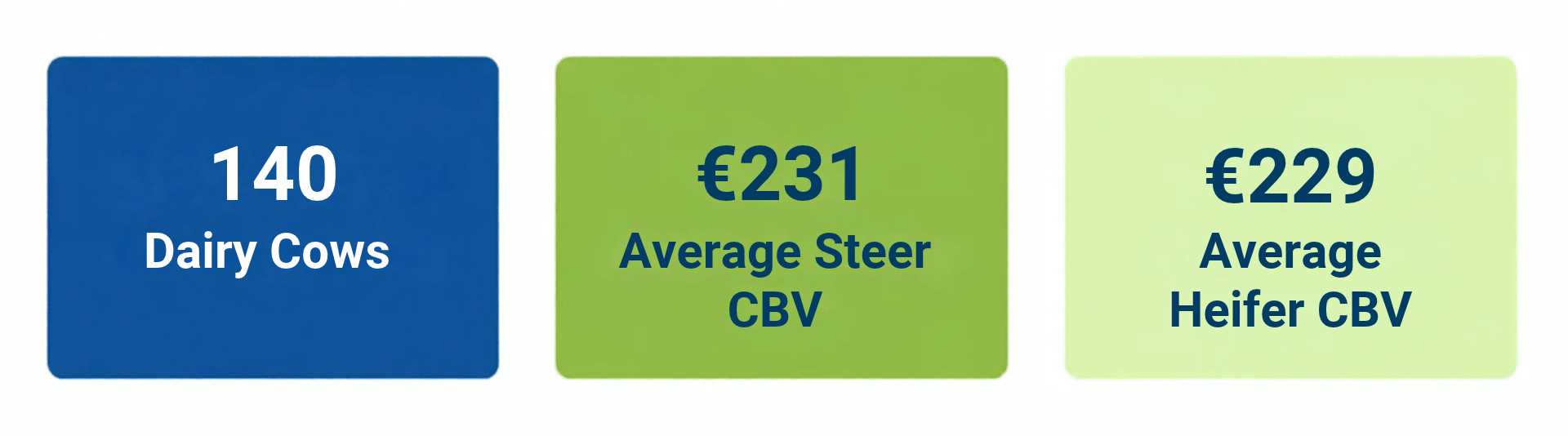
A third-generation farmer, John’s lifelong passion for livestock and breeding has helped shape the family farm into the successful operation it is today. Over the years, he has overseen significant growth on the farm, with the dairy herd expanding from 70 cows to 140 following the abolition of milk quotas. Alongside the dairy enterprise, John and his wife Gail have managed a respected suckler herd, breeding pedigree Limousin cattle under the Glasslough prefix since the 1980s.
John fondly recalls one of his homebred Glasslough bulls being selected to go to Tully when it operated as a young bull testing centre, a highlight that reflected the quality of stock being produced on the farm. Today, John farms in partnership with his son Stephen, a fourth-generation farmer who returned home after studying at Greenmount College. The family operation is a true team effort. John continues to work as an agent for Foyle, while Stephen manages the dairy herd and oversees the feeding of the dairy-beef enterprise. A relief milker also supports the demanding workload, with milking beginning at 6:30am and the day’s work often finishing around 6:00pm.
Family remains central to everything they do. Stephen has two young sons, aged five and seven, who already share the family’s passion for farming. As Stephen explains, “The lads can spot a cow from when she was a calf. They’ll say, ‘Daddy, that cow was the calf from over at Grandad’s.’ I don’t know how they do it.” Their enthusiasm suggests the Graham farming story could yet continue into a fifth generation.
Developing a Dairy-Beef Enterprise
Historically, John sold calves and purchased store cattle, retaining only the dairy heifers required as replacements. However, when Stephen returned from Greenmount, he encouraged the family to take a different approach. Rather than selling the calves born on the farm, the family began keeping them and bringing them through to finishing. A successful dairy-beef system now operates alongside the dairy and suckler enterprises, with a clear focus on producing quality cattle from birth through to slaughter.
Breeding from a Strong Dairy Herd
The foundation of the dairy-beef enterprise is the family’s pedigree Holstein-Friesian herd, managed under the Griggy prefix. The herd is made up of of approximately 75% Holstein and 25% Friesian genetics. A combination of artificial insemination (AI) and homebred Glasslough Limousin stock bulls is used throughout the breeding programme. Sexed semen is used to generate replacement dairy heifers, while beef sires are selected to maximise the value and finishing potential of the resulting dairy-beef progeny.
The introduction of the Smaxtec monitoring system last year has further supported reproductive performance and helped increase the effectiveness of the farm’s sexed semen programme.
When selecting sires for dairy replacements, milk production and milk solids remain the main priorities. Replacement heifers are typically calved between 24 and 26 months of age, helping to maximise productivity within the dairy herd. Stephen is not overly concerned with higher calving difficulty figures. “We’ve used bulls with up to 15% calving difficulty on heifers before with them needing little to no assistance,” Stephen explains. Good body condition management and careful observation around calving help ensure cows come through the period successfully.
Selecting Beef Sires for Finishing Performance
When selecting beef sires, Stephen places significant emphasis on carcase weight, a trait that carries considerable weighting within the Dairy Beef Index (DBI).
The DBI helps dairy farmers identify beef sires capable of producing calves with strong finishing potential. The commercial value of those breeding decisions is subsequently reflected through the Commercial Beef Value (CBV) of the progeny.
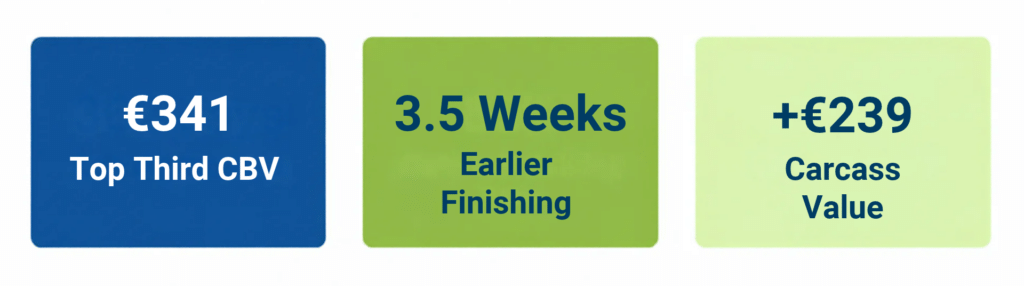
Dairy-beef steers in within the Graham herd recorded an average CBV of €231, while dairy-beef heifers averaged €229. Both were €81 ahead of their respective national averages, highlighting the strong genetic merit of cattle being produced on the farm.
Using CBV to Support Cattle Selection
As an agent for Foyle, John occasionally purchases a small number of cattle to finish alongside those bred on the farm. When asked what catches his eye when selecting stock, his answer is straightforward: “Shape, style and size for age.”
Purchased stores are generally around 18 months of age and are typically retained for less than a year before finishing. Although CBV has not historically been a major factor in John’s purchasing decisions, he believes it will become increasingly relevant. “I will be looking at it now,” he says, acknowledging the growing importance of genetic information when identifying animals with strong finishing and profit potential.
The value of higher CBV cattle can be clearly seen in the farm’s finishing performance. Steers in the top CBV third generated €348 more in factory value than those in the bottom third and produced carcasses that were 40kg heavier, averaging 376kg compared with 336kg. They also returned an additional €0.50 per day over their lifetime, achieving €3.56 per day compared with €3.06 per day for the lower CBV group.
A similar trend was evident among the heifers. Heifers in the top third of CBV delivered €235 more in factory value and produced carcasses that were 35kg heavier than those in the bottom third.
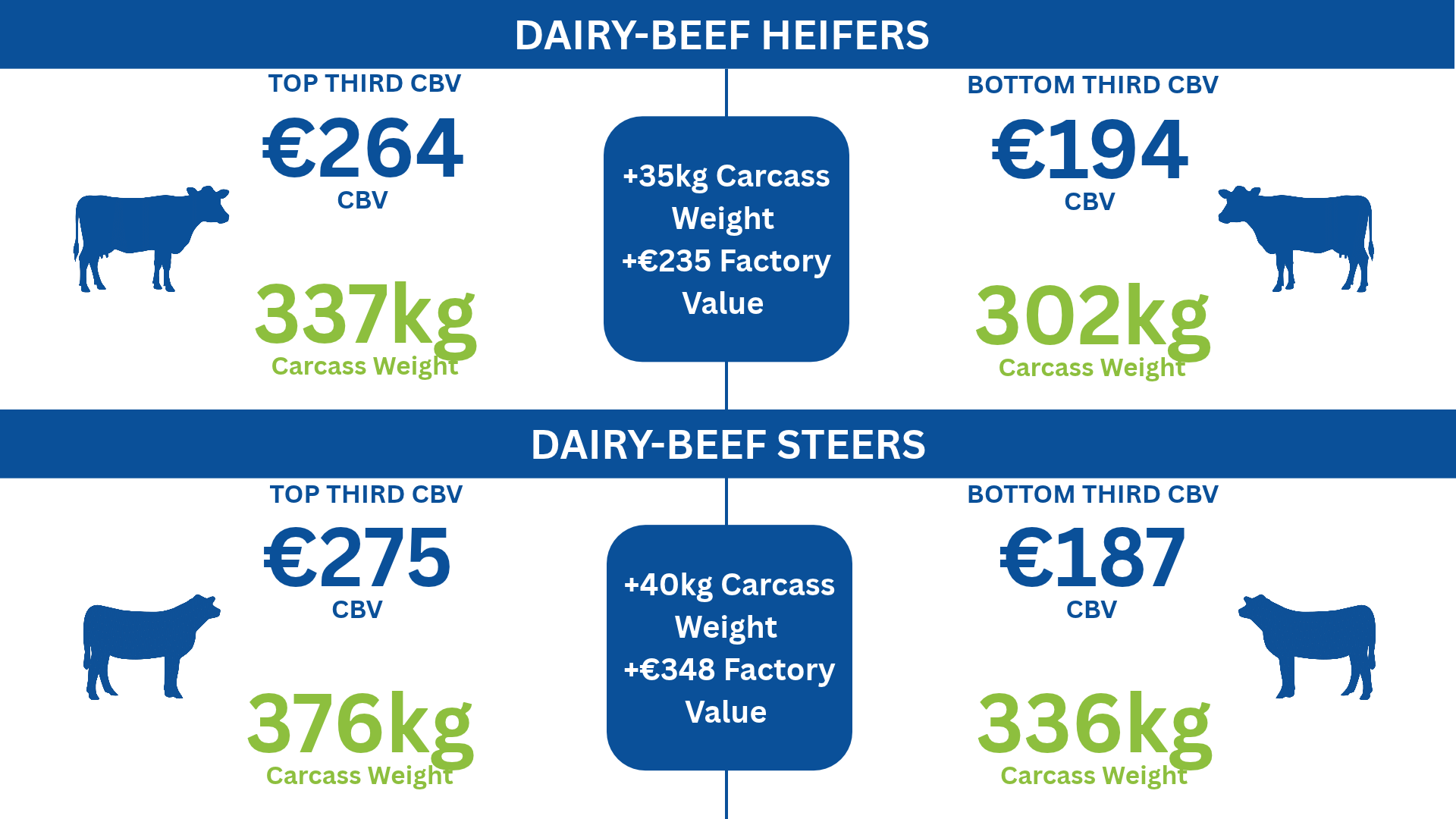
These results demonstrate how stronger genetics can translate into heavier carcasses, increased factory returns and improved lifetime profitability.
Calf Health as the Foundation of Performance
A straightforward but effective herd health plan is followed across both farms, with routine vaccinations forming the foundation of disease prevention.
John and Stephen place particular importance on calf health, believing that the first six months of an animal’s life have a lasting impact on subsequent growth and finishing performance.
“We can often spot an animal that had a chill or illness as a calf when it becomes a mature animal,” Stephen explains. As a result, calf management and preventative health measures receive significant attention from day one.
A Grass-Based Feeding System
The feeding system is designed to achieve steady growth while making maximum use of grass.
Calves are reared on milk replacer before being turned out to grass for their first summer. During their first winter, cattle receive approximately 2kg of meal per head each day.
Animals are generally moved to John’s herd in early spring as they approach one year of age. Weather permitting, they are turned out to grass around the middle of March, with no concentrate supplementation provided while grazing.
The finishing system then varies according to animal type. Bulls are typically housed in August and intensively finished for slaughter around Christmas time. Heifers remain at grass later into the autumn before housing. They initially receive approximately 1kg of meal per day, with concentrate levels gradually increased throughout the winter. As finishing approaches, heifers receive between 8kg and 10kg per day before being finished in April or May.
Managing Performance in a Changing Industry
Stephen participates in the CSP Dairy Beef Welfare Scheme and NGP, while both herds are also participating in the Dairy Beef Weighing Scheme. These programmes provide valuable weight, parentage and performance information that helps support breeding and management decisions across the enterprise.
Like many farmers, John and Stephen are also navigating volatile markets and rising costs. “It’s been a lean year for milk and beef,” John notes. The family is alsoaccustomed to long winters, with Stephen explaining that “A seven-month winter is normal for us. We’re not afraid to open the pit in August and stay feeding,”
This year, feed management has been particularly important due to dry weather conditions and the resulting high milk urea levels. As a result, careful planning around forage quality and supplementation has been essential to maintain herd performance.
Despite these challenges, the biggest concern remains the uncertainty around returns on investment. As John puts it, “There’s no guarantee. There’s always risk.”
Experience, Health and Quality Stock
When asked what advice the family would give to someone hoping to establish a successful dairy-beef enterprise, John returns to the importance of early-life management, “The first six months of a calf’s life are vitally important. Health is everything, and quality stock is paramount.”
John also recognises that the partnership he and Stephen have in place provides an excellent foundation for shared responsibility and learning.
For the Graham family, success begins long before cattle enter the finishing shed. Strong breeding decisions, careful calf management, excellent herd health and steady performance from an early age are all essential to producing profitable dairy-beef cattle.
When asked about future plans, John paused briefly before replying with a grin: “Keep at it. I absolutely love what I do.”
That passion, combined with generations of farming experience, strong genetics and a willingness to embrace new technology, helped John Graham earn recognition as the 2026 Foyle Dairy Beef Finisher Award winner. With another generation already growing up around the farm, the Graham family enterprise appears well positioned for the future.