
Herds using mainly genomic bulls recorded higher genetic merit and better production and fertility performance than those using mainly daughter-proven bulls in the 2025 herd comparison. Their average herd EBI was €44 higher, and they produced 16 kg more milk solids per cow. In addition, genomic bulls can help Irish dairy farmers make faster genetic progress and improve the long term profitability of their herds. The key take away is to select high EBI sires and spread risk by using a balanced team of genomic bulls across dairy replacements.
Why Genomic Bulls Offer Greater Genetic Merit
The main advantage of young genomic bulls is their higher average genetic merit compared with daughter proven bulls. By analysing a bull’s DNA, breeding programmes can identify promising young sires earlier. As a result, this shortens the generation interval and accelerates genetic gain in the national dairy herd.
Graph 1 shows the genetic trend for first calving females by sire type from 2021 to 2025. In 2025, the average EBI of progeny from genomic sires was approximately €134, compared with €110 for progeny from daughter proven sires. Meanwhile, female progeny from Gene Ireland G1 bulls recorded the highest average EBI at €165. Across the five years, progeny from genomic bulls were consistently around €20 to €30 higher in EBI than progeny from daughter-proven bulls. Overall, this represents roughly three to four years of genetic gain. Based on Teagasc research cited by ICBF, each €1 increase in EBI can be associated with an increase of €2 in profit.
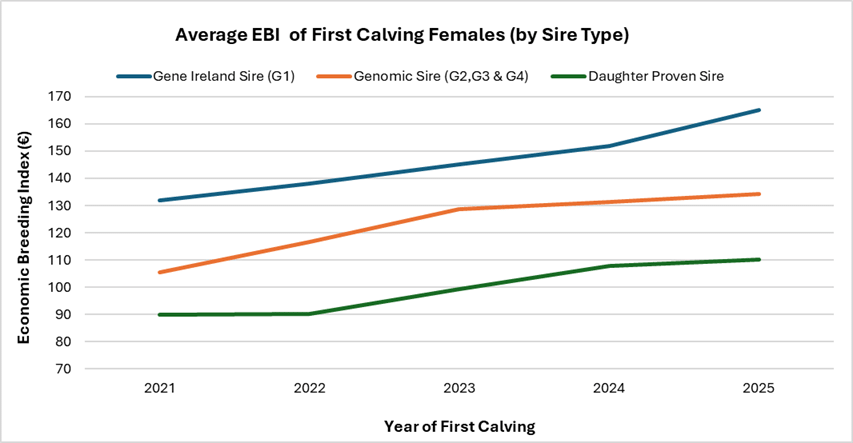
Graph 1. Genetic trend in first-calving females by sire proof type, 2021 to 2025.
The trends in Genomic bull usage have been consistently greater than daughter proven bulls over the last number of years. This is presented in graph 2 below and the increasing impact of genomics. The usage of genomic bulls has gone from 66.6% to 74.8% over the last 5 years on dairy farms. The greater usage of young Genomics bulls than Daughter proven bulls can be attributed to the superior level of genetics being offered to famers. The analysis confirms that dairy farmers continue to have increased confidence in young genomically selected bulls.
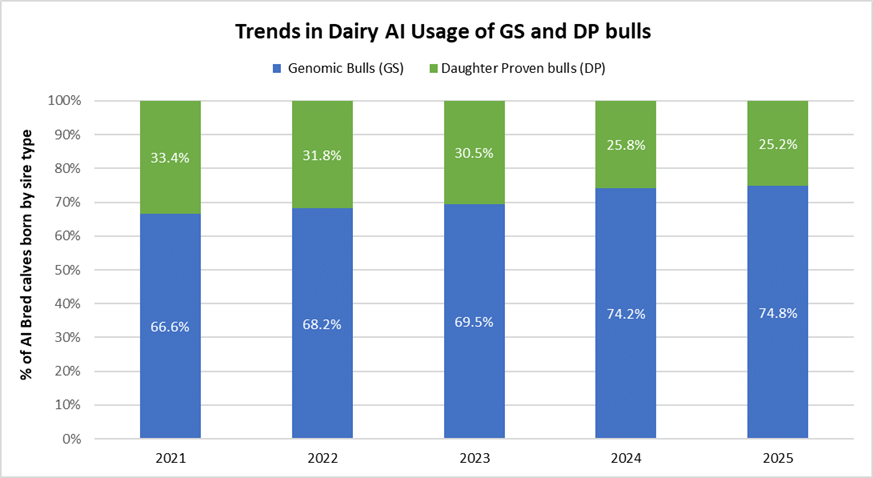
Graph 2. Share of AI-bred dairy females by genomic and daughter-proven sire type, 2021 to 2025.
Manage Proof Changes with a Team of Genomic Bulls
All bull proofs can change as more information becomes available, whether the bull is genomic or daughter proven. A proof may rise or fall as the reliability of the breeding value increases.
Daughter proven bulls with production information but limited female fertility information can still show meaningful proof movement. Genomic bull proofs may move more because they initially have lower reliability and no milking daughter records. Graph 3 shows the potential change in EBI at different reliability levels. Even a bull proven for both milk and female fertility at greater than 90% reliability may still change by approximately plus or minus €45.
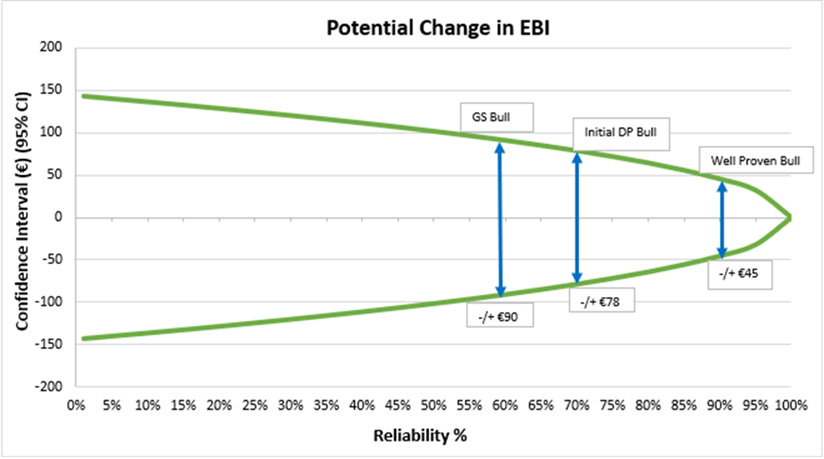
Graph 3. Potential change in an individual AI bull’s EBI at different reliability levels.
So, should a farmer select young genomic bulls for their higher breeding values or daughter proven bulls for their higher reliability? The practical answer is to select on breeding value and use reliability to guide how heavily each bull is used. For most herds, the best approach is to use a team of high EBI genomic bulls and use each bull evenly across the cows and heifers selected to breed dairy replacements. The average genetic merit of a team is more reliable than the proof of any one bull. This reduces the risk that a change in one bull’s EBI will have a major effect on the genetic merit of the next generation. Use Table 1 as a minimum guide when deciding how many bulls to include in the team.
| Herd Size (Inc. Heifers) | Recommended minimum number of Bulls |
| 0-100 | 7 |
| 100-150 | 8 |
| 150-200 | 10 |
| 200-250 | 11 |
| 250-300 | 12 |
| 300-350 | 13 |
| 350-400 | 14 |
Table 1. Recommended minimum number of bulls in a team, by herd size.
How Genomic Bull Use Relates to Herd Performance
Table 2 compares 2025 herd performance in Spring calving herds that used mainly genomic or mainly daughter-proven bulls for the milk traits when breeding heifer replacements. Herds were included where at least 70% of their AI bred heifer calves born from 2020 to 2023 were sired by one of the two proof types. These heifers now form an important part of the milking herd. The comparison is descriptive. It shows the performance recorded in the two herd groups and should not be read as proof that sire type alone caused every difference.
| On Farm Performance 2025 | Daughter Proven | Genomic |
| No. Cows/herd | 123 | 120 |
| Herd EBI (€) | 89 | 133 |
| Litres/cow | 5,552 | 5,706 |
| Milk Solids kg/cow | 457 | 473 |
| SCC | 167 | 161 |
| Calving Interval (days) | 385 | 376 |
| 6-week Calving Rate (%) | 69 | 75 |
| Heifers Calved at Optimum age (%) | 73 | 84 |
Table 2. EBI and 2025 performance in herds using mainly genomic or daughter proven bulls for replacements.
Herds using mainly genomic bulls had an average herd EBI that was €44 higher. They also produced 16kg more milk solids per cow, had a calving interval that was nine days shorter, and achieved a six week calving rate that was 6% higher. The proportion of heifers calving at the optimum age was 11% higher as well. These results support the use of a carefully selected team of high EBI genomic bulls, alongside good herd management, to improve genetic merit, production and fertility performance.
Practical Breeding Checklist
• Set clear breeding goals for EBI and the traits that matter most in your herd.
• Choose a team of high EBI genomic bulls rather than relying heavily on one sire.
• Use the bulls evenly across cows and heifers.
• Check milk, fertility, health and other relevant sub-indexes.
• Use ICBF Dairy Sire Advice to match selected bulls to suitable females and manage inbreeding.
Using a balanced team of genomic bulls is a practical way to accelerate genetic progress while managing proof risk. Focus on breeding value, spread usage across the team and review the latest ICBF information before making final mating decisions.
Useful ICBF Breeding Tools
Before finalising the breeding plan, review the latest Dairy Active Bull List, learn more about the Economic Breeding Index (EBI), and use ICBF Dairy Sire Advice through HerdPlus.