
Roscommon finisher PJ Finnerty shows how consistent management, performance recording and the Commercial Beef Value are delivering heavier carcasses, earlier finishing and stronger margins on a specialist beef finishing farm.
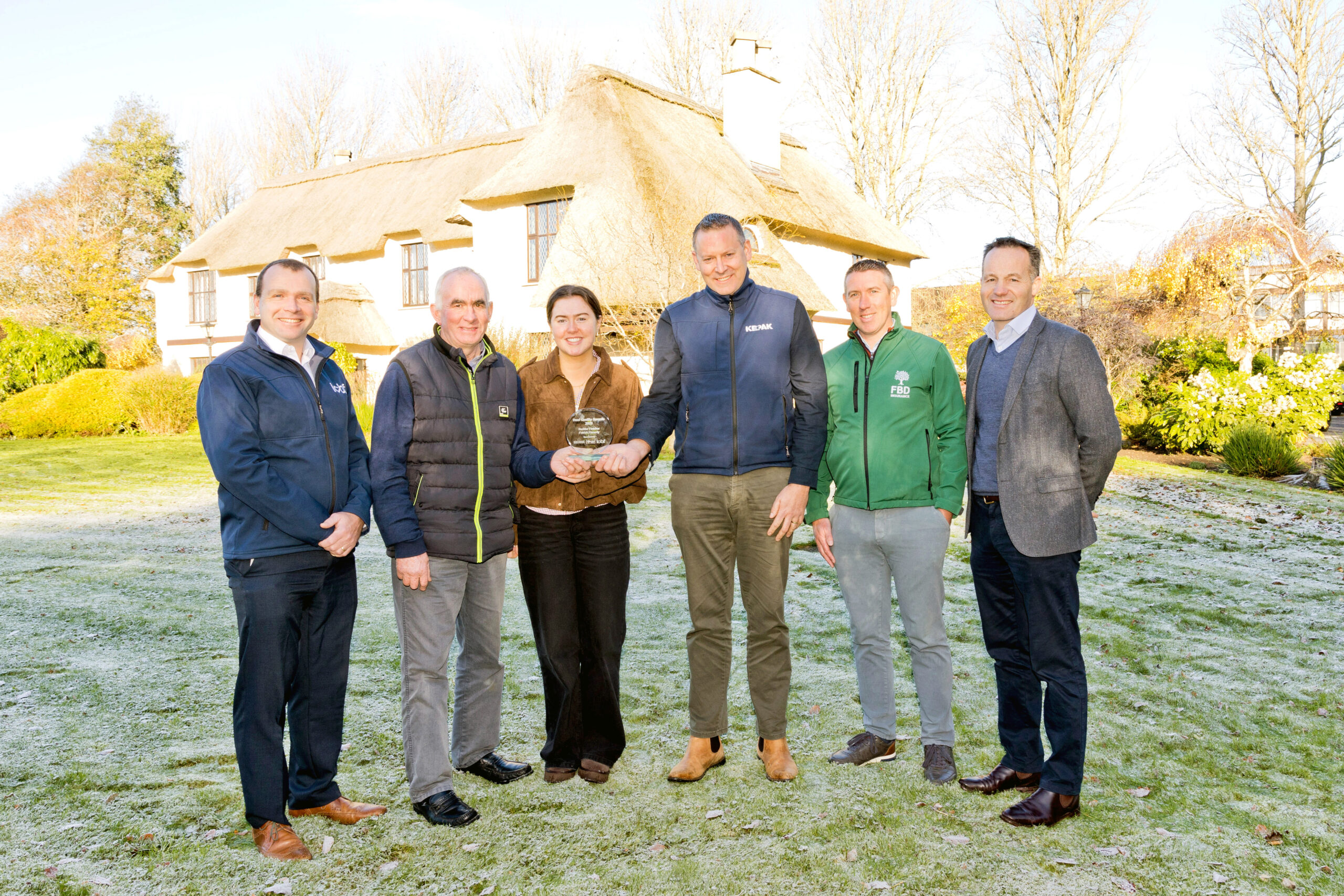
For Roscommon beef finisher PJ Finnerty, success has never come from chasing trends. Instead, it has been built steadily over time through buying the right cattle, managing them well, and learning from the figures each year. That approach has now been recognised with an ICBF Beef Quality Award, highlighting the role the Commercial Beef Value (CBV) plays in driving performance and profitability on commercial finishing farms.
PJ took over the family farm in 1992, having started farming alongside his father. “I started farming at home with my father and he handed the farm over to me,” he says. “At that time it was mostly sheep.” While there were a few cows on the farm, beef was not the main focus. “There were only three or four cows and I wasn’t long getting rid of them.”
From the outset, finishing cattle appealed to PJ. He began buying store cattle and finishing them within 12 months, and while the system has been refined, the fundamentals have remained the same. “All along I kept improving it as I went,” he says. “You’re never finished tweaking things.”
Today, PJ operates a specialist beef finishing system, buying all cattle as weanling heifers, with over 90% sourced through Roscommon Mart. Weight for age is the first filter when buying. “I’d always be looking for strong weanlings for their age,” PJ explains. “I’d want everything over 300 kilos. If they’re strong coming in, there’s less chance of them getting sick.”
Cattle are purchased mainly in October, with a smaller number bought in spring as shed space becomes available. Some are finished off grass before their second winter, while the majority are housed and finished. “The ones out of the shed are always finished younger,” PJ says. “That’s why I’m after that type of animal, they have the capacity to do it.”
That focus on capacity aligns closely with the principles behind the Commercial Beef Value. PJ has followed CBV since its introduction, even when very few cattle had values available. “I’ve been aware of it since it came in, but very few showed up at the start,” he says. “You couldn’t go into a mart and say you were only buying high CBV”. As genotyping levels have increased, more CBV information has become available at purchase and PJ says it matches what he sees in performance. “When you look back at the animals you’ve bought, you can see it reflected,” he explains. “A lot of what I have now has CBVs, and the higher CBV cattle have the ability to hit big carcase weights and finish younger.”
That relationship between CBV and performance is clearly demonstrated in the data from PJ’s own herd. Analysis of 70 Beef x Beef heifers finished through Kepak Athleague shows that cattle in the top third for CBV returned €430 more per head at slaughter than those in the bottom third. Finishing slightly earlier, these higher CBV heifers produced carcasses that were 39kg heavier on average, graded a full grade higher, and achieved a 42 cent stronger price per kilo.
For PJ, those figures reinforce the value of weighing and recording performance throughout the year. “I do weigh,” he says. “I weigh going out to grass, again about 100 days later, and when they’re coming back in. It tells you which cattle to push and which ones to hold back.” The weighing data also feeds directly into grassland and system decisions. “I was very disappointed one July with weights,” PJ recalls. “When I looked back, I’d run very tight on grass in late May. That showed me what I need to change.”
The farm carries a high stocking demand, with finishing heifers and a substantial sheep enterprise across 160 acres, managed through an extensive paddock system. Animal health and cost control are also central to the system. Cattle are vaccinated, treated for parasites, and carefully settled after arrival. PJ is also part of a purchasing group, reducing costs on fertiliser and meal. “That’s a big cost saver,” he says.
For PJ, the Beef Quality Award reflects a system where genetics, management and data all work together. “You have to do every bit of it,” he says. “There’s no one thing that’s going to lift you. If you don’t do every step along the line right, you’re going nowhere.”
His experience shows that the Commercial Beef Value is not just a breeding tool, but a practical decision-support tool for finishers, helping identify cattle with the genetic potential to deliver heavier carcasses, better grades and stronger margins where it matters most.
ICBF would like to congratulate the Finnerty family on achieving the 2025 Suckler Finisher Award for Kepak.
For more information on the Commercial Beef Value (CBV), click here.
