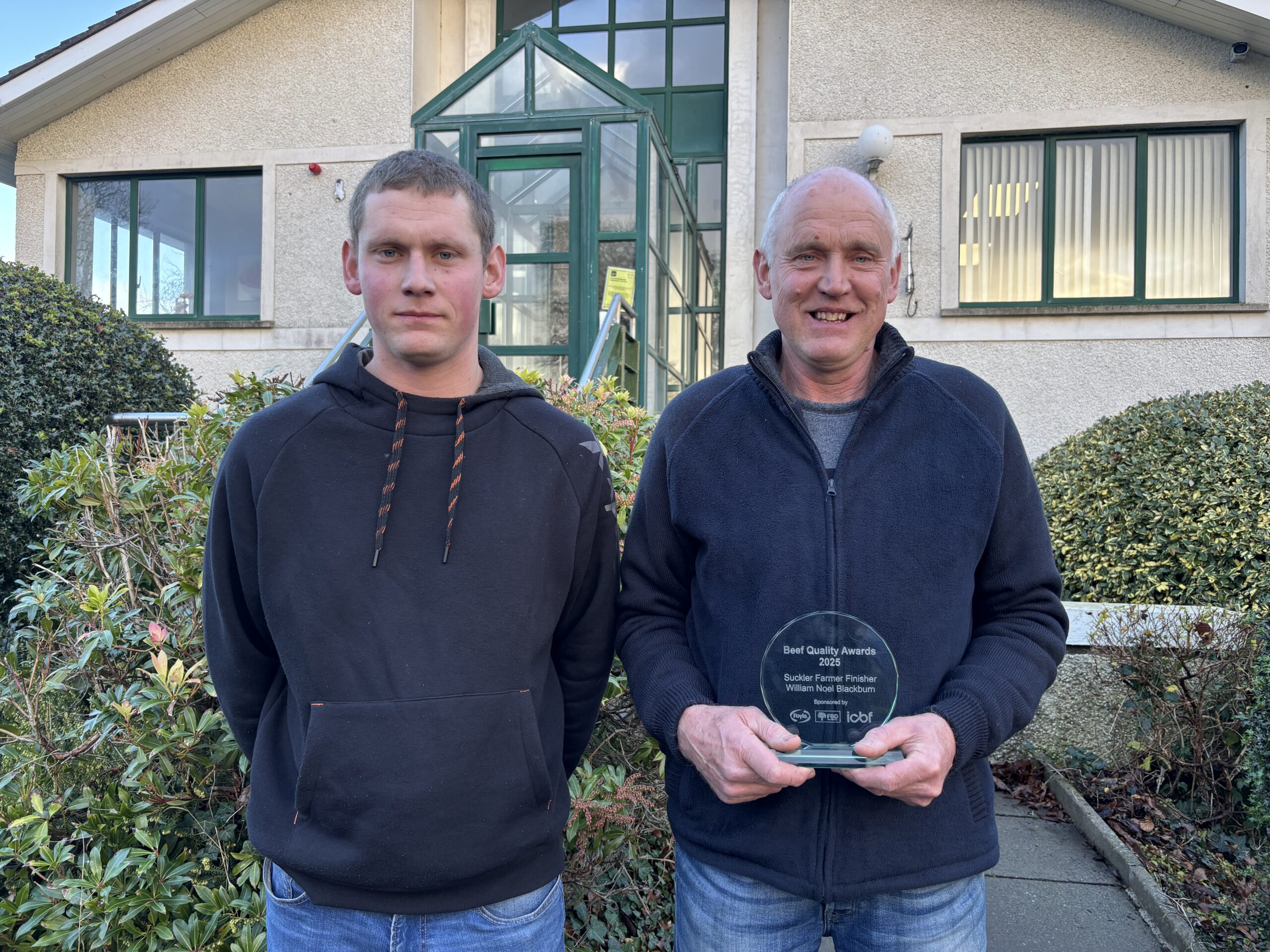
How David and Noel Blackburn align breeding and management in a grass‑based suckler‑to‑beef system
The Commercial Beef Value (CBV) is a genetic tool used to identify cattle with strong potential to be reared and finished profitably for beef production. By combining information on growth, efficiency and carcass traits, CBV helps highlight animals that are genetically suited to beef finishing systems.
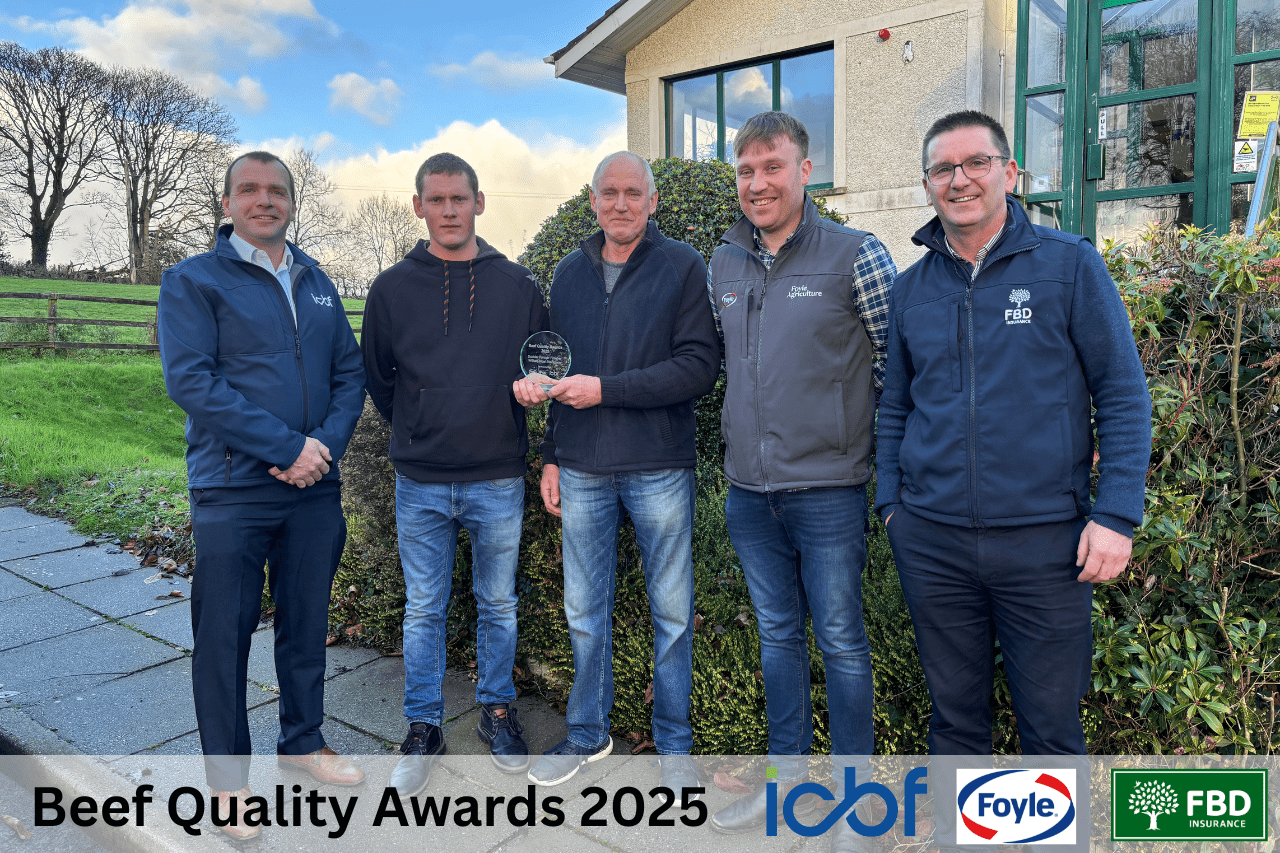
For suckler farmers, CBV is not something that only becomes relevant at slaughter. The foundations of CBV are laid much earlier, through breeding decisions. This is reflected in the system operated by ICBF Beef Quality Award recipients for Foyle Food Group, David and Noel Blackburn, where calves are bred, reared and finished within a clearly defined suckler‑to‑beef system.
Located near Killgordon in Co.Donegal, the Blackburns operate a grass‑based suckler‑to‑beef enterprise, finishing all progeny and supplementing throughput with approximately 60 purchased weanlings annually. At the core of the system is a compact spring‑calving suckler herd and a clear focus on breeding cattle with the genetic potential to perform from birth through to slaughter.
The cow herd is predominantly Limousin‑cross, with a preference for black Limousin heifers when purchasing replacements. Cow selection focuses on fertility, functionality and the ability to consistently produce terminal progeny suited to beef finishing systems.
Cows are crossed with a terminal Charolais stock bull, selected on a high Terminal Index, while maintaining a clear focus on calving difficulty to support herd performance and labour efficiency.
ICBF weaning performance data for calves born between July 2024 and June 2025 highlights strong early‑life performance across the herd. Calves recorded an average daily gain of 1.30 kg/day to weaning, with an overall average 200‑day weight of 306 kg. Strong growth performance was evident across both sexes, reflecting a system in which calves are thriving on grass and milk. Early growth is a key component of CBV, as calves that perform well from birth are more likely to finish efficiently at younger ages, delivering improved lifetime daily gain.
Terminal sire selection is clearly reflected in the weaning data. Progeny by the Charolais stock bull recorded an average 200‑day weight of 316 kg, based on calves weighed within the reporting period. With a Terminal Index of €155, this sire is delivering calves with the genetic capacity to perform strongly right through to finishing.
Average cow weight within the herd is 681 kg, with an average weaning efficiency of 45%, exceeding the 42% benchmark. A number of cows achieved even higher efficiencies, producing calves with strong weights relative to their own body weight. Efficient cows help control maintenance costs while supporting consistent calf performance, contributing positively to overall system profitability.
Males are finished as under‑20‑month bulls, with slaughter taking place in January directly from the shed. A strong emphasis is placed on maximising grass utilisation, particularly during the second grazing season. Keeping bulls on high‑quality swards supports liveweight gain at low cost, with meal only introduced at grass a number of weeks ahead of housing to ease the transition to an indoor finishing diet.
Once housed, bulls are offered high‑quality silage, with concentrate levels increased gradually to ad‑lib feeding during the final finishing period. Bulls are typically finished at carcass weights of 400–500 kg, with drafting decisions based primarily on fat cover rather than liveweight alone. A consistent target of U‑ and U= conformation is achieved.
Heifers are finished during the second winter and slaughtered out of the shed. A diet of good‑quality silage combined with 4–5 kg of concentrate is used to achieve suitable carcass weights and fat cover, without unnecessarily extending the finishing period.
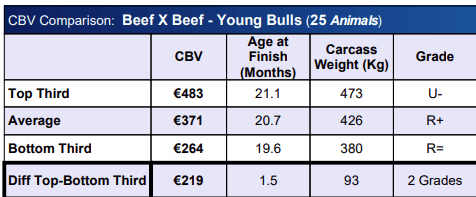
Finishing performance data further supports the relevance of CBV within the system. Among young bulls, the top third for CBV averaged €483, slaughtering at an average carcass weight of 473 kg at just over 21 months of age, with U‑ conformation. In comparison, the bottom third averaged €264 CBV, highlighting the impact that genetic potential, supported by effective management, can have on lifetime performance.
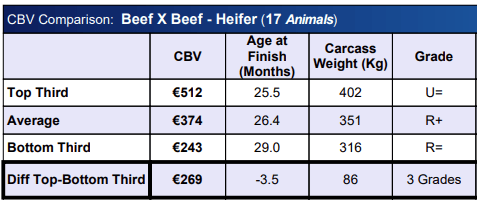
Similar trends were evident in heifers, where the top third achieved an average CBV of €512, compared to €243 for the bottom third, alongside heavier carcasses and higher lifetime €/day performance. All cattle are processed through Foyle Foods, with both breeding and finishing decisions closely aligned to factory specifications.
The ICBF Beef Quality Award recognises systems where genetics and management work hand in hand. As demonstrated by David and Noel Blackburn, aligning breeding decisions with management allows Commercial Beef Value to act as a reliable indicator of lifetime beef performance.