
Learn how genomic testing improves breeding accuracy, verifies parentage, increases confidence in EBI and CBV evaluations, and helps farmers make better breeding decisions.
What is Genomics?
Genomic technology was introduced into cattle breeding in Ireland in the late 2000’s and has transformed cattle breeding and indexes in the country ever since. Genomics in cattle breeding involves using DNA information from an animal to make faster, more accurate breeding decisions.
Before genomics, it could take several years to accurately assess a bull’s genetic merit. Farmers had to wait for daughters to calve, milk and produce performance records before reliable breeding values could be calculated. Genomics now allows an animal’s genetic potential to be predicted at a much younger age, helping farmers select animals before they produce offspring, reduce generation intervals and improve accuracy.
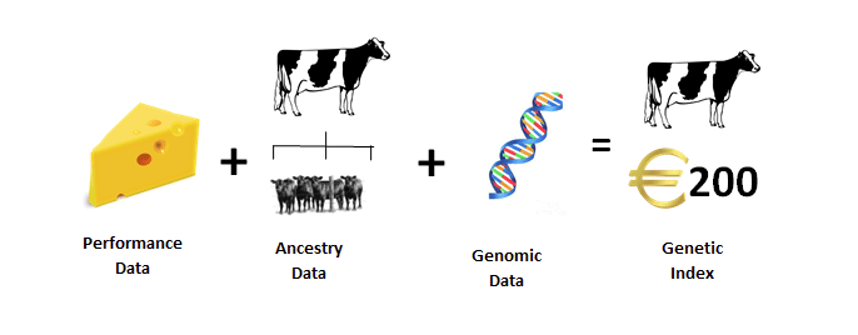
Genomics has become a widely used tool in the Irish cattle breeding industry with thousands of farmers genotyping stock now before breeding from them. There are over 7.3 million genotypes in the ICBF database currently.
What are the benefits of Genomics?
1. Parentage Verification.
Parentage errors distort breeding values because the calf’s genetic merit is assigned to the wrong parents. In Ireland, before genomics, sire misidentification rates were 10–20%, and dam errors were also significant. The National Genotyping Programme (NGP) revealed:
- 17.47% sire errors corrected. Sire errors are very common where herds are using multiple stockbulls or both AI and natural service. Where the stockbulls are genotyped, genomics can be used to confirm the correct sire for each calf.
- 8.67% dam errors corrected. With the commonality of compact calving etc it is easy to make a mistake when recording dams of calves. The genotype of the calf can identify the correct dam where that dam has also been genotyped.
That’s nearly 1 in 4 calves with at least one incorrect parent recorded.
Where no sire is recorded the genotype is often able to identify and add the sire to the animal so that it can then get a genomic evaluation.
Correcting these errors dramatically improves the reliability of EBI, EuroStar, and CBV.
2. Accuracy of Evaluations
Along with more accurate parentage, animals that are genotyped have higher reliability on their evaluations thanks to the genomic information being included. Animals would typically see a 25-30% increase in the reliability of their indexes after they get genotyped with increases of 40%+ seen in the milk sub index. This means that at a young age, farmers can make very informed decisions when picking animals to keep as replacements and to breed from.
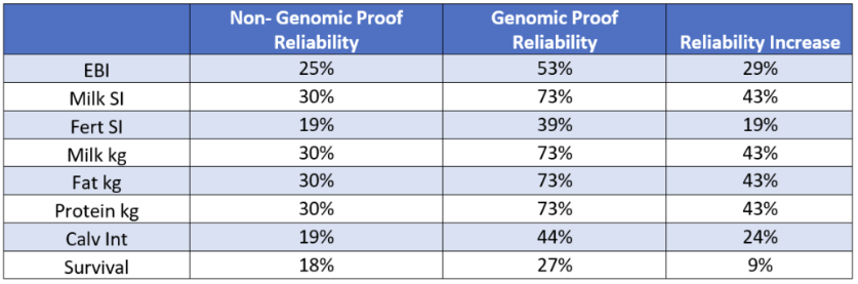
The table above highlights the difference in reliability that can be seen between a non-genomic and a genomic evaluation across the major traits in the Economic Breeding Index.
For herds that produce surplus replacement heifers every year and would be selling some of these replacements, genotyping can be a very useful tool to ensure they are selecting the best females to keep. As farmers would be acutely aware, given current production costs, breeding and rearing replacement heifers is very expensive so farmers must be sure that after all this work they are not selling their best replacement heifers.
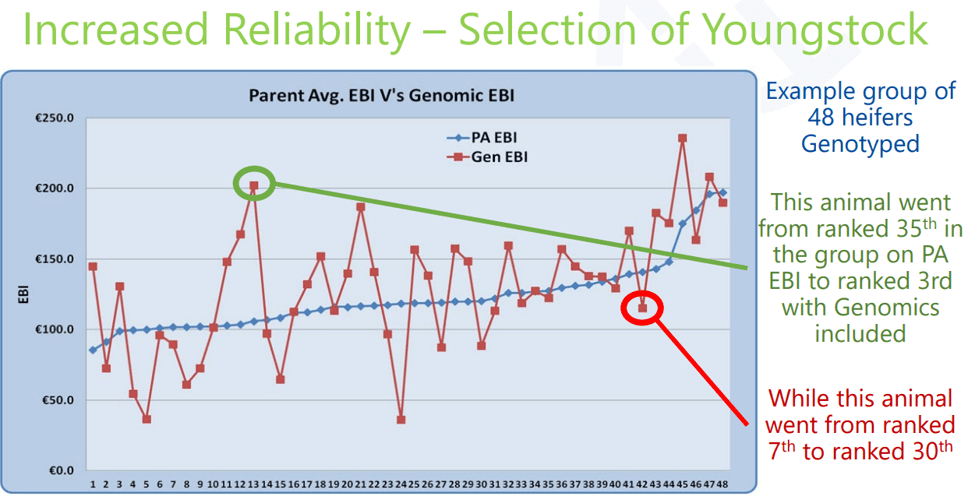
The above example shows a group of 48 dairy heifers that were recently genotyped. The blue line shows each heifer’s EBI based on parental average, while the red dots show each heifer’s EBI with genomics included. You can clearly see significant reranking across the group after they are genotyped. Therefore, of the 48, a heifer ranked 35th before genotyping was then ranked 3rd after genomics. If a farmer was only keeping the best 30 heifers, without the benefit of genomics the farmer would have sold one of their very best heifers.
3. Accelerated Genetic Gain
Genomics has allowed farmers to really drive the genetic gain in their herd since it was introduced in the 2000’s. With increasing levels of genotyping, farmers have been able to make more informed decisions and in turn increase their rate of genetic gain.
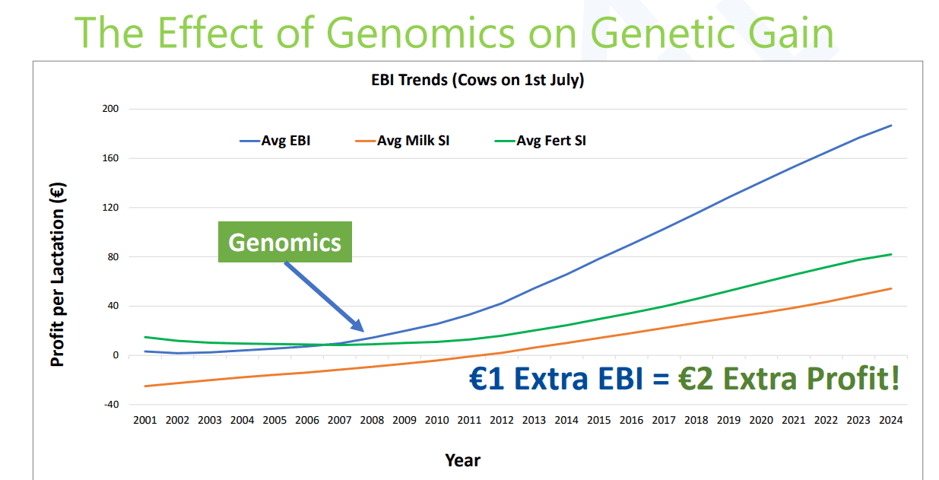
As can be seen above, it is estimated that every €1 increase in EBI generates approximately €2 in additional profit, demonstrating the strong return on investment that genotyping can deliver.
Additional Benefits of Genotyping
Along with improved parentage verification, increased reliability and greater genetic gain, there are several other benefits to genotyping. These can include myostatin results, lethal genes and polledness. Where possible through genotyping, the myostatin results can be reported for animals along with a number of lethal genetic mutations such as HH1 and HH3 in Holstein Friesian cattle.
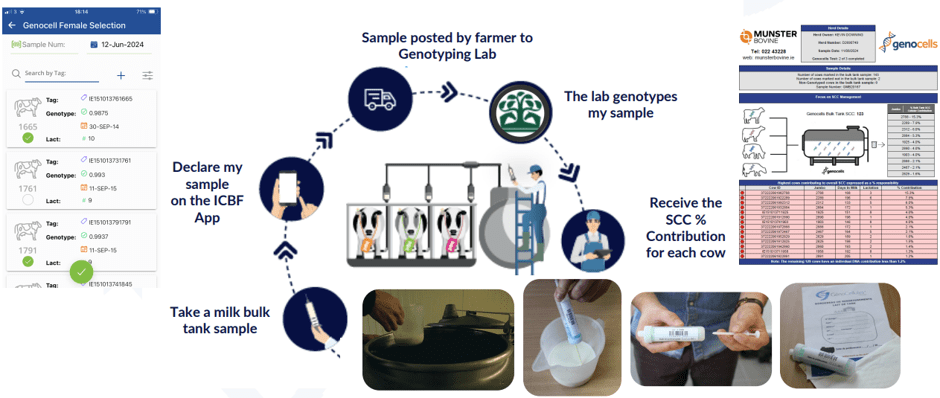
As the popularity of genotyping grows so too do the technologies and potential tools farmers can use on the back of it. One such example is a tool called Genocells which dairy farmers who have their milking cows genotyped can benefit from. Genocells allows farmers to take an individual sample from the bulk tank, send it to the genotyping lab. It is then possible to predict the Somatic Cell Count (SCC) of individual cows from a single bulk tank sample as each somatic cell in the sample has a specific DNA marker from each cow which confirms which cow it came from. This is a useful tool for farmers to use throughout the year alongside milk recording to manage SCC throughout the season.
How do I genotype an animal?
Genotyping can be done through a DNA button tag which is used on the animal’s ear to get a tissue sample from which the DNA of the animal can be extracted. Alternatively, a hair sample can be taken which involves pulling some hairs from the tail of the animal including the roots and the DNA of the animal is then extracted from those roots.
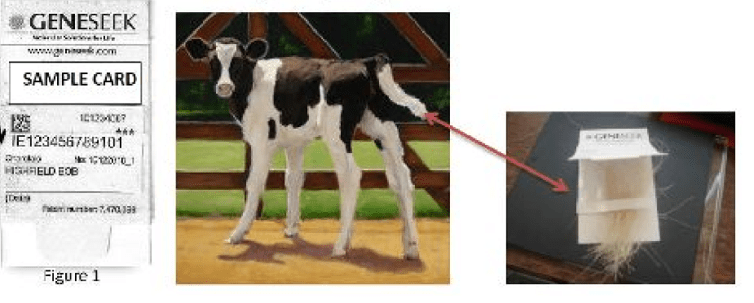
The genotype of the animal is then loaded onto the system and the information on the genotype is incorporated into the animal’s genetic evaluation.
Genotypes can be ordered via the ICBF website. Simply log into your ICBF account and go to genomic services to order genotypes.
How much does it cost?
HerdPlus customers can avail of a discounted rate for private genotyping of €18 per animal while non HerdPlus customers can order private genotypes at €30 per animal.
In Summary
Genotyping is one of the most valuable tools available to Irish cattle farmers. It improves parentage accuracy, increases confidence in EBI and CBV evaluations, helps identify the best breeding animals, and accelerates genetic gain within the herd. With genomic testing becoming increasingly common, farmers can make more informed breeding decisions and maximise the profitability of their herd.