
For 25 years, the Economic Breeding Index (EBI) has helped Irish dairy farmers breed more profitable, fertile and efficient cows for seasonal, grass-based systems. Introduced in 2001, the EBI brings the key breeding traits that affect farm profit into one figure, making it easier to compare bulls and cows and plan the next generation of replacements.
The results can be seen in the national genetic trend. The average EBI of dairy cows in 2026 is €121, which is €202 higher than the average for dairy cows 25 years ago. Over that period, progress has been made across milk solids, fertility, health and environmental efficiency, strengthening the EBI’s role at the centre of genetic improvement in Irish dairy herds. Graph 1 shows the average EBI, Milk Sub-Index and Fertility Sub-Index of dairy cows present on 1st July each year. Teagasc research has shown that every €1 increase in EBI can generate an additional €2 in profit per cow per lactation, demonstrating the significant economic benefit of continued genetic improvement in the national dairy herd. For a 100-cow herd, this equates to €2,000 additional profit from improved breeding decisions.
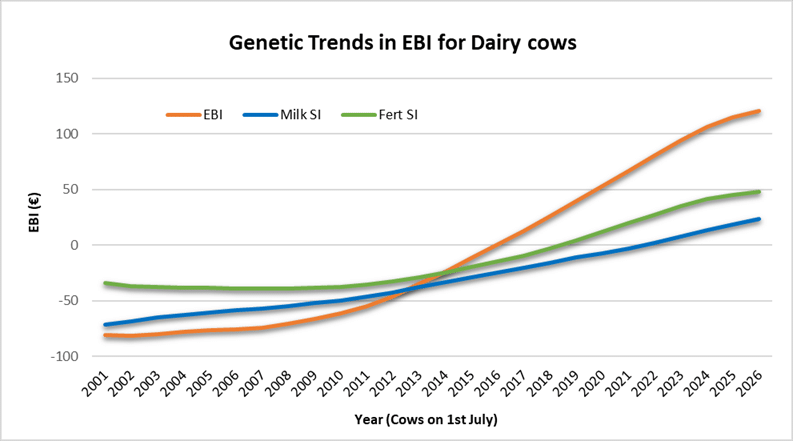
Graph 1. National genetic trend for EBI, Milk Sub-Index and Fertility Sub-Index in dairy cows, 2001-2026, based on the September 2026 evaluation.
Why EBI replaced a milk only breeding approach
Before the Economic Breeding Index, Irish farmers used the Relative Breeding Index (RBI), which focused on genetic improvement in milk production. While national milk performance improved, fertility declined, contributing to longer calving intervals and lower herd efficiency.
Fertility is essential in Ireland’s seasonal, grass-based dairy system. Cows need to go back in calf, calve compactly and remain productive in the herd. The introduction of a Fertility Sub-Index in 2001 helped address the national decline in fertility. It is currently based on calving interval and survival traits.
As farm economics and breeding priorities developed, further sub-indexes were added for calving, beef, health, maintenance, management and carbon. Graph 2 shows how the relative emphasis within the EBI has evolved from the RBI to the current balanced breeding index.
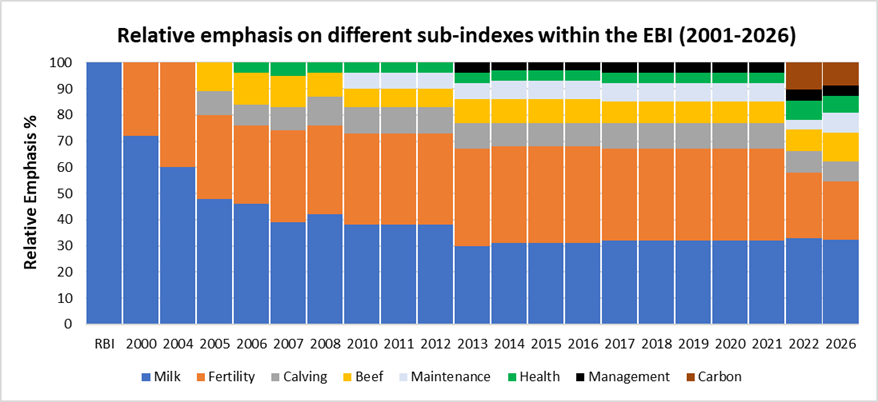
Graph 2. How the relative emphasis on EBI sub-indexes has changed over 25 years, from the RBI to 2026.
How genomics and Dairy Gene Ireland accelerated genetic gain
The introduction of genomic evaluations in 2009 was a major step forward for the Economic Breeding Index. Genotyping combines an animal’s DNA profile with ancestry and performance data, allowing elite young bulls to be identified earlier and with greater accuracy. This has halved the generation interval and doubled the rate of genetic gain compared with traditional progeny testing. The current annual rate of genetic gain is €10.8 EBI per year.
The reference, or training, population has also expanded to include informative females and several dairy breeds. This improves the accuracy of evaluations for important traits, including female fertility and milk production. For farmers, it supports earlier and better-informed breeding decisions. Within Dairy Gene Ireland, it provides access to high-EBI bulls through a structured progeny-testing programme.
Dairy Gene Ireland has helped increase EBI while maintaining balance between the Milk and Fertility Sub-Indexes. More than 1,100 bulls have been tested and over half a million straws distributed, alongside improvements in fat and protein PTAs and overall EBI. Active bull lists have also become increasingly Irish-bred, highlighting the contribution of the national breeding programme.
Farm adoption is strong, with more than 74% of inseminations using genomic sires. This reflects the higher average EBI available from young genomic bulls compared with daughter-proven sires. Farmers should manage changes in individual bull proofs by using a balanced team of high-EBI bulls rather than relying heavily on one sire.
The National Genotyping Programme has built further momentum. More than 1.5 million animals were genotyped during the last three years, supporting a large national bovine genotype database and more accurate genetic evaluations. The number of dairy cows genotyped has risen from 515,794 in 2024 to 744,389 in 2026, with 46% of the dairy cow population now genotyped in the programme. This is presented in Graph 3. This national genotyping infrastructure is an important advantage for Irish dairy breeding.
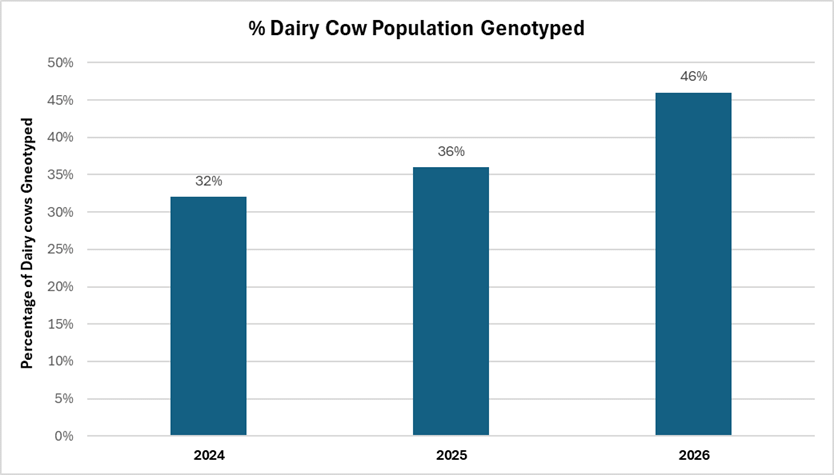
Graph 3. The percentage of the dairy cow population genotyped.
What genetic progress means for milk and fertility performance
The benefits of genetic progress are also visible in national milk performance. Average milk solids per cow increased from 390 kg per lactation for cows calving in 2015 to 459 kg for cows calving in 2025. Graph 4 shows the changes in both milk litres and milk solids per cow.
These national figures reflect the combined effect of genetics, feeding, grassland management, animal health and overall herd management. The practical breeding message is to continue selecting for profitable milk solids while keeping fertility and the other EBI sub-indexes in balance.
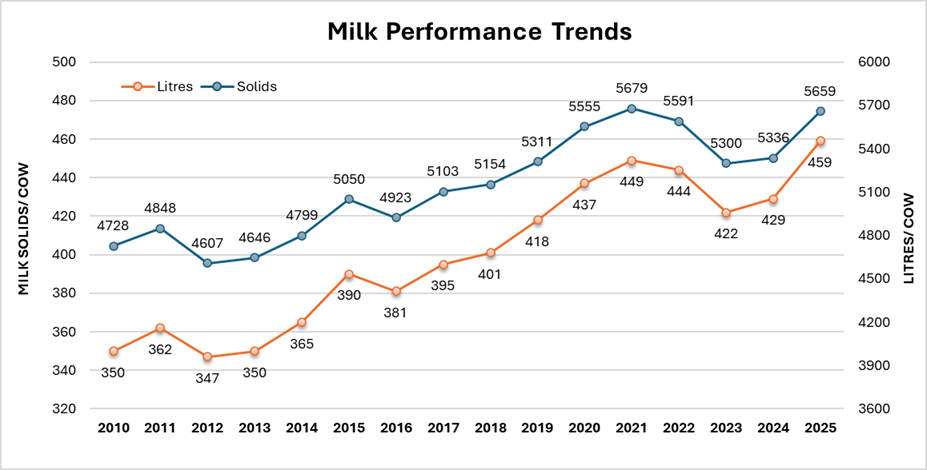
Graph 4. National milk performance trends from co-op milk data, 2010-2025.
National fertility performance has improved alongside milk performance. As shown in Graph 5, average calving interval fell from 389 days for cows calving in 2016 to 383 days in 2026. Over the same period, the six-week calving rate increased from 58% to 69%, while the proportion of heifers calving between 22 and 26 months rose from 59% to 76%.
The overall direction is positive, but there is still scope to move closer to national reproductive targets. Approximately half of performance gain comes from genetic progress, with the remainder influenced by environmental and management factors. Farmers therefore need to combine high-EBI breeding decisions with good nutrition, heat detection, health management and breeding-season management.
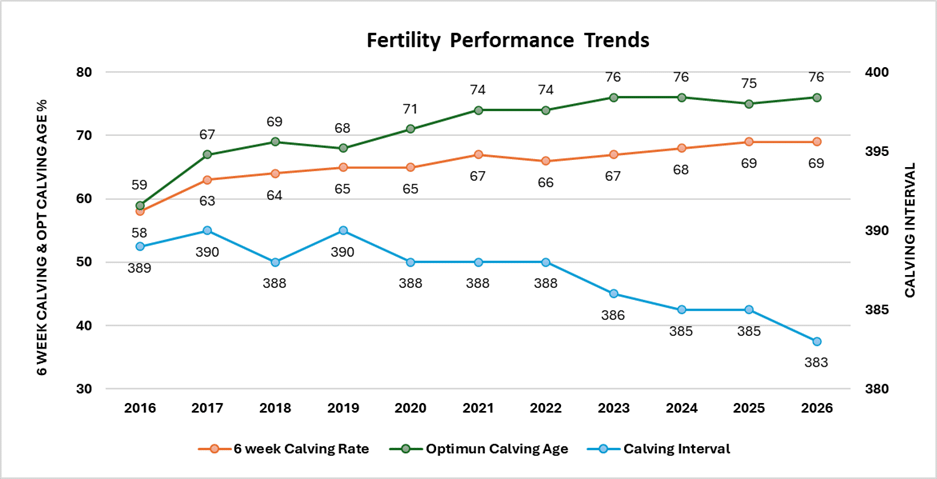
Graph 5. National dairy fertility performance trends, including calving interval, six-week calving rate and optimum calving age, 2016-2026.
Practical EBI tools farmers can use on farm
ICBF provides practical tools to help farmers turn the Economic Breeding Index into on-farm progress:
• Active Bull List: select high-EBI bulls with the right balance of sub-indexes for your herd’s breeding goals.
• HerdPlus reports: use performance information, including the Weekly Fertility Report and Bull Usage Report, to support management and breeding decisions.
• Sire Advice: match cows and heifers to suitable bulls to breed more balanced replacements while managing inbreeding.
• Genotyping: confirm parentage and identify the replacement heifers with the strongest genetic merit.
The next step for Irish dairy farmers
Twenty-five years after its introduction, the Economic Breeding Index remains the foundation of genetic improvement in Irish dairy herds. It has supported balanced progress in milk and fertility while also expanding to include calving, beef, health, maintenance, management and carbon.
The next gains will come from combining high-quality data, genomics and consistent breeding decisions on farm. Farmers can start by reviewing their HerdPlus EBI profile, using the ICBF Active Bull List to choose a balanced team of high-EBI sires, applying Sire Advice and genotyping potential replacements. Used together, these tools can help breed profitable, fertile, healthy and efficient cows for Ireland’s grass-based dairy system.