
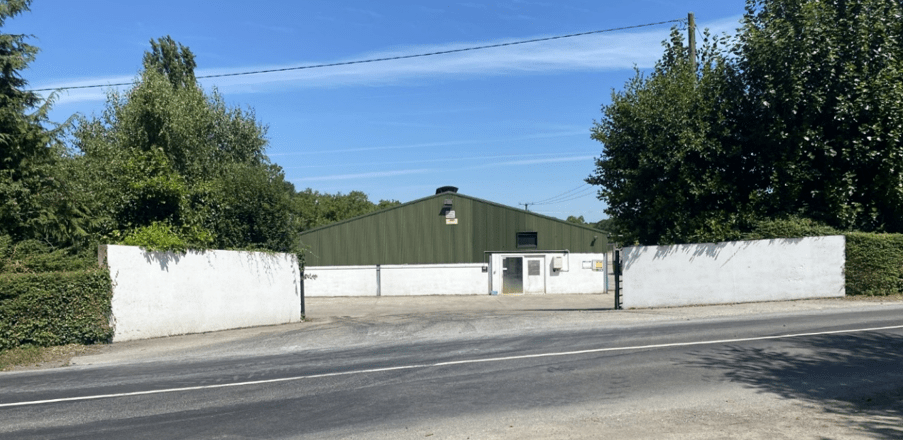
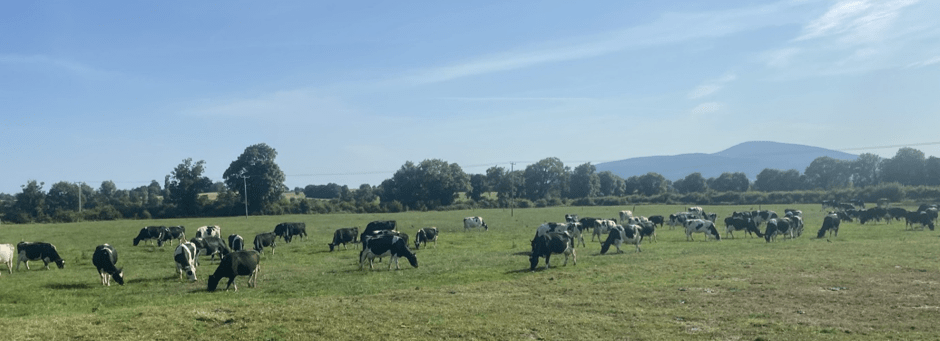
Paul Flaherty is a dairy farmer from Clonmel, Co. Tipperary, milking a herd of 85 Holstein Friesian cows in a unique autumn calving system. The farm is located just minutes from Clonmel town, with the Slievenamon Mountains providing a stunning backdrop. Most of the milk produced on the farm is supplied through Tirlán for the production of Cashel Blue Cheese.
Paul is a long-time HerdPlus member and actively participates in the National Genotyping Programme (NGP), the CSP Dairy Beef Welfare Scheme and Gene Ireland. He believes the ICBF HerdPlus service is essential for record keeping, breeding decisions and overall herd management on his farm.
Paul’s Dairy Farming Journey
Paul began milking in 1995 as a new entrant when he leased 10 hectares of land and a neighbouring milking parlour to secure a milk quota. This arrangement lasted 12 months before he leased his father’s dairy farm for the following five years until his retirement.
At the time, Paul operated a 50:50 spring and autumn calving system. In 2017, however, he made the decision to move to a fully autumn calving system. The change was driven by both financial and lifestyle reasons, reducing the pressure associated with managing multiple breeding and calving seasons.
The switch has brought several benefits. Summer holidays are now possible, with the herd dried off for most of July and August, while cows calve outdoors in generally favourable weather conditions. The breeding season takes place indoors during December and January. This allows Paul to closely monitor cows and heifers without leaving the farmyard. This also complements the 100% AI breeding programme operated on the farm.
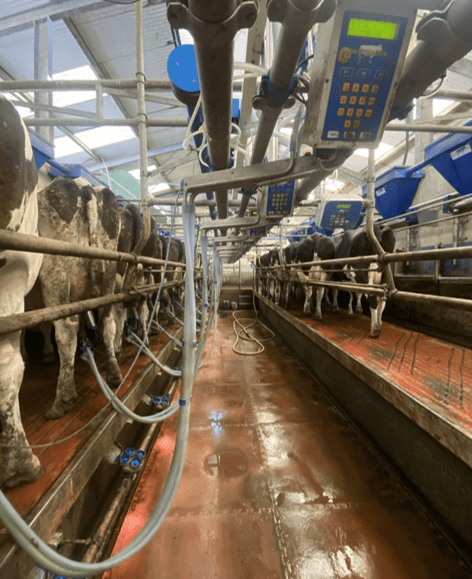
When asked about the best decision he has made on the farm, Paul said: “Definitely putting in a feed-to-yield milking parlour in 2004. The old one had no feeders or bin, so all the meal had to be bucketed across the farmyard. The auto washer was also a huge labour saver at the time.”
How HerdPlus Supports Breeding and Herd Management
Paul joined HerdPlus in 2007 to gain better herd data and a deeper understanding of his milk recording and breeding decisions. He remembers the colour-coded Somatic Cell Count (SCC) section on the milk recording reports as being particularly informative and easy to follow.
Since joining HerdPlus, Paul has seen the genetic merit of his herd continue to improve. He has also seen the HerdPlus service evolve over time. Today, the Rathronan Farm herd has an average EBI of €161, with a strong focus on fertility and health. These sub-indexes rank in the top 5% and 6% nationally respectively.
“Decision making at breeding time revolves around the system I run here on the farm. I need strong, resilient animals with good feet and health traits that can withstand the winter season when they are indoors for both peak production and breeding. I also look at fat and protein kilograms, as my long-term goal is to get to 600kg of milk solids on this grass-based system while feeding less than 1.5 tonnes of meal. Another goal is having all replacement heifers bred within three weeks, which we succeeded in this season.”
| KPI | Paul’s Herd | National Average |
| Calving Interval | 363 days | 385 days |
| Autumn 6 Week Calving Rate | 81% | 54% |
| Calves per Cow per Year | 0.98 | 0.95 |
| Cows Not Calved in Period | 2% | 6% |
| Current Replacement Rate | 20% | 19% |
| Heifers Calved 22-26 Months | 100% | 75% |
Using EBI and Milk Recording to Improve Herd Performance
Paul operates a low-input, grass-based dairy system. It demonstrates the value of efficient, high EBI cows in producing quality milk profitably and sustainably. While breeding season can be stressful, he believes it is one of the most important times of the year for improving the genetic merit of the herd.
EBI data, milk recording information and HerdPlus cow performance reports all play a major role in his breeding decisions.
“I would mainly look at the EBI reports as well as monitoring cell counts through milk recording. The colour-coded SCC section makes it easy to identify problematic animals and repeat offenders, which ultimately influences decisions around culling and dry-off strategies.”
Paul has seen continuous improvements in both milk recording performance and EBI since joining HerdPlus. He values having all the information and reports he needs in one place, whether through the HerdPlus website or mobile app, making herd management and record keeping more efficient.
National Genotyping Programme, Gene Ireland and Dairy Beef Participation
Paul participates in programmes that improve the performance of his own herd while also contributing to the genetic advancement of the national herd.
He has been involved in the National Genotyping Programme since its launch in 2023. Genotyping is a vital tool for genetic improvement, providing parentage verification between dams, sires and calves while helping farmers reduce inbreeding and gain a clearer understanding of an animal’s genetic potential.
As calves are born outdoors on Paul’s farm, occasional recording errors can occur when multiple cows calve in the same field. Genotyping helps identify and correct these inaccuracies, ensuring the highest EBI replacement heifers can be accurately identified and retained within the herd.
Paul also uses Gene Ireland bulls. These young, high-EBI genomically evaluated bulls are made available to participating farmers at a discounted price before they are fully proven. This gives Paul access to elite genetics at a lower cost while providing valuable performance data that helps ICBF validate and improve future genetic evaluations.
In addition, Paul participates in the CSP Dairy Beef Welfare Scheme, which promotes improved animal health, welfare and beef genetics through the use of higher-quality beef sires.
Through programmes such as the National Genotyping Programme, Gene Ireland and the CSP Dairy Beef Welfare Scheme, Paul benefits from valuable herd data and access to improved genetics, helping to drive better herd performance and support informed management decisions on the farm.