
A progressive beef enterprise built on high‑CBV dairy‑beef calves, disciplined nutrition and trust in proven genetics.
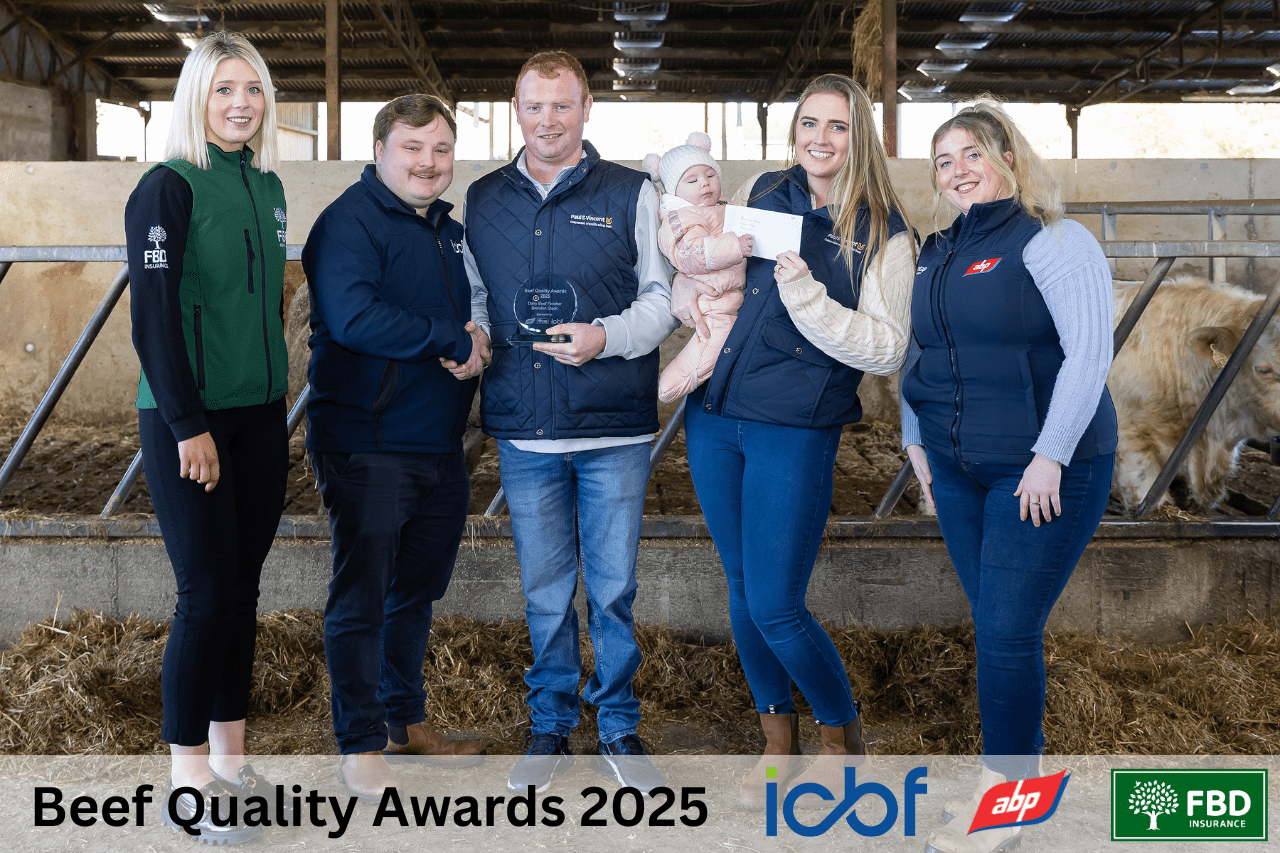
Brendan Stack is a beef farmer farming around 160 to 170 acres of rented and owned land in Moyvane, Co. Kerry. He farms in partnership with his parents, and his partner, Sarah, is also involved with the herd. Up until December 2025, Brendan had been working with a local dairy farmer for 8 years before deciding to come home and invest fully in the home farm. Brendan’s grandfather initially farmed the home place, which later went to Brendan’s uncle, so his father bought bits of land here and there as they came up. They then bought more land 3 years ago, which was neighbouring them. Brendan’s father always had cattle, and when Brendan became interested, the herd grew year by year to where it is today.
The farm has 30 sucklers which calve down in the spring. Brendan also buys in stores of 500 kg or more, which he finishes after 70 days. They plan to rear 80–100 dairy beef calves this year, up from their usual 60, rearing them from a month old until they reach the factory at just under 2 years. His partner, Sarah, will play a big role in raising these calves. The herd also includes bulls, which are killed out just under 16 months old. Brendan’s aim is “to keep cattle going to the factory all year round”.
Brendan’s herd consists of a mix of continental breeds. His sucklers are mainly Aubrac‑cross cows put in calf to an Aubrac pedigree stock bull. They also have a small number of pedigree Aubrac cows, which are calved down to the stock bull as well. The calves that Brendan and Sarah rear are mostly Limousin, Belgian Blue and Charolais calves from Friesian dairy cows. In Brendan’s opinion, these kill out better than Angus and White‑Head cross calves. When it comes to cattle bought into the herd, these could be any mix of breeds, though they are usually dairy‑beef animals, mostly from Friesian cows, with some coming from Limousin cows as well. Brendan is not as particular about buying in beef cattle as he is when it comes to getting good quality calves.
The herd is fed on a diet of home‑grown silage and bulk‑bought ration. Brendan has feeding troughs built into the sheds. He tests each cut of silage and uses the better‑quality pits for younger or faster‑growing stock. Calves under 12 months get a Heifer Rearer nut, which contains 20% protein for fast growth, along with minerals and maize for strong bones and feed efficiency. The weanling bulls get the same to drive growth and muscle without losing condition. All animals then move onto a Beef Maker nut to help achieve the best grading results and the highest possible kill‑out percentage. Brendan also aims to have the sucklers out to grass by the 17th of March each year, depending on the weather. His favourite stage of the system is seeing all the cows out at grass and beginning to thrive
Brendan’s calves come from two herds: his uncle Patrick’s and Noel’s, a local farmer. He usually gets 50 to 60 Limousin, Belgian Blue or Charolais dairy‑cross calves from Noel, along with the excess dairy‑cross Aubrac calves from Patrick. Brendan is not involved in the breeding decisions for these calves; both Patrick and Noel use AI, and he trusts them completely to choose suitable bulls that produce calves with strong CBV traits.
Last year was the first year Brendan bought Charolais calves, as Noel had used an AI Charolais bull, and he was pleased to see they killed out a bit heavier than the others. Overall, he is also happy with the Limousin and Aubrac dairy‑cross calves but finds the Belgian Blues a little slower to finish. From a CBV point of view, he feels the Charolais and Limousin types tend to offer stronger carcass traits, particularly length, muscle and overall shape, which is reflected in their quicker finishing and better kill‑out performance. Brendan’s main goal with his dairy‑beef calves is to rear animals with good length, depth and square ends, traits that align well with higher CBV carcass scores and help him consistently aim for R or O grades in the factory. He also plans to review the animals already killed to compare high- and low-CBV calves and see how much difference their CBV made in kill‑out results.
Brendan has a strong herd health plan, and while the odd case of viral pneumonia can appear, his vaccination programme means it’s very rare for him to ever lose a calf.
One of the challenges on Brendan’s farm at the moment is TB, along with the worry of beef prices dropping. As Brendan says, ‘If price stayed steady and there was a bottom line put on it, at least you could work each day knowing this is the lowest price you’ll get.’ The Mercosur deal is a concern for him for this exact reason.
For now, Brendan’s main goal is to keep building his herd bit by bit, allowing more high‑rated CBV calves to be brought in. He places “full trust in his uncle Patrick and Noel, confident that the bulls they select are helping him rear the best‑quality calves for factory finish.”